
I love makeup!
In fact, I find makeup to be pretty magical!
I can wake up in the morning, gulp graciously sip down my lemon water, coffee, green juice, eat breakfast, and dab a little makeup on and suddenly I go from “Who is that woman?” to “Wow! Who is that woman?”
Okay, maybe I’m not stopping traffic, but for a mom of two little kids, makeup somehow possesses the magical powers to make me feel “put together.” I can go from frumpy to polished, ready to hit the playground and looking half-way decent while doing so.
Who pays attention to the multiple stains from morning breakfast splattered on my shirt, the 5 dirty wipes stuffed in my pocket about to fall out, and the hair that hasn’t been washed in two days, when I have makeup on?
At least that’s what I am telling myself…please don’t burst my mommy bubble!
I love makeup, but I have a problem.
Makeup does NOT love me.
I have seriously sensitive skin.
The moment any foreign substance comes in contact with my skin, it attacks! Leaving behind some serious battle scars. In my late teen years I began to battle break outs here and there. I believe this was largely due to my poor diet and the amount of chemical-ridden “beauty” products I used. My face would always react poorly and I would turn to more chemicals which promised to help “beautify” my skin.
Real food has certainly helped my skin! The past few years I have seen huge improvements in the condition of my face in particular.
About 6 months ago (update as of September 2014: I’ve been making homemade products for two years), I decided food wasn’t enough and so I ventured down the world of “natural” beauty products: soaps, deodorant, and toothpaste.
I’m talking real, natural products.
I scoured the aisles in stores and was greatly disappointed to find all the “natural” products (Aveeno, Burt’s Bees, even Arbonne) were far from real ingredients. Since the skin absorbs anything that is placed on it within a mere 26 seconds, I wanted my products to contain ingredients I would feel safe floating around in my bloodstream. I wanted products made from ingredients I could eat.
I finally found what I was looking for. I use a local line of products which contain food-grade organic ingredients for soap, lip balm, and toothpaste. I purchase Primal Pit Paste for deodorant. Even after searching and searching I couldn’t find makeup products which suited my new requirements. Why not make my own?
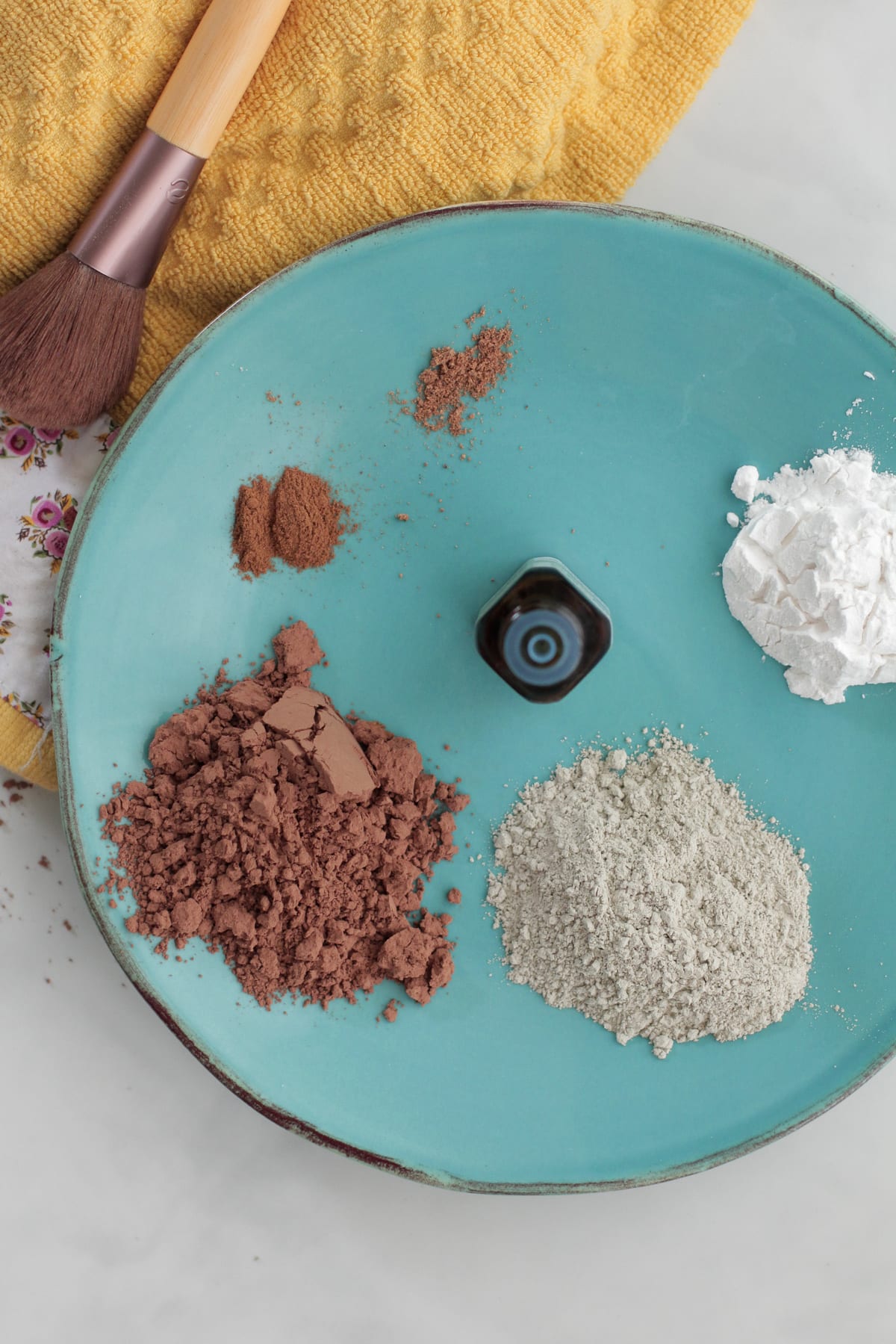
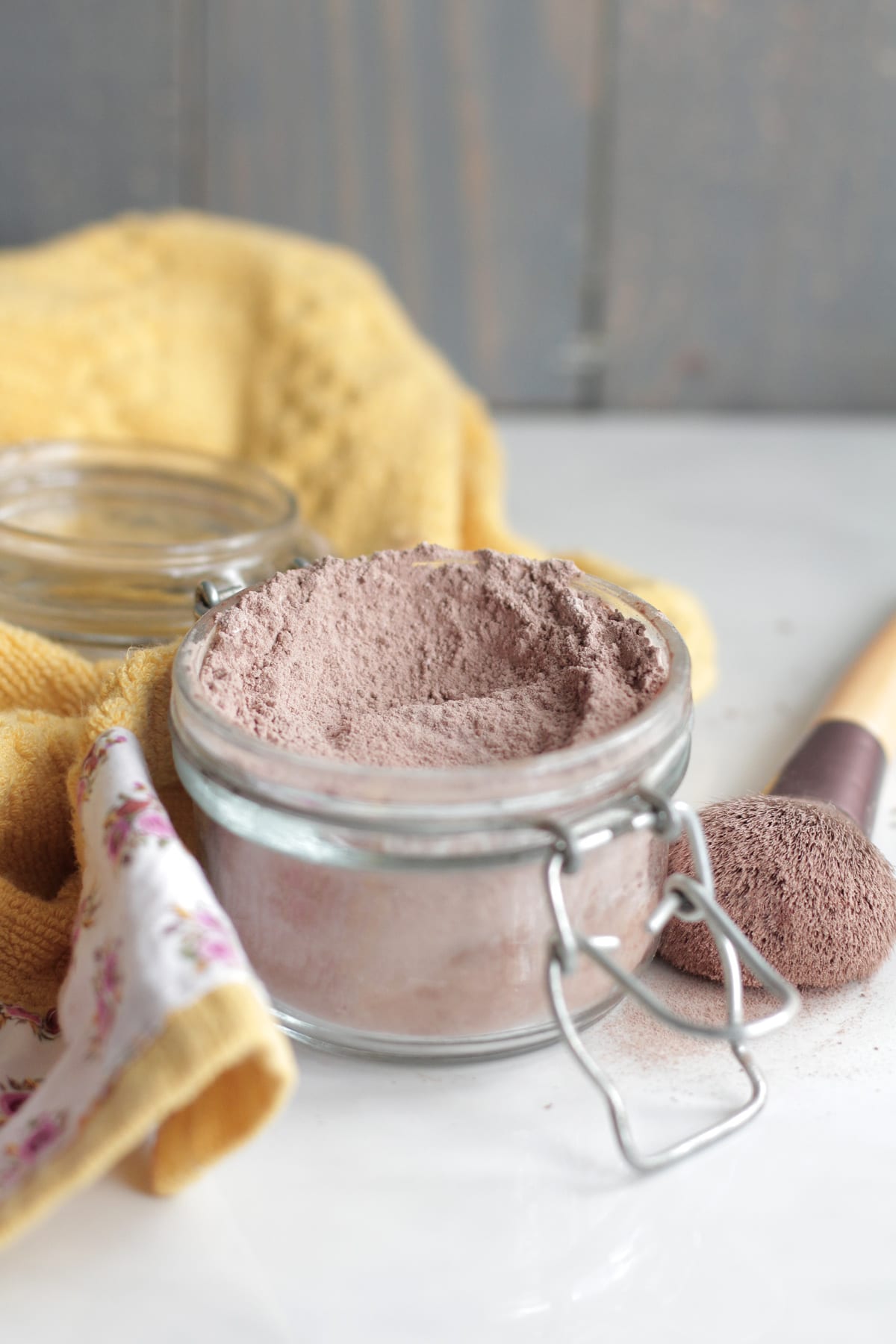
My first concoction was homemade foundation powder makeup. I have fallen in love with this homemade mineral-like foundation powder. I have tweaked it a bit over the past few months, adding a few ingredients. I love the coverage this makeup gives me without drying my skin or leaving me looking like a pan of bacon grease at the end of the day. Homemade foundation powder is made with ingredients that are be safe to eat. In fact, many of these ingredients you may already be using in your real food kitchen.
Want more good news? This makeup is super inexpensive to make.
To think I used to pay $30 for a container of toxic makeup! The initial cost of purchasing ingredients may be pricey, but these products will last through dozens of batches of homemade foundation powder makeup and can be used in the kitchen, too. The true cost is significantly less expensive than many toxic makeup options.
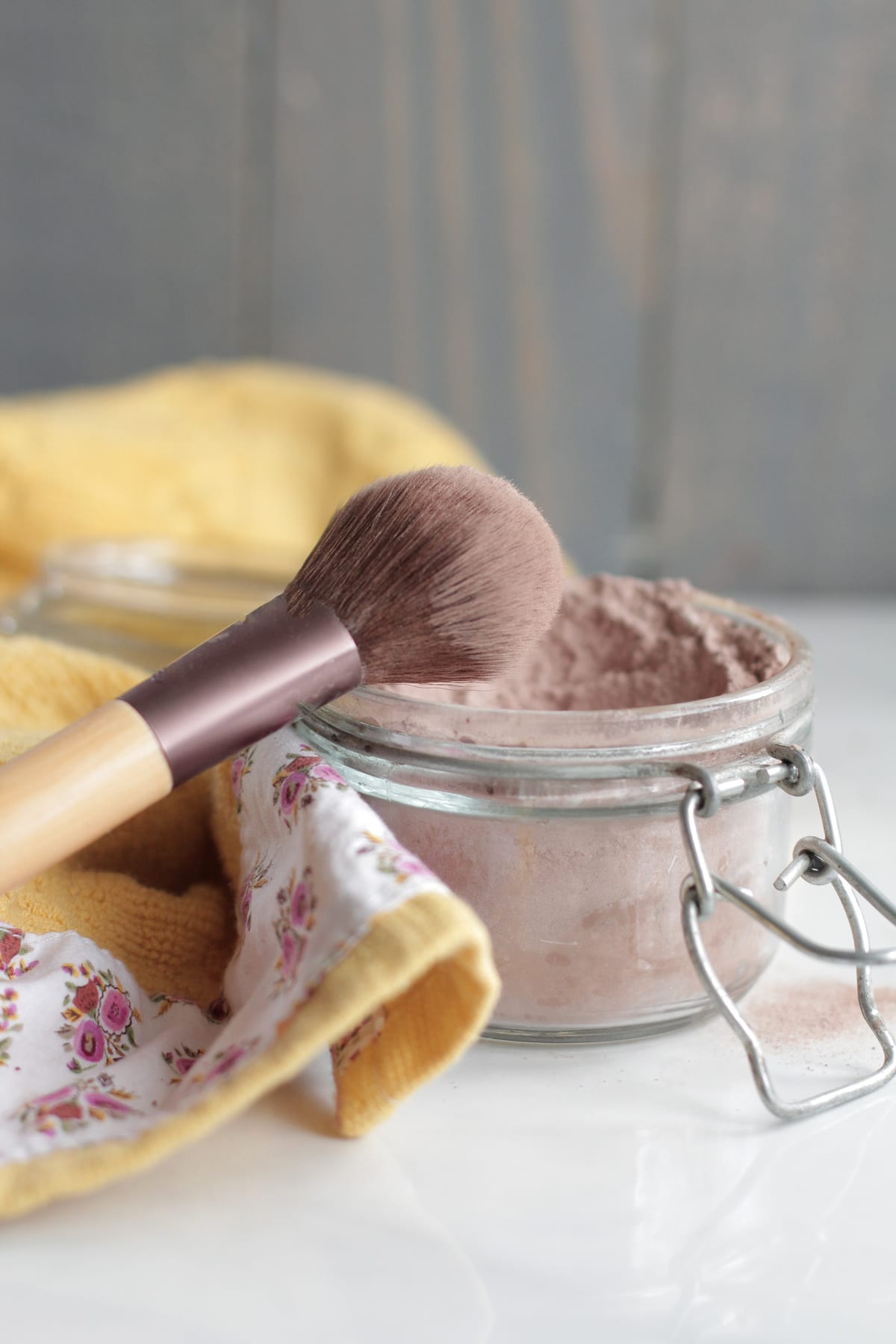
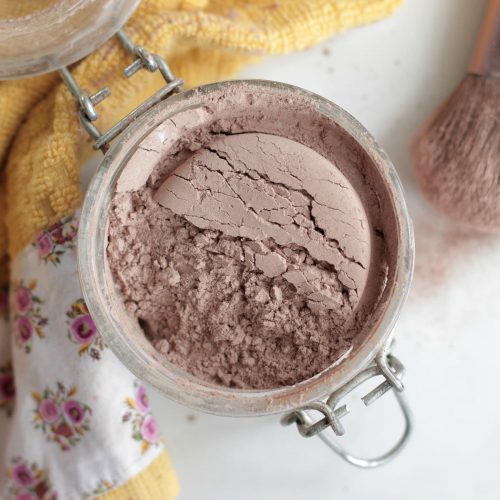
Homemade Foundation Powder
Ingredients
- 1/4 cup arrowroot flour starch similar to corn starch (a thickening agent), but without the GMOs.
- 2 TB unsweetened cocoa powder or cacao powder
- 1/2 tsp ground cinnamon
- 1/4 tsp ground ginger
- 2 tsp bentonite clay or kaolin clay (very gentle), or French green clay
Instructions
- Gather your ingredients and a non-metallic bowl (Bentonite clay should not come in contact with metal). The amount you use of each ingredient will greatly depend on your skin complexion.
- Mix all your ingredients in the bowl, starting with the arrowroot as your base. Add each ingredient, adding the cocoa powder slowly, one tablespoon at a time, until you reach the desired shade. Whisk together.
- Test the color by placing a small amount on your face (or arm) with your finger or a brush. It may take a little tweaking the first time to make the perfect shade for your complexion.
To Use:
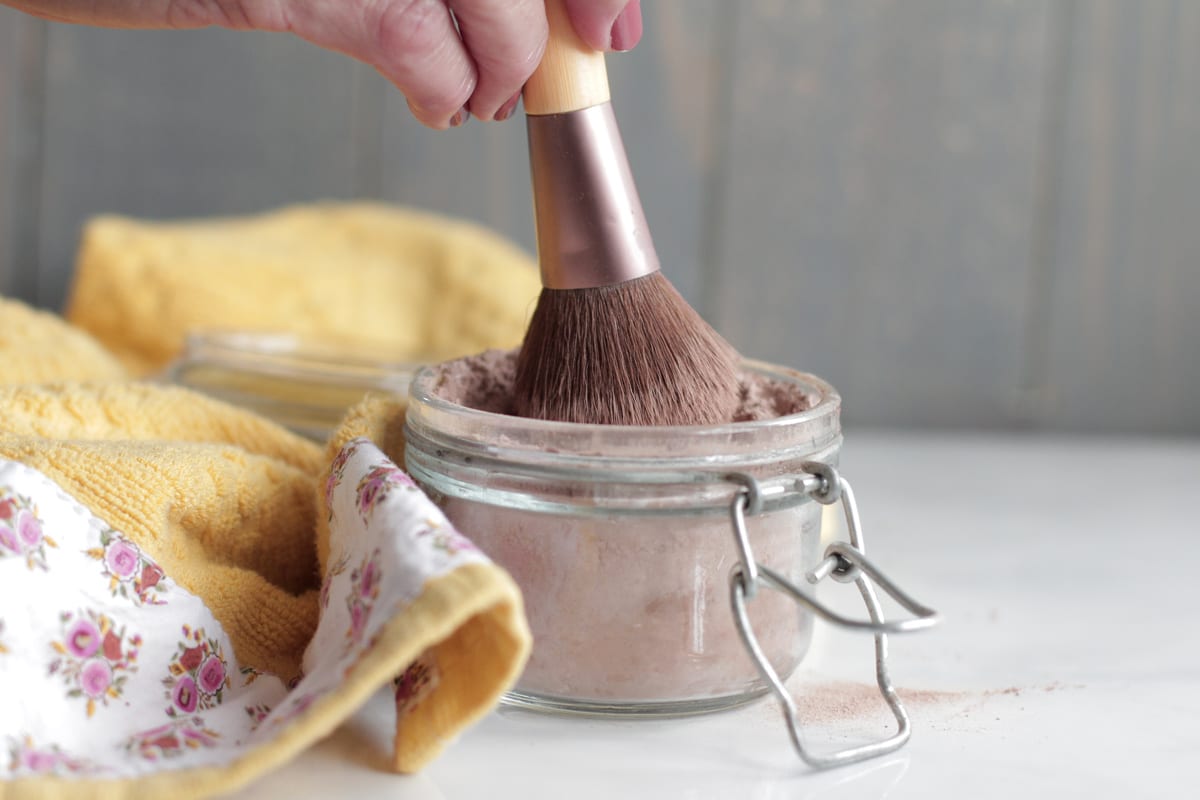
- Store your foundation powder in a small container and use a dry sponge or brush to apply. I use a liquid foundation (2017 Update: Here's a list of my favorite store-bought natural makeup products.) under this foundation powder. You can also use this foundation powder without a liquid foundation for light coverage.
Video
Notes
Store your foundation powder in a small container and use a dry sponge or brush to apply. I use a liquid foundation under this foundation powder on days when I want more coverage. You can also use this foundation powder without a liquid foundation for a lighter coverage.
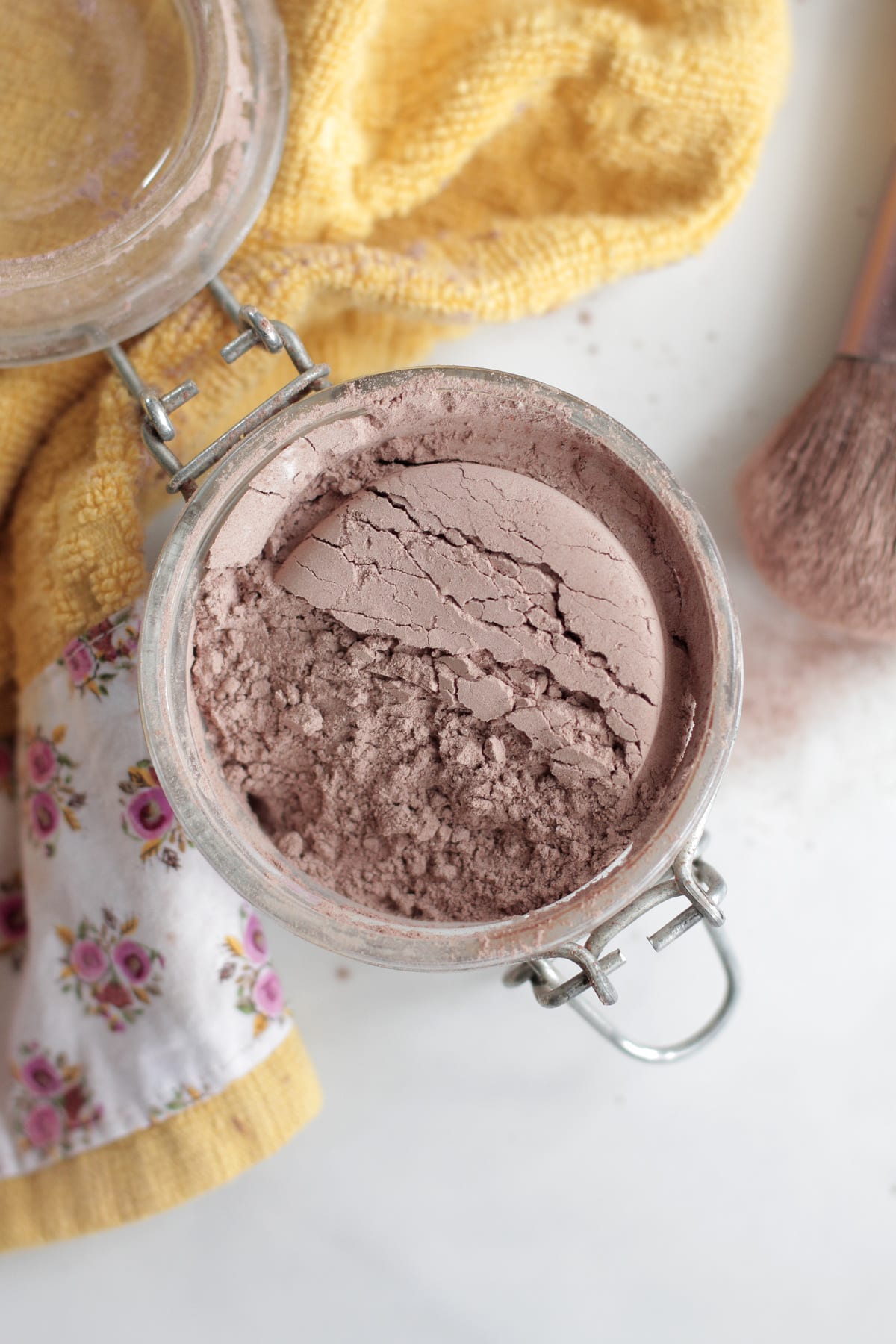
Now you’re ready to face the day, Mom.
And I think making your own homemade foundation powder makeup might even give you a bit of bragging rights at the playground today.
Q & A
Q: What kind of coverage does this provide?
A: This foundation powder will provide a light to moderate coverage. If you’re looking for heavy coverage, this powder isn’t for you, at least not as a solo makeup product. If you’re looking for heavier coverage (without the makeup looking heavy), I recommend using a liquid foundation underneath this powder foundation. My current favorite brand is Ilia. I use their True Skin Serum Foundation under my powder. I recently shared everything you’ll find in my (natural) makeup bag, here. You can also use this foundation powder without a liquid foundation for a lighter coverage.
Q: This doesn’t stick to my face. Help!
A: I guarantee I’ve made countless jars of the powder (around one jar a month), and I haven’t ever had this issue. Truthfully, I’m not sure why a few people have sticking issues. Listed above in the ingredients are the actual brands I use to make this powder. I’d recommend buying ingredients that are high quality and very fine. Since I’m not in your kitchen (or bathroom) making this with you, I simply don’t know why the powder didn’t stick. I’d recommend wiping your face with a damp cloth to see if any powder stuck to your face. It may be that you are experiencing the difference between heavy, cake-like, store-bought powder and homemade, light powder. A few other questions to ask: did you wash your face and then apply this powder? Did you moisturize before applying this powder (this is my recommendation)? What kind of application tool did you use-powder brush, finger, washcloth? (I recommend a powder brush.) It shouldn’t roll-off your face, there should be stick. You can find my video tutorial for making homemade foundation powder, here.
Q: Does the cinnamon irritate your skin?
A: No, it doesn’t. This recipe calls for very little cinnamon compared to the main ingredients. The ratio is very low. Cinnamon can cause skin irritation, if you are worried, leave it out, or test a small amount. I would not suggest applying cinnamon directly to your face without a mixture like this foundation. Cinnamon is actually beneficial for your skin and helps heal, particularly with blackheads. I feel more comfortable applying a small amount of cinnamon found in this powder than the chemicals in store-bought powder.
Q: If I don’t like it, did I waste my money?
A: No, you didn’t. I personally love this foundation powder. I literally use it daily and know many other readers and friends who do as well. I’ve bought countless foundation powders over the years and thrown many away. Talk about a waste of money! Everyone has different tastes. If you don’t like this powder, I’m not hurt, it’s just a difference in taste. Here’s the great news–when you buy powder and don’t like it at the store, you’ve lost $10-30. Ouch! When you buy the ingredients for this powder, you’ve gained kitchen and bathroom ingredients. The cocoa and arrowroot can be used in the kitchen. Arrowroot is basically corn starch without the GMOs. The clay makes a fantastic mask! Add a little with water and apply to the face. Your skin will thank you. The spices are common cooking spices.
Q: Can I skip the clay?
A: I don’t recommend skipping the clay. You can still make a great foundation without it, but if you are looking for corrective issues, like redness or mild acne to be resolved, the clay is needed. French clay or kaolin clay are also good choices.
Q: I want to turn this powder into a liquid foundation, can I just add coconut oil?
A: I’ve experimented with liquifying this recipe with zero success! Adding a liquid like coconut oil just darkens the cocoa and you end up with a nice edible chocolate. Freeze it and you’ll have a chocolate bar. I recommend purchasing a liquid foundation from a natural brand. My favorite brand is Ilia. I use their True Skin Serum Foundation under my powder.
Q: I love your recipe so much I want to feature it on my blog. Can I do that?
A. So glad you like the powder and I’m honored you’d like to feature Live Simply’s recipe on your blog. The content here at Live Simply is copyrighted so we don’t allow duplication. If you’d like to use a picture with a link back (recipe needs to stay here at Live Simply), please contact me here and we can talk. I love a good blogger shout-out and am happy to work with you so the recipe is properly featured with credit. Of course, feel free to share across social media or mention the recipe in a blog post with a link back.

Do you think I could add this to a lotion recipe to make a liquid version? or do you think it would make it clump? I really only us liquid foundation and, like you, have NO luck finding ANYTHING this good! I find powder foundations never seem to get enough coverage for me.
I just made this and followed your amounts for fair skin and it was too dark, so I doubled the arrowroot powder and it is still a bit dark and too yellow for my skin tone. I have red under tones not yellow, do you any suggestions on how I can adjust this recipe?
Hey Ashely, I would recommend adding a bit more bentonite clay. The color of the bentionite seems to help when I make my powder a bit too dark.
I made this and I love it!! As a makeup lover with super sensitive skin this is wonderful for me. I made it just a hint darker and it just warms up my pale complexion without making me clownish. I used lemon essential oil since I dont much like lavander. I think the recipe needs the little bit of oil to stick to skin. Plus the e oil is anti aging. Thanks soo much for sharing.
You’re welcome, Erin! I’m so glad you like it.
Hi! I just made this powder and wanted to ask you whether it should really be 4 tablespoons of cacao or rather 4 teaspoons? I used only 2 tablespoons … way too dark. Added more arrowroot, and still too dark. My complexion is very similar to yours. Need to toss it, unfortunately, but would definitely like to try again.
Hey Klaudia, You can also try adding more bentonite clay to the mixture to help lighten the color. In the winter you’ll probably need less cocoa powder, too.
Hi! I just found your site today by following someone’s pin on Pinterest. I, too, have super sensitive skin and was unable to wear any kind of makeup most of my life because of bad reactions.
A few years ago, I discovered loose mineral makeup and haven’t looked back. I found after using mineral makeup for a few months, my skin was in a lot better shape, and the rosacea I was developing has gone away completely. My understanding is that the titanium dioxide and zinc oxide in mineral makeup have anti-inflammatory properties, and are physical sunblocks (I can’t use sunblock either, and don’t want to because of the toxins). (You can find out more about mineral makeup at Web MD–http://www.webmd.com/beauty/makeup/the-lowdown-on-mineral-makeup?page=1.)
Unfortunately, many of the major brands of mineral makeup contain bismuth oxychloride, which supposedly only a tiny percentage of women are sensitive to. I’m one of those women–it makes my skin feel like a million tiny ants are biting me all at once. (The inexpensive Physician’s Formula loose mineral makeup does not contain bismuth oxychloride, nor does the much more expensive LA Minerals.)
I love the ingredients in your recipe on this page, but am a little reluctant to switch because I am having such great good luck with mineral makeup. Have you tried making your own mineral makeup?
Also, a comment for the woman who had trouble with the makeup she made using your recipe falling off. She might need to apply a light layer of moisturizer (homemade from your recipe, of course!) and wait a few minutes while it sinks in, then try applying the powder.
Hey Marina, Welcome to Live Simply! I haven’t tried making a mineral make-up (yet). I think you could successfully add a good zinc to this recipe and possibly create similar inflammatory properties. I’ll keep thinking about a homemade mineral-based powder :).
Marina, I just went shopping via Amazon and have a few ideas for making a mineral powder foundation (using minerals). Thanks for the inspiration. Hopefully I’ll have a new recipe to share with you soon!
I just found this website (in the middle of the night while breastfeeding!) and was so excited to try it. Got all the ingredients and just made it following your recipe since it sounds like we have similar complexions and it came out so dark. I lightened it up but it still doesn’t look right and when I tried it on my face it wouldn’t blend right. Pretty bummed 🙁
Hey Liza, Welcome! Keep playing around with the color, sometimes it takes a few tweaks to get it just right.
Hi! congratulations on this wonderful idea, I like it so much I’m going to put it into practice. I would ask if the bentonite clay can be replaced by another as the green clay or simply remove it. I have oily skin and this would help me, but in Spain it is difficult to find. And arrowroot flour, may be substituted corn starch? Thanks for conpartir your experience. Bye! Soraya
Hello, just wanted to thank you for this recipe. I’ve been playing around with basically the same ingredients for awhile as recommended by other fairly similar recipes, trying to get a good match and stick, and the addition of E oil really helps. I don’t know why I wasn’t adding it before lol. I suppose I assumed the presence of oils would turn my powder to a gooey consistency. I’ve used evening primrose oil to make a batch when I was out of E oil as well and it worked just as good for me, so for anyone having trouble with the stick-the oils are pretty important. (though I would like to say that as much as I love and use coconut oil for many things, I wouldn’t recommend it here. It’s a great cleanser and awesome for oil pulling but because of it’s ability to pull bacteria from your own sebum and into itself, and also because of it’s ability to pull metals because of it’s positive charge and molecular structure, I wouldn’t let it sit on your face as a moisturizer or in your makeup-It will also react chemically with they clay and will probably cause oxidation and discoloration.)
In regards to the covering power of this powder, I struggled with covering acne and acne scars for awhile when I started using homemade powder and even broke down and used a bit of my left over mineral fusion pallet to cover the redness at first (I do wish I could make a powder that covered like that pallet does) but I grew tired of even ‘natural’ makeup like mineral fusion coating my face with irritants that would ultimately bring the acne and irritation back, so I bit the bullet and stopped using it completely, only used my homemade concoction from then on, started taking food grade diatomaceous earth daily, and spritzing my face with colloidal silver and using masques made from bentonite clay or my kombucha scoobys. I don’t know which of those worked the magic, but my skin is pristine now. I know the role of foundation is usually to create an even skintone and cover imperfections, but it really does feel nice now to not have to worry about really using foundation for anything but occasional dark circles.
Anyway, what i’m trying to say is don’t just rely on makeup to cover up what your body is trying to tell you about being irritated and out of wack (like I did), Treat the problem from within and you will glow-naturally.
Thanks again for solving my sticking problem, great blog :]
Thanks for sharing, Kaila. I’m glad you found some helpful insights for your skin!
Hi I am having a little trouble with the powder appearing blotchy on my skin…….. And also do you have any suggestions on how to achieve a blush tint to this… my current mineral foundation is called “blush medium” just wondering any suggestions on what I could use to get that hint of rosey/blush coloring to the foundation?
Hey Erica, I usually have an issue with the powder being blotchy when the color is a bit off for my skin. When that happens I tweak the color a bit (usually making it lighter with more arrowroot) and the issue is corrected. For the blush, you could try adding dry ground hibiscus or beet powder to this recipe and then pressing the powder through a cheesecloth to remove any “grit”, creating a fine powder.
Can zinc oxide be added to this recipe to create some sun protection? and if so, how much would you add?
Hey Amy, I’ve never added zinc to this recipe, but I think it would be a nice addition. I would start with a very small amount (a couple of teaspoons) and add more (up to a couple of tablespoons) depending on how the color changes with the addition of a white powder.
I work at a reception desk so I’m obliged to wear high collar formal shirts which are mostly light coloured. Won’t this powder stain my clothes? I remember wearing something once upon a time that was constantly on my scarf and shirts.
Hey Jay, I’ve worn white collar shirts and scarves (even white scarves :)) many times with this foundation powder without any issue. Just like any loose powder, I recommend applying the foundation powder before putting your clothes on, if possible, to avoid dusting your clothes. As long as the shirt or scarf doesn’t rub your face consistently throughout the day, the foundation shouldn’t come off.
Can I add zinc oxide powder to this to add the sunscreen protection? If so, how much would you suggest?
Rebecca, I haven’t personally tried adding zinc oxide to this foundation powder recipe, but I think it would be a great addition to add sun protection. I would try a couple of tablespoons.
Hi 🙂
I noticed in the article above you’ve saI’d this has a light to medium coverage, do have any other recipes or tips for a heavier coverage please?
I have just made and tried this, I absolutely love the idea, love that it’s free of rubbish but it is too light for me. I added a little french green clay too (I have quite a red blotchy skin tone- why I like a heavier coverage- I’m too self conscious to suddenly drop to this one straight away, silly I know but we all have our quirks)
Any help or tips would be fabulous
Thank you
🙂
It smells devine too
Hey Rachel, When we go out to an event or party and I’d like more coverage, I add a liquid foundation under the powder. Between the liquid foundation and homemade powder I get a ton of coverage (heavier coverage)! My favorite brand at the moment is called, “Pacifica”, it’s a more natural brand and sold in many health stores.
I just tried this and I totally love it! This homemade beauty wonder is better than the harsh and comedogenic makeup products in the market. Thanks a lot for sharing!
I’m happy you like it, Mercedes! Enjoy.
Can I use any kind of eo? Really dislike lavender and your other suggestion of tea tree oil, again, dislike!
Hey Melinda, Yes, you can. I add the oils for their skin benefits. You can leave them out or replace them with different skin-loving oils.
Can I use good ole Hersheys cocoa powder?
I have VERY fair skin…so fair, that people think I wear white stocking with shorts! LOL!
Currebtly I use mary Kay Ivory 1 Pressed powder. I no longer wear any kind of foundation…just a quick swipe of powder to reduce shine , a splash of bluch and I’m good to go.
I used to wear the whole Mary Kay face. SO tjos is a big change for me. I am into EO’s and am trying to transition into a natural powder & blush
Im worried about the color.
What would you suggest the porprtions be (spices) to be a very light ivory?
Thanks!
Hey Betty, You can use Hershey’s cocoa powder, just make sure it’s unsweetened (I personally don’t have experience with Hershey’s, but I believe it will work well). I’m not sure what ratio you’ll need, so I’d recommend starting with the base of benonite and arrowroot and then adding the cocoa powder until you achieve the color you need. Then add the spices, just a few pinches at a time.
Update! After changing my entire skin care routine: using rosewater, argan oil, essential oils (frankincense, lavender, tea tree) and eliminating all my cosmetics, my skin has greatly improved! I tried oil cleansing and it did not work for me at all, so, I stopped and now my skin has cleared and does very well cleansing with bentonite clay/tea tree/rosewater! I can now use this powder over some concealer on my remaining acne scars. I am so surprised at the rate of healing my skin is undergoing! I use bentonite clay (alone) first, over my argan moisturized face, as a corrective powder and primer. I then spritz with rose water and apply this powder. I did find an alteration of ingredient amounts to make this a very light, yellow toned powder! I then use cocoa powder with arrowroot to bronze, BUT, you cannot set this with spray because it will blotch! But the cocoa bronzer does stay all day without it. My face has been so soft and smooth and I don’t worry about transfer at all. I am now working on a beet lip balm and stain! Thank you!
I have a question (and this is JUST a question, NOT a judgement in any way shape or form). How much research/how many scholarly articles have you read about GMOs and their effects? I’m 17 years old, and my parents are super interested in science-type stuff and subscribe to a bunch of science periodicals.
All SCHOLARLY research that I have heard of shows that GMOs are not actually harmful to humans. Additionally, there is another way of modifying organisms that is not GMO and actually seems more harmful, at least to me – radiating seeds and planting them to see what they produce, then cross-breeding them until the desired end-product is reached. This does not have to be labeled as GMO, because it ISN’T GMO.
GMO plants, like golden rice, can also actually be extremely beneficial. Golden Rice, in case you don’t know, is a GMO strain of rice that is modified to produce beta-carotene, a precursor of Vitamin A. It was intended to be used in areas of the world with major Vitamin A deficiency, which kills approximately 670,000 children every year.
We are both from a first-world country, and therefore have the resources available to NOT use GMOs. However, there are large parts of the world where people cannot afford to not use them, and our refusal to see the good that GMOs can do will, I believe, eventually harm the rest of the world.
I hope that you at least consider this point of view.
-Kathleen
Hey Kathleen, Thanks for sharing your thoughts. From all my research, I can’t endorse the way genetic modification is currently happening to products by the major King of modification. In fact, in many countries due to the lack of evidence that they are safe, GMOs are banned. There is a major difference between hybridization and genetic modification. I would also highly recommend you look into who is paying for that scholarly evidence. Also, I grew up during my teen years in West Africa (Ghana). Trust me when I say the third world doesn’t need GMO food. Did you have a question about the foundation powder?
I made this again with arrowroot, cocoa, mustard powder, bentonite clay, and lavender with some argan oil. I absolutely love it now! No it does not give coverage because it does not have pigment, but it is a wonderful setting powder over concealed spots and under eyes! I use it also to lightly set my facial oil at night and it makes my skin so so soft and does help improve it I believe! I will also use it to set my mineral foundation I will be making soon, just because I do need more coverage until my skin improves!
Wonderful, Ashlynn! I’m so glad the foundation powder is helping to improve your skin and is working so well! Thanks so much for coming back to share your results.
Could zinc oxide power be added to the mix for SPF coverage? Can’t wait to try this!
Hey Amy, Yes, zinc can definitely be added! You may need to add a bit more cocoa powder to make up for the white color.