
This sweat-absorbing homemade deodorant recipe is easy to make and will keep you smelling amazing all day! The deodorant takes under 10 minutes to make and has been a daily staple in my beauty routine for over 14 years.
Want to Save This Article?
Enter your email & I’ll send it straight to your inbox. And you’ll get new recipes & tips each week.
In 2008, I started my natural living journey by making DIY recipes, from homemade foundation powder to my favorite honey face wash to laundry detergent.
The only problem: I couldn’t find any natural deodorant brands that worked or the right ones for me.
I decided to experiment and make my own with a few natural ingredients known for nourishing the skin and keeping odors away.
The recipe I’m sharing today is the best recipe and the one I still turn to today when I want to make an easy homemade deodorant.
You may also like to check out my natural deodorant guide with my top store-bought deodorant recommendations (there are now some great natural brands).
Homemade Deodorant Benefits
- No Harmful Chemicals – Using a non-toxic deodorant is one of the best swaps you can make. Many commercial deodorants contain toxic ingredients like parabens, aluminum, dye, and triclosan. I highly recommend googling these ingredients to learn more about their effects.
- Simple Ingredients – My natural homemade deodorant uses shea butter, coconut oil, beeswax pellets, arrowroot starch (or cornstarch), and an optional essential oil for scent.
- Odor Control – Coconut oil is known for its anti-bacterial properties, making it a great option to control body odor (source). Baking soda is used for its deodorizing properties. An essential oil may also be added to help keep odors at bay.
- 12-Month Shelf Life – This deodorant will last just as long as regular deodorant, up to 12 months.
Before You Get Started: What You’ll Need
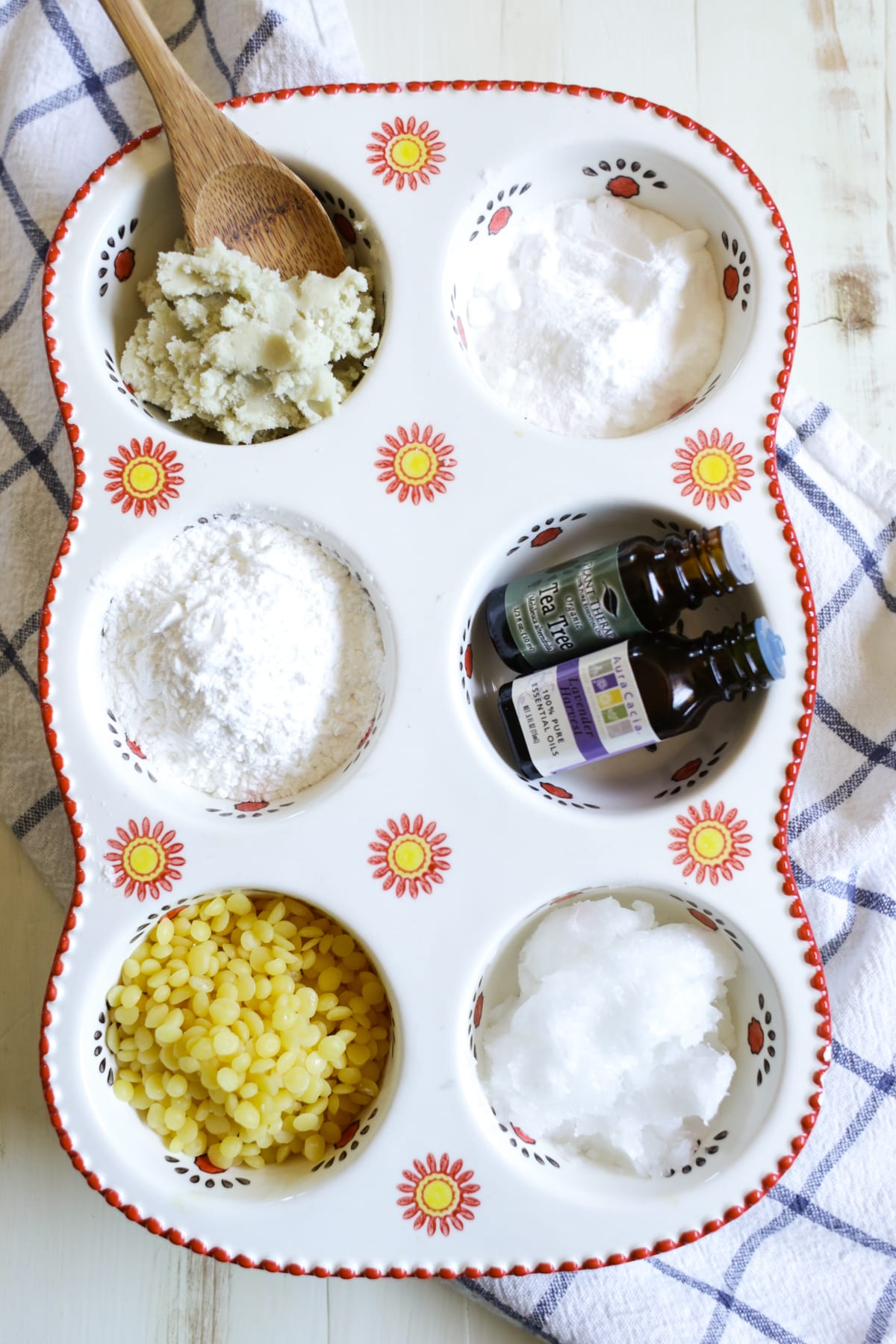
Ingredients
- 1/4 cup refined or unrefined shea butter – A natural fat from the nuts of the shea tree. It’s safe for all skin types, won’t clog pores, moisturizes, won’t make your skin oily after application, and has anti-bacterial and anti-fungal properties (source) and anti-inflammatory properties. Unrefined shea butter has a strong natural scent. Refined shea butter is odorless. Both are great options.
- 2 tablespoons virgin coconut oil – Coconut oil contains fatty acids, like lauric acid, which help with odor control.
- 3 tablespoons beeswax pellets – the glue that holds the ingredients together and creates a solid product. The wax also provides a protective moisture barrier to the skin and may also help to soothe the skin.
- 3 tablespoons baking soda – absorbs sweat and helps with odor control. Baking soda also makes a great body exfoliator and natural household cleaner. Baking soda can irritate, so reduce it to 1.5-2 tablespoons if you have sensitive skin.
- 2 tablespoons arrowroot flour starch or corn starch- A white powder that thickens sauces and makes gluten-free chocolate chip cookies. It’s highly absorbent, making it ideal for absorbing sweat without clogging pores.
- 15 drops of essential oil (optional) – Tea tree essential and lavender essential oil are my favorite options. Tea tree essential oil is anti-bacterial and fights odor. Use your favorite essential oil.
Equipment
- Use a small sauce pan to create a double boiler by adding water to the saucepan and placing a heat-safe bowl on top. This method protects the fragile ingredients from burning.
- Use a small or medium heat-safe bowl (glass or metal) to create a double boiler and melt the ingredients. I recommend keeping a bowl just for DIY projects. Clean with soap and water after use.
- 4-ounce storage jar or two 2.5-ounce empty deodorant sticks/tubes
How to Make Your Own Natural Deodorant: Recipe Steps
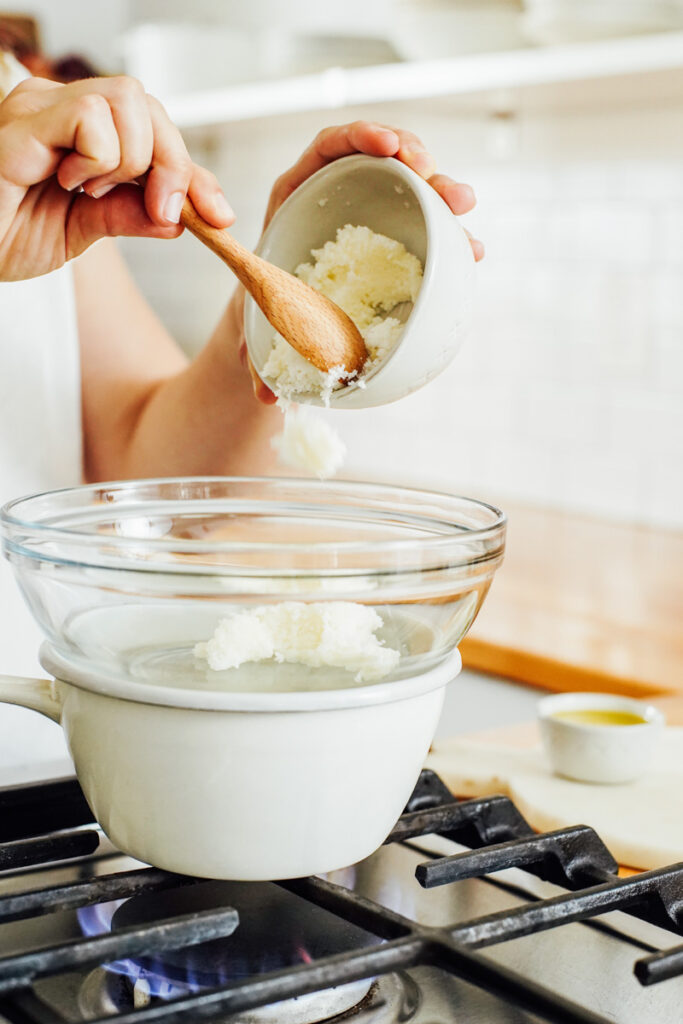
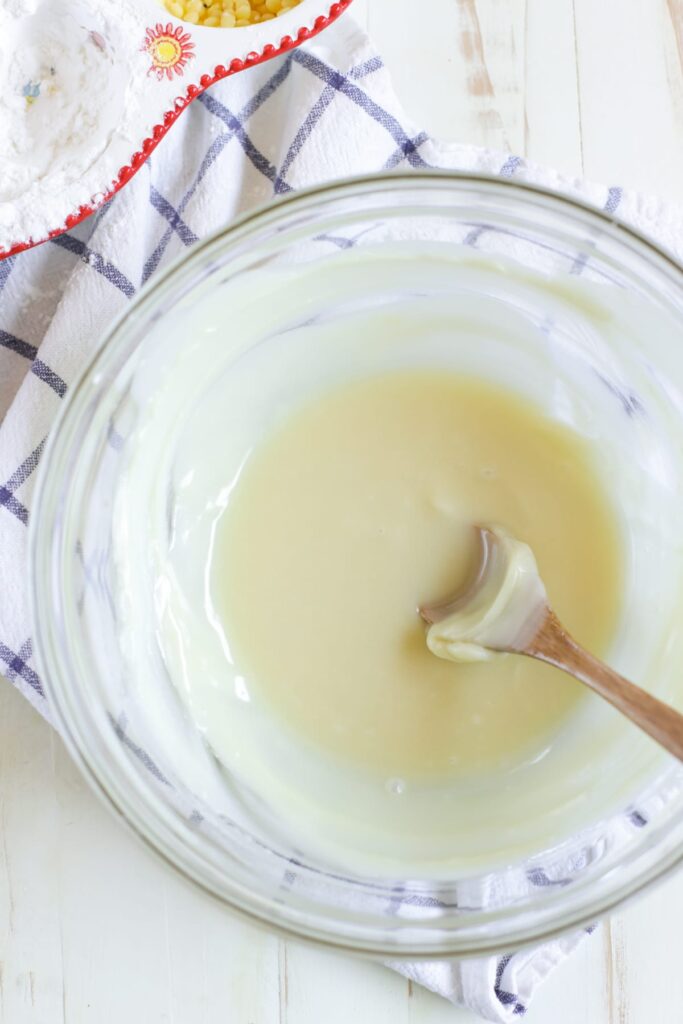
- Step 1 Combine Shea Butter & Coconut Oil – Place the shea butter and coconut oil in a small or medium heat-safe bowl or tall measuring cup. Place the glass bowl on top (or sitting inside) of a saucepan partially filled with water (about 1/4 way full) over medium heat (this creates a double boiler to protect the fragile ingredients from burning). Melt the ingredients (approximately 1-2 minutes).
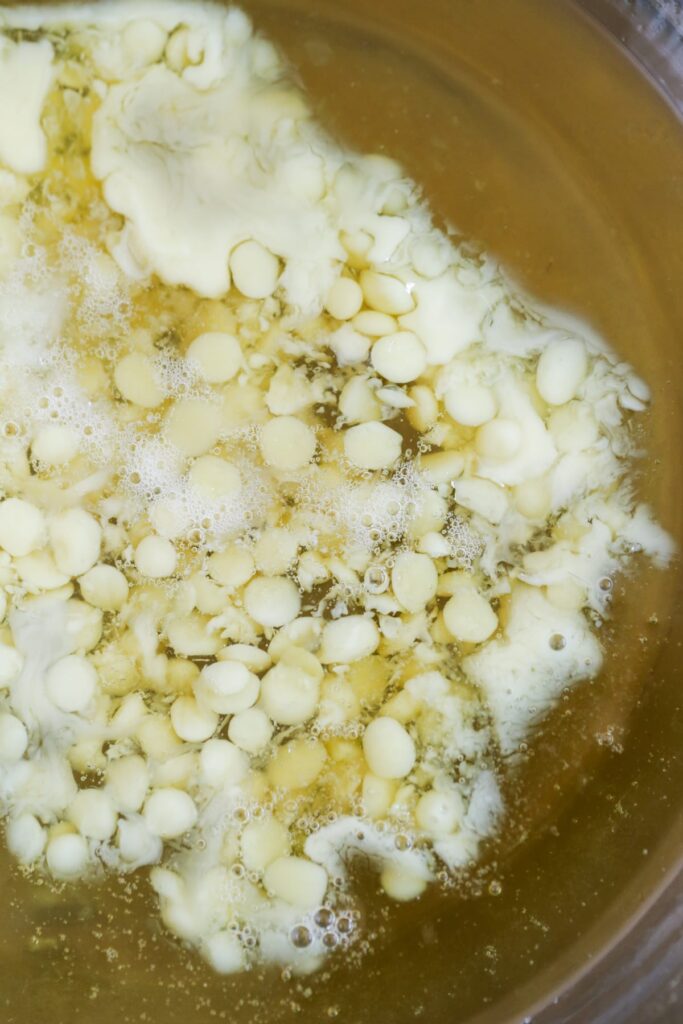
- Step 2 Add Beeswax – Once melted, add the the beeswax and stir frequently until all the ingredients are liquid. Remove the bowl from the heat.
- Step 3 Add Baking Soda & Arrowroot Starch – Quickly add the baking soda and arrowroot. Stir the baking soda and arrowroot into the liquid ingredients.
- Step 4 Add Essential Oils – If using, add the essential oils, stirring to combine all the ingredients.
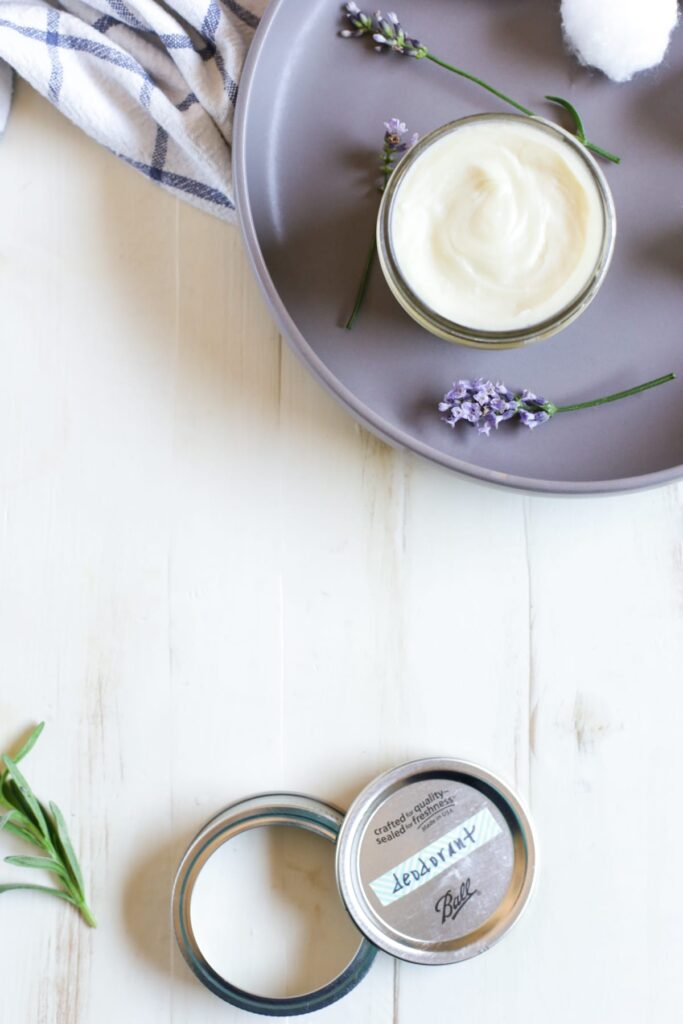
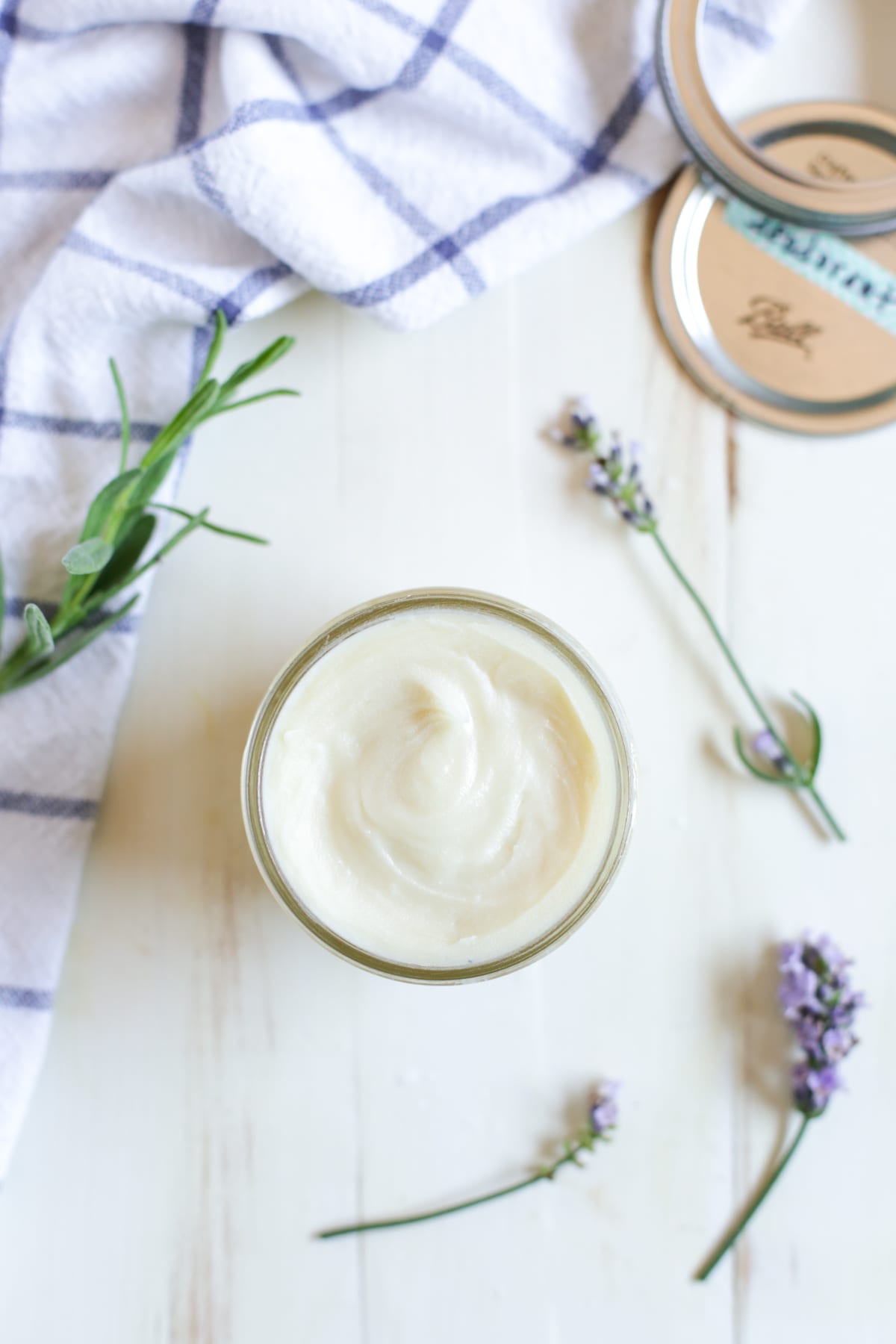
- Step 5 Pour into a Container – Pour the deodorant into a 4-ounce Mason jar or two 2.5-ounce deodorant tubes. The deodorant will solidify as it cools.
Once the deodorant is fully cool, it’s ready to use.
How to Use This Deodorant
- Use this homemade recipe just like store-bought deodorants.
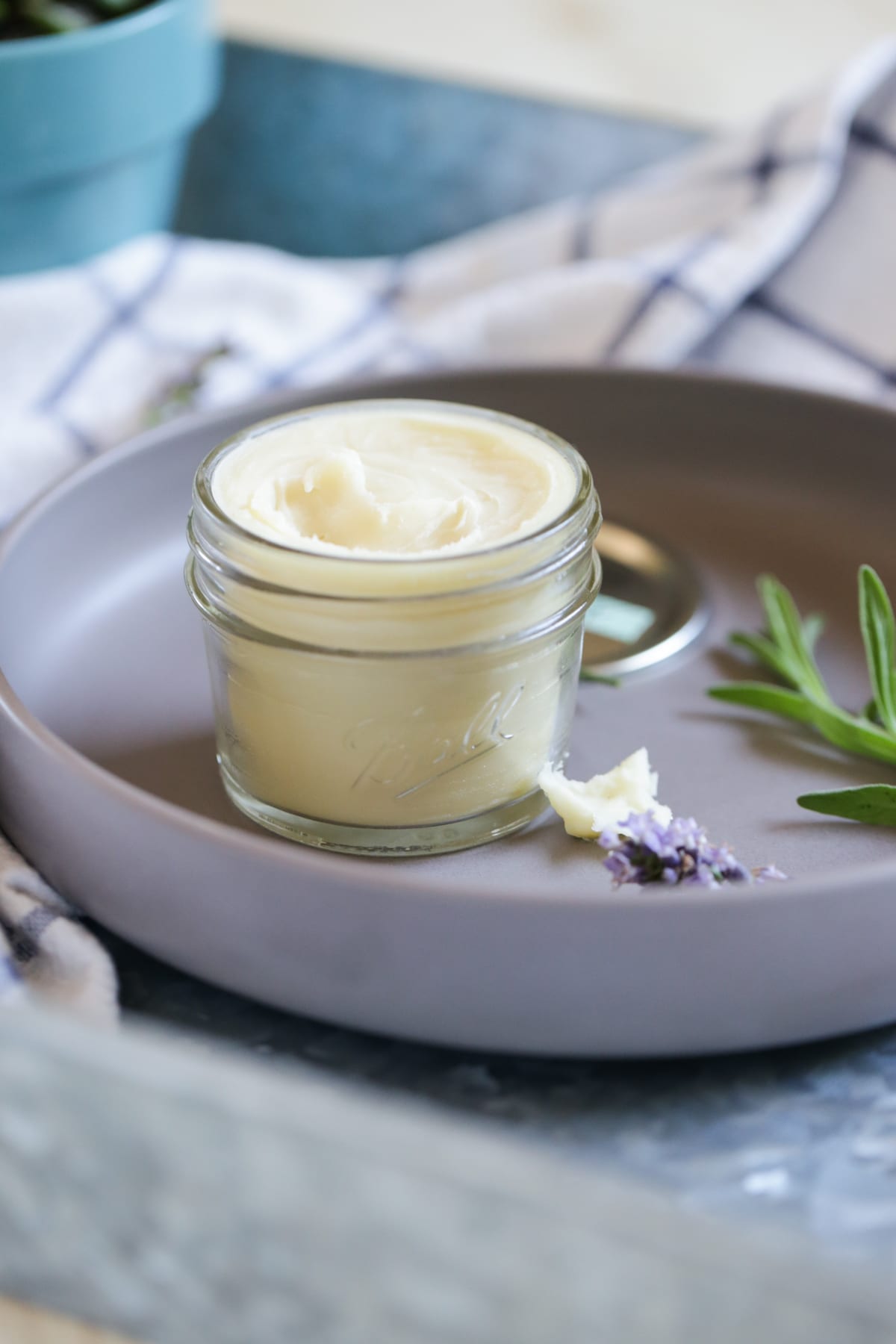
- Deodorant in a Jar – Remove lid, scoop a small amount (dime-size) from the jar (using your finger) and apply it under the arms.
- Deodorant in a Stick/Tube – Remove lid and roll under the arms.
- Reapply the deodorant throughout the day, as needed.
Substitutions & Variations
- Sweet Almond Oil or Jojoba Oil – Instead of coconut oil, sweet almond or jojoba oil are lightweight oils that work well.
- Mango Butter – Some people are allergic to shea butter. In this case, mango butter may be used instead. Cocoa butter is another option; however, using this ingredient will result in a hard final product that may be difficult to apply.
- Tapioca Starch – Tapioca starch may be used instead of cornstarch or arrowroot starch.
- Vegan Deodorant – To make this basic recipe vegan, you must substitute beeswax for plant-based wax, like soy wax, carnauba wax, or candelilla.
How to Prevent a Rash From Natural Deodorant
If you experience a rash or discomfort from this recipe or any natural deodorant, here are a few tips to try.
- Don’t Use After Shaving – It’s best to shave several hours before using this deodorant, as the baking soda may irritate freshly shaven skin. I recommend shaving at night and applying the deodorant in the morning.
- Avoid Essential Oils – Essential oils can be irritating for some people. Some oils, like cinnamon, may also have a burning sensation on the skin, as they’re known as “hot oils.”
- Use Less Baking Soda – Baking soda can irritate; using less may help if you have sensitive skin.
Best Essential Oils for A Fresh Scent
Here are a few of my favorite essential oils for a great-smelling deodorant. Use one oil or a combo of a couple of different oils.
- tea tree essential oil
- lavender essential oil
- peppermint essential oil
- lemon essential oil
- patchouli essential oil
- grapefruit essential oil
- bergamot essential oil
- geranium essential oil
- Plant Therapy Deodorizing essential oil blend
How to Store & Shelf Life
- Store up to 12 months at room temperature.
FAQs
- Is this recipe an antiperspirant, too? No, this recipe is for deodorant, the better option for odor control and absorbing sweat. It’s best to avoid antiperspirants as sweating (through your sweat glands) is the body’s natural way of regulating temperature.
- Can I make homemade deodorant without baking soda? Yes, you can; however, the deodorant will be less effective. Use more starch to make up for the lack of baking soda.
- Is this deodorant okay for daily use? Yes, I use deodorant daily.
- Do you have an excellent store-bought deodorant recommendation? I use the Native brand (easily found in many stores). Here’s a list of my favorite natural deodorants.
- Can I skip the beeswax? Yes, you can. If you skip the beeswax, the deodorant won’t be hard enough for a deodorant stick/tube. It will be more of a soft paste and should be stored in a jar. There’s no need to melt the ingredients if you choose to skip the beeswax, as long as the oil and shea butter are soft enough to stir with a fork.
More Natural Beauty Products
- Lip Balm – Naturally moisturize your lips with this 3-ingredient shea butter lip balm recipe.
- Body Butter – Use shea butter to make a luxurious homemade body butter to moisturize the whole body.
- Honey Face Wash – Use honey and castile soap to natually clean your face and remove makeup.
- Best Natural Face Moisturizers – The best natural moisturizers for all skin types and budgets.
- Best Store-Bought Natural Deodorant – Don’t want to DIY? I’ve gathered my favorite store-bought deodorant brands.
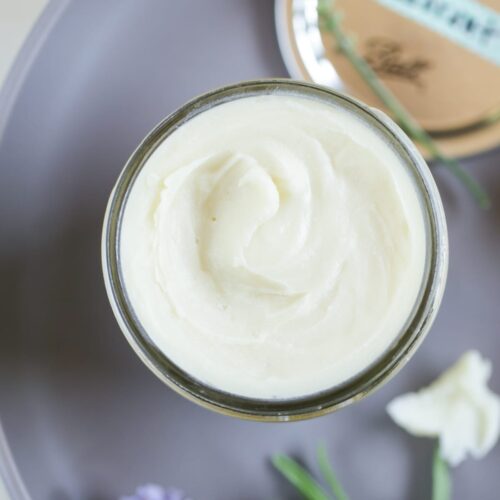
DIY Homemade Deodorant with Lavender
Equipment
- 1 small-medium saucepan to make a double boiler and melt the ingredients
- 1 small-medium bowl to make a double boiler and melt the ingredients
- 1 4-ounce mason jar with lid or 2 2.5-ounce deodorant tubes for storing the deodorant
Ingredients
- 1/4 cup shea butter refined or unrefined
- 2 TB virgin coconut oil
- 3 TB beeswax pellets
- 3 TB baking soda
- 2 TB arrowroot flour starch or cornstarch or tapioca starch
- 15 drops favorite essential oil see notes below for recommendations
Instructions
- Combine Shea Butter & Coconut Oil – Place the shea butter and coconut oil in a small or medium heat-safe bowl or tall measuring cup. Place the glass bowl on top (or sitting inside) of a saucepan partially filled with water (about 1/4 way full) over medium heat (this creates a double boiler to protect the fragile ingredients from burning). Melt the ingredients (approximately 1-2 minutes).
- Add Beeswax – Once melted, add the the beeswax and stir frequently until all the ingredients are liquid. Remove the bowl from the heat.
- Add Baking Soda & Arrowroot Starch – Quickly add the baking soda and arrowroot. Stir the baking soda and arrowroot into the liquid ingredients.
- Add Essential Oils – If using, add the essential oils, stirring to combine all the ingredients.
- Step 5 Pour into a Container – Pour the deodorant into a 4-ounce Mason jar or two 2.5-ounce deodorant tubes. The deodorant will solidify as it cools.
- Once fully cool, the deodorant is ready to use.
Storage & Shelf Life:
- Store at room temperature for up to 12 months. If the deodorant is stored in a jar, seal with a lid after each use.
How to Use:
- Either scoop a small amount from the jar (using your finger) and apply it under the arms. Or, if using deodorant tubes, roll under the arms. Reapply the deodorant throughout the day, as needed. Do not use after shaving as the baking soda will burn.
Notes
- Unrefined Shea Butter – This type of shea butter contains all its natural nutrients. It has a strong, earthy scent and cream color. Some people don’t like the scent.
- Refined Shea Butter – Due to the refining process, some of its natural nutrients are removed, making it odorless and white.
Natural Body-Care Simplified
Learn how to make your own body and beauty products with simple ingredients.

Hi Kristin!
Thank you for sharing all your DIY discoveries! I just started with my family in this journey and I’m hoping that will completely be able to make our own cosmetic and home products;-) BTW, i just finished making this recipe but, ( i know this might sound a bit funny! ) how do you clean your utensils from all the wax? It took me almost an hour just to clean everything. Do you or does anyone have any technique in making up the clean up quicker?….help! Thanks!
Hey April, I’m so glad you’re enjoying the DIYs. Yes, cleaning up after making some DIYs is a pain! I’ve found that pouring very hot/boiling water into the containers and using a detergent, like Sal Suds, is the best formula for quickly removing the leftover gunk. The hot water weakens the wax buildup, and the detergent is powerful enough to clean the jars. I also use special tools now, just for DIYing, so I don’t have to worry about the jars or spoons having any leftover residue and then cooking food or something edible.
Thanks for your tips Kristin!
I prefer the primal stick to the paste. What would I do differently when making it??
Hey Sherrie, You may need to increase the beeswax a bit. I’m not sure by how much, but it should only be a couple of teaspoons (that’s my guess).
One more question, has anyone ever put vanilla EO in place of the tea tree EO? I think the lavender and a hit of vanilla would smell awesom.
Hey Nicole, I haven’t tried adding vanilla EO, but I bet it would smell wonderful.
Hi there,
I made this a couple nights ago (with orange and vanilla essential oils) and by the end of the day I smelled terrible! But when I use just coconut oil and baking soda with some essential oil, I smell fine by the end of the day – I just get really sweaty, more so than I do with this. It didn’t make sense why I should smell so bad with this, because the orange cream sickle PPP works great for me but I had to quit because the baking soda was inflaming my armpits. I checked out the deodorant I made, and I noticed it looked as though the shea butter and beeswax had mostly risen to the top, whereas the coconut oil and baking soda had mostly sunk to the bottom. Since I put part of the batch I made into a small plastic container, I popped that one out and flipped it over, and I’m trying it out today to see if that side of it works better. I think it will because I’ve only noticed a bad smell from homemade deodorant when I have too much shea butter in it. So my question is, how do you keep it from separating when it’s cooling? I stirred it up really well when I finished making it and popped it in the fridge to set, but it separated while it was in the fridge. Should I just try re-melting it and stirring it up again? I want this to work so badly!
Hey Shaina, I personally haven’t had any issues with the deodorant separating yet at room temperature. I wonder if the issue is due to the extreme temperature variation in the environment–from really hot in the pot to really cold in the fridge. I would definitely go with remelting the deodorant, and this time allowing it to cool at room temperature.
Hi Kristin!
I am thrilled I came across your blog! I recently decided that enough was enough with so many chemicals in every beauty product I used so I decided to find more natural alternatives. I’ve been using Stick Up 2 oz lavender from Primal Life Organic deodorant but my skin started to get really irritated (from the baking soda I am guessing). I want to substitute the baking soda in your recipe with just the arrowroot powder and was wondering how much I should increase the table spoons by? Please take into consideration that I am a fellow Floridian who is also concerned about body odor ;). I can’t wait to try this recipe, I have never attempted concocting anything like this before but I guess that even the most skilled DIYer had a first time 🙂 Thank you!
Hey Rosangel, This is a great DIY to make for a beginning DIYer! I hope you love it. I would stick with the same amount of arrowroot as the baking soda, and see how that works out for you.
Hi Kristin! Here’s another shea butter question! I have all the ingredients to make the deodorant except for shea butter. Is it ok if I leave it out? Thanks for sharing your recipe!
Hey Susie, The shea butter is really important. You could try subbing more coconut oil in place of the shea butter. You may also need to add more beeswax. Let me know how it goes!
So I substituted coconut oil in place of the shea butter but it was a bit too hard and sticky for my liking (probably because of the beeswax) so I added a little more coconut oil, baking soda, and arrowroot powder and it was perfect! I was so excited to start using it this morning! I think the real test will be once the summer heat arrives, but so far so good! Thanks again! I’m so glad I found your blog! Can’t wait to make more of your recipes!
hi Kristin
So glad that i came across your article.
I was wondering, if i go for cocoa butter instead of shea butter, what should i add to make the consistency the same as when you use shea butter?
Thanks!
Hey Natalia, You may want to reduce the beeswax a bit, but other than that, the consistency should be great :). Let me know how it goes!
The recipe sounds wonderful, and it can’t wait to try it. I have all the ingredients but Shea butter. Do you think I could substitute cocoa butter for the Shea?
Hey Sheri, I believe so. The cocoa butter may result in a harder deodorant.
I love this consistency! For those of you who want a nice, androgynous scent, I have found that rosemary oil is wonderful and it is also supposed to have similar antifungal and antibacterial properties to tea tree oil. 🙂
Rosemary essential oil is so lovely. Great tip, Jade. Enjoy!!
I’ve been wanting to make my own deodorant after trying every natural product available and really only finding one (expensive one!) that works. This works just as well and makes a pretty large quantity! The only problem I’m having is that the lavender scent from the EO didn’t stick around long – either that, of I’ve gone nose blind to it! But I know that is to be expected with EO. Thank you for this “recipe”!
I’m very excited to try out this homemade deodorant! I was wondering if you can substitute other essential oils in place of the lavender? And which ones would you recommend?
Hey Brianna, I think any of these oils would be great: bergamot, geranium, sandalwood, tea tree, or patchouli.
Hi Kristin! I’m so glad I found Live Simply 🙂 I’m excited to try this and all your other recipes 🙂
Do you know what the shelf-life is when unopened and also, once used? How can you tell if it’s gone bad/expired?
Hey Kathy, I’m so glad you found Live Simply, too! Welcome!
From my experience, this deodorant should last about 6 months, possibly even longer. Generally, if you see mold, mildew, or an unwelcomed odor, it’s time to toss the homemade product. Using clean tools, hands, and not adding water to the product will help protect the deodorant.
Is there a way to make the deodorant softer? I bought empty deodorant containers and made this deodorant and its really difficult to apply. Even if I try with my fingers it is pretty hard. I love this recipe and once its on its great but applying it is making my armpits chafe. I followed the recipe but I’m wondering if there is a way to make it softer. Maybe less beeswax? Just curious what you recommend. Thanks!
Hey Jaclynn, Yep, you’ll just want to use less beeswax, or omit the beeswax all together.
Great recipe. I have been using it for months. It does not stain clothes, even whites, and it has been really efficient during warmer months in Greece . I had to put it in the fridge thought and I had increased the amount of beeswax, because I didn’t want it very soft. Now during winter, I am using your quantities. Thanks a lot for a great recipe!!
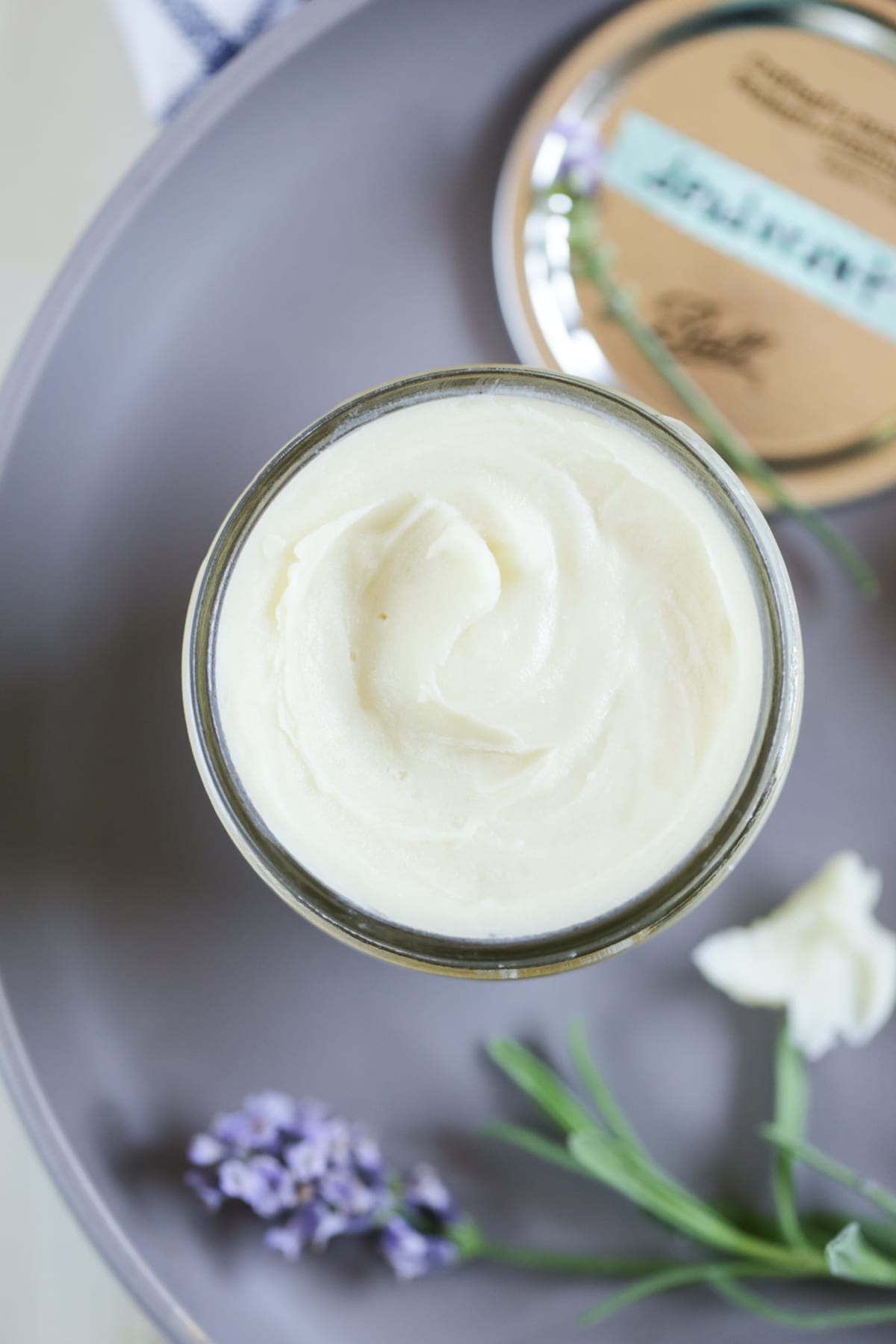
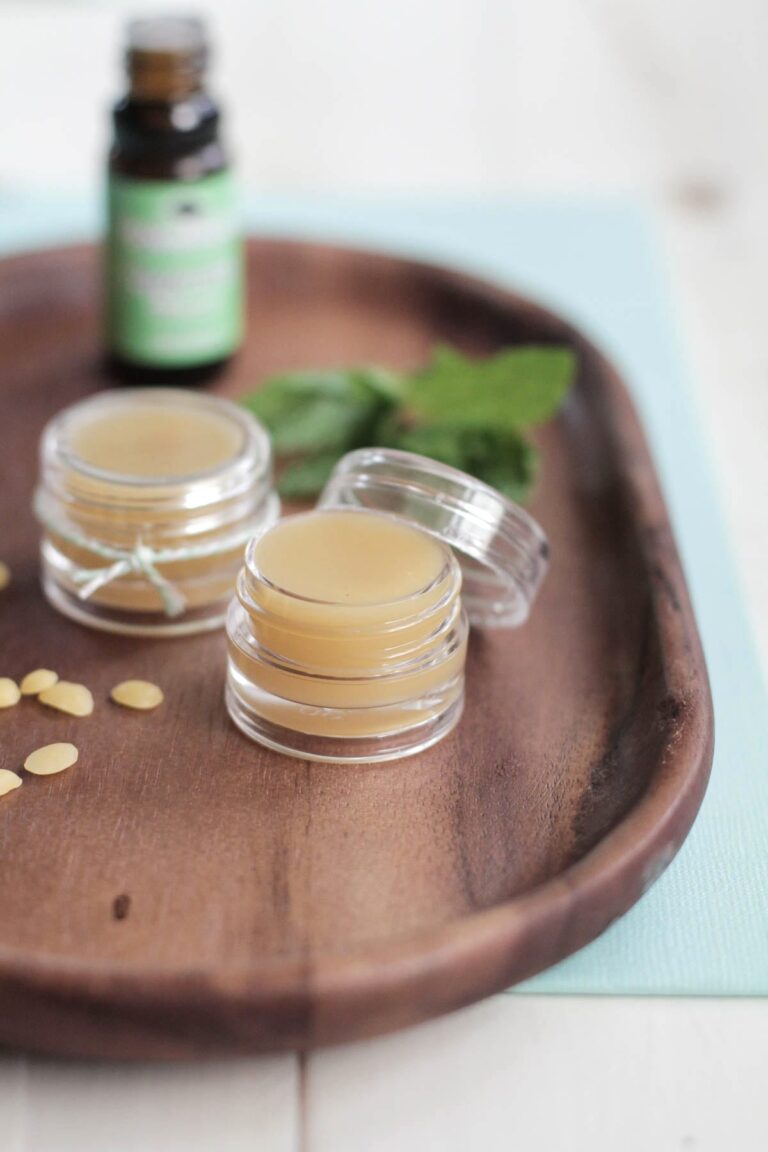
This was wonderful to find and I look forward to trying it out. I am a bit confused. The first photo shows it in a jar, but if it is a hard consistency, how can you use it in a jar?
Thank you
Hey Catria, I scoop it out with my finger. You’re welcome to decrease the beeswax or use a deodorant container :).
I began using plain baking soda as a deodorant in the sixties. Rose hip syrup kept colds at bay and putting clove bud on a sore tooth, eased the pain. I was thrilled when I came across your blog! In the months since, I have made the body wash, which I also use as a shampoo! The body wash is great! Then came the face wipes! Now today I mixed up the floor cleaner! Can’t wait to use it!
I have always thought there was a simpler way to clean, but never had the time to think it through. Thank you foe doing the thinking.
Fran Wallace
Hagerstown, Md
fr
Hey Frances, That’s awesome about the deodorant! I’m so glad you’re enjoying Live Simply as a resource for natural living. Thank you for sharing!
Hi Kristin
Does this melt during hot weather? Is it OK to put on an old deodorant container?
Thx!
Hey Monica, I live in Florida and use this deodorant most of the time (I still go back to Primal Pit Paste if I don’t have time to make homemade deodorant). I haven’t had any issues with this melting in Florida’s hot weather. I think you can use an old deodorant container.
Ok, thank you. I put it in a small mason jar and I guess I just have a hard time getting it out. I will try heating it back up and the coconut oil.
Let know how it goes, Yvonne. In jar form (the way I use it, too), you definitely need to scoop it out (it’s harder than a soft lotion)–I hope the coconut oil softens the deodorant for you!
Hey Kristen, love your site. Use a lot of your homemade recipes. I tried the deodorant and it’s real hard. I don’t if I did something wrong or what. Not sure how to get it to a useable state. I hope it isn’t ruined. Any suggestions? Thanks.
Yvonne
Hey Yvonne, Thank you. It’s so great to hear you’re enjoying the recipes!
The deodorant should be hard, but also spread well on the skin. If you’d like a softer deo, my initial thought is you could try melting it back down and add a couple of tablespoons of coconut oil. If the deodorant jar is large enough you could leave the deodorant in the jar and try heating it in a double boiler, then adding the oil directly in the jar (and deodorant) and stirring. If not, you’d need to scoop the deodorant out and into a double boiler again. Hopefully once the deodorant is cool, it will have a softer consistency. I’ve never tried this, but I think it’s the only way to achieve a softer consistency at this point.
Thanks for the recipe! I’ve tried a similar one but it turned out a bit too soft for my liking. I think the beeswax here might do the trick, though. For lack of a deodorant tube, I think a small batch in a lip balm tube will be a good experiment. Very travel-size.
And since most of your readers are…earthy types, I’ll be the one to ask: how does this hold up for those of us who don’t shave? (I’m female, but I suppose if men have had good results, that’s promising too.)
Hey Neely, I think you’ll like the consistency of this deodorant–the beeswax helps a lot! I’m not sure about the shaving question. Maybe a reader will be able to comment with a helpful answer.