
Want to make an all-natural laundry detergent as effective as commercial detergent? Your search is over. Here’s how to make the best DIY homemade laundry detergent. And all you need is 3 key ingredients and 15 minutes.
Want to Save This Article?
Enter your email & I’ll send it straight to your inbox. And you’ll get new recipes & tips each week.
11 years ago, I started making the switch to natural cleaning products, including laundry detergent!
At that time, the majority of recipes online called for a bar of fels naptha, washing soda, and Borax. But there was one problem: our clothes came out with chalky white spots.
So I made a simple swap: liquid Dr. Bronner’s castile soap instead of the fels naptha soap bar. With this one change, the detergent worked just as good as Tide.
This recipe is non-toxic, fights stains better than commercial detergent, and is cheap! I’ve been making this liquid laundry detergent for over 11 years (originally created in 2014) because of its extraordinary cleaning power.
Homemade Laundry Detergent Benefits
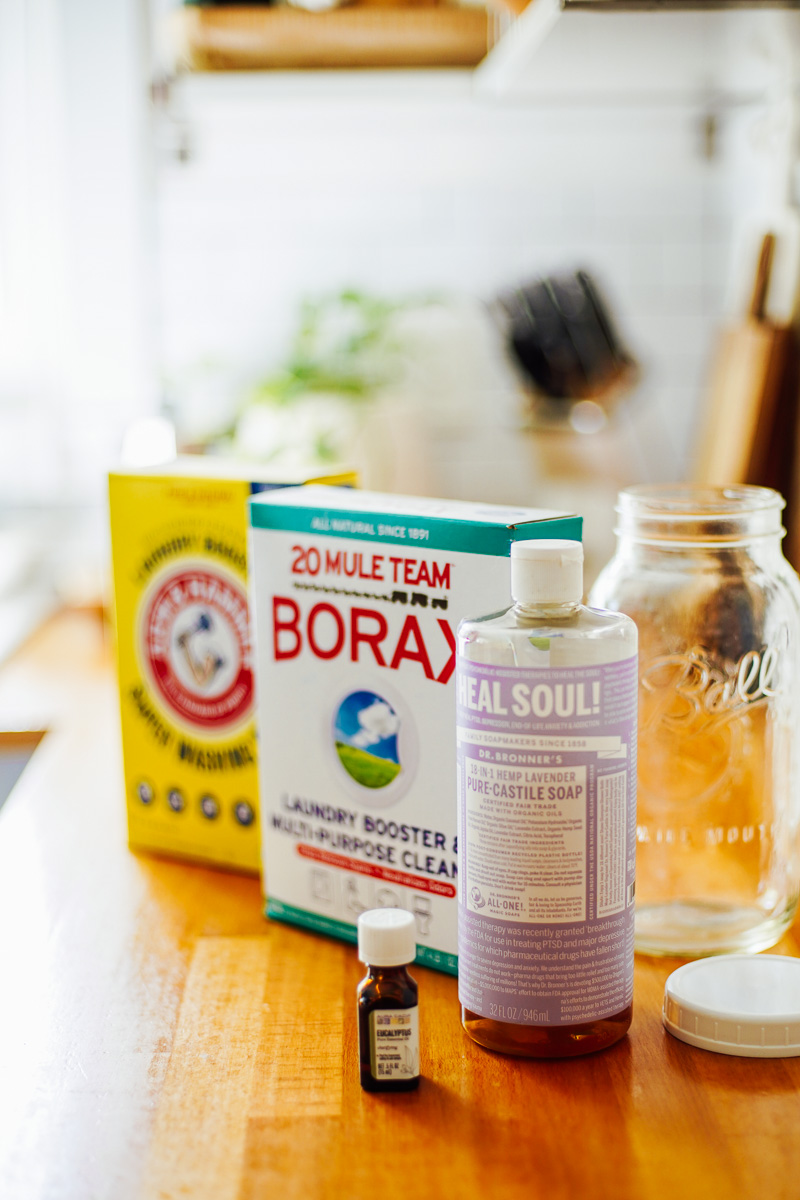
Before You Get Started: What You’ll Need
Ingredients
This recipe, made with simple ingredients, makes 1 gallon of homemade soap.
- 1 cup borax – freshens, deodorizes, and lifts dirt and stains
- 1 cup washing soda – freshens and deodorizes
- 1 cup liquid castile soap or Sal Suds – the main cleaning agent, lifts dirt and cleans
- 50 drops essential oil – optional for a scent
- 15 cups water – distilled water, found in any grocery store, is best as it doesn’t contain containments found in tap or filtered water
Equipment
- Large saucepan or Dutch oven – enough to hold 1 gallon of liquid, 15 cups
- Storage Jars – such as 2 half gallon-size glass mason jars, 1 gallon-size jar, or reuse an old detergent bottle
Thicker Detergent Tip: This recipe calls for 15 cups of water. If you’d like a thicker, more concentrated soap, use 10-12 cups of water.
How to Make Homemade Laundry Detergent: Recipe Steps
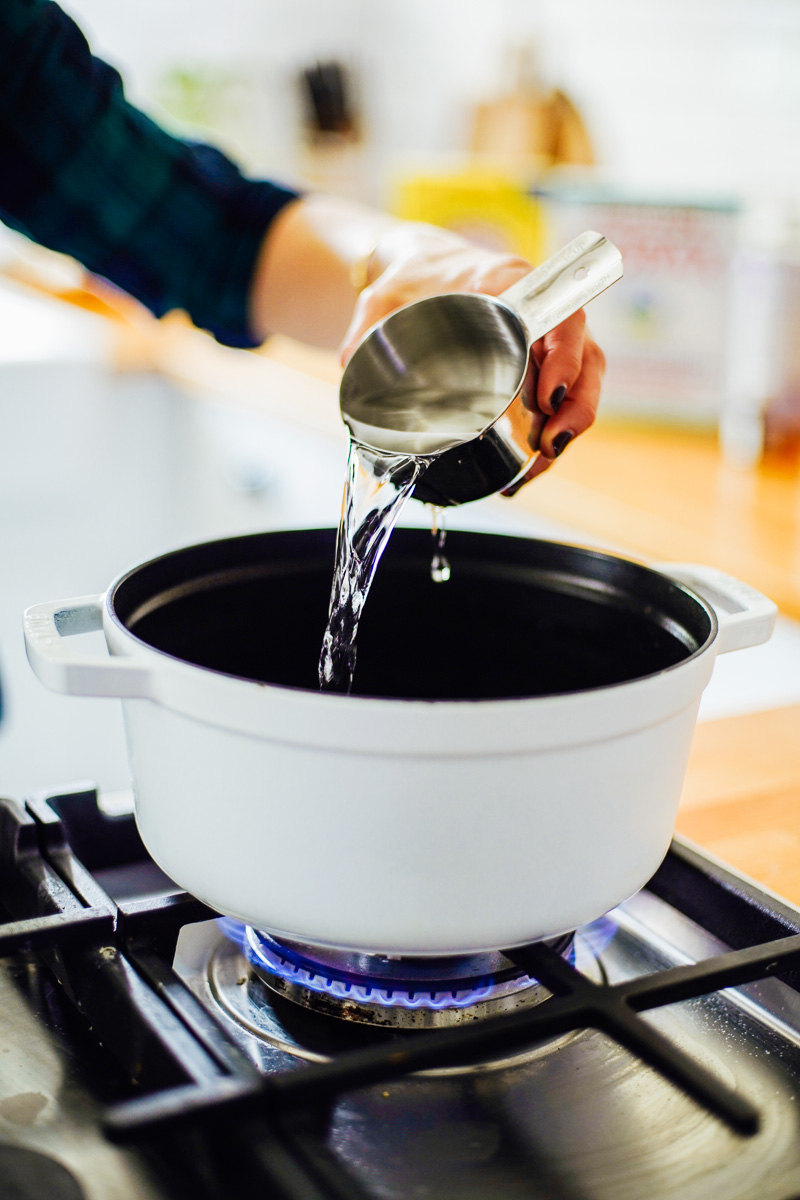
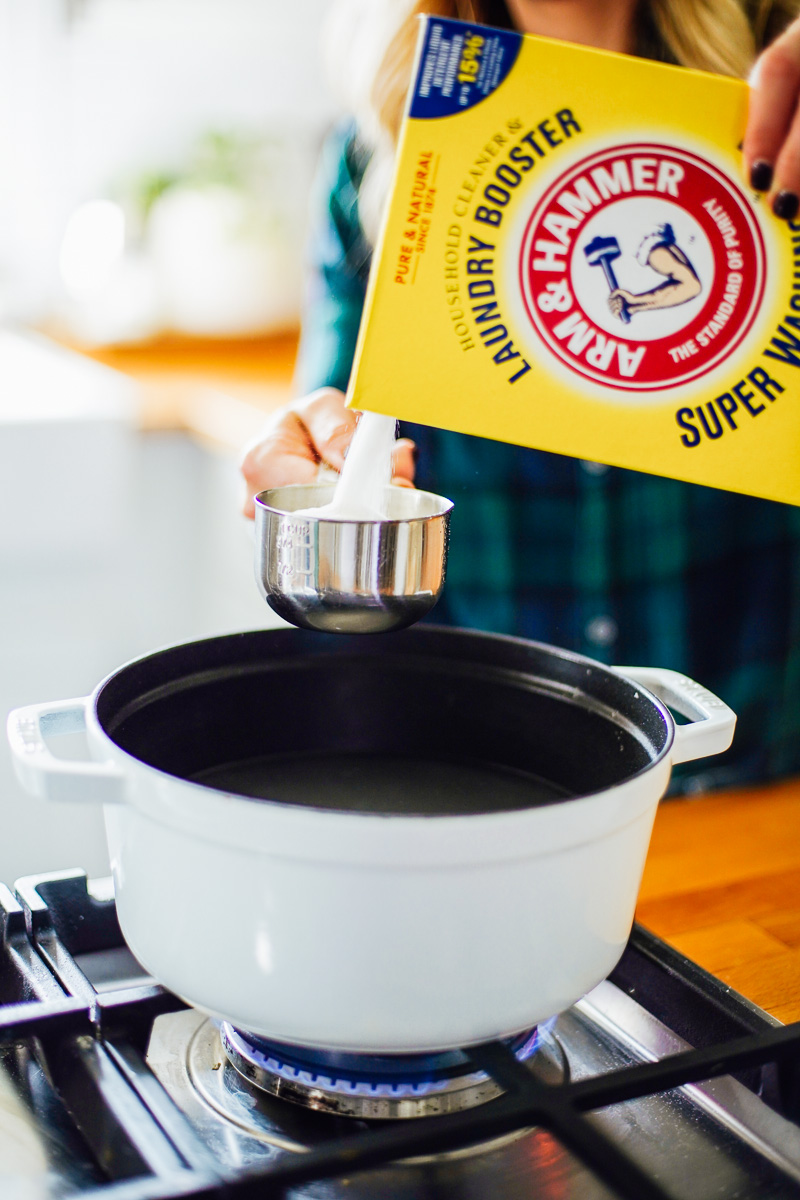
- Step 1 Boil 6 Cups of Water: In a large saucepan or Dutch oven, bring 6 cups of water to a slight boil. Once the water begins to boil, turn off the burner.
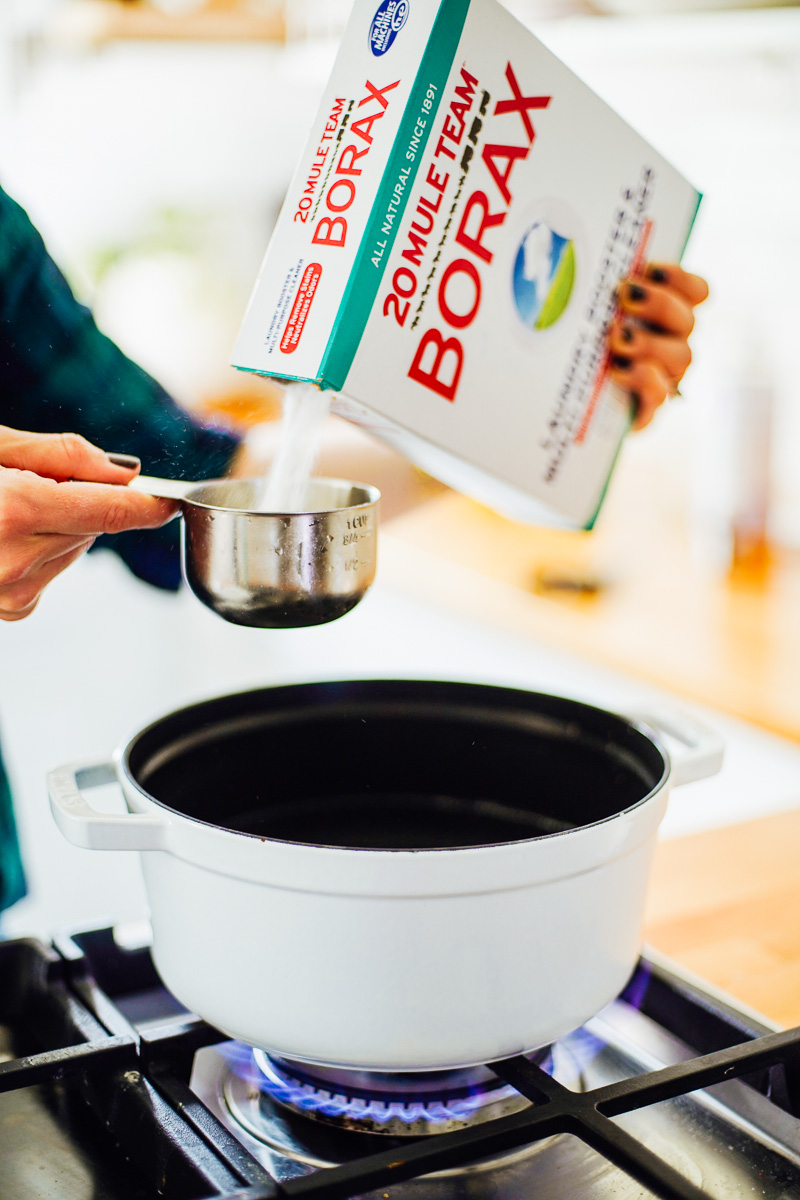
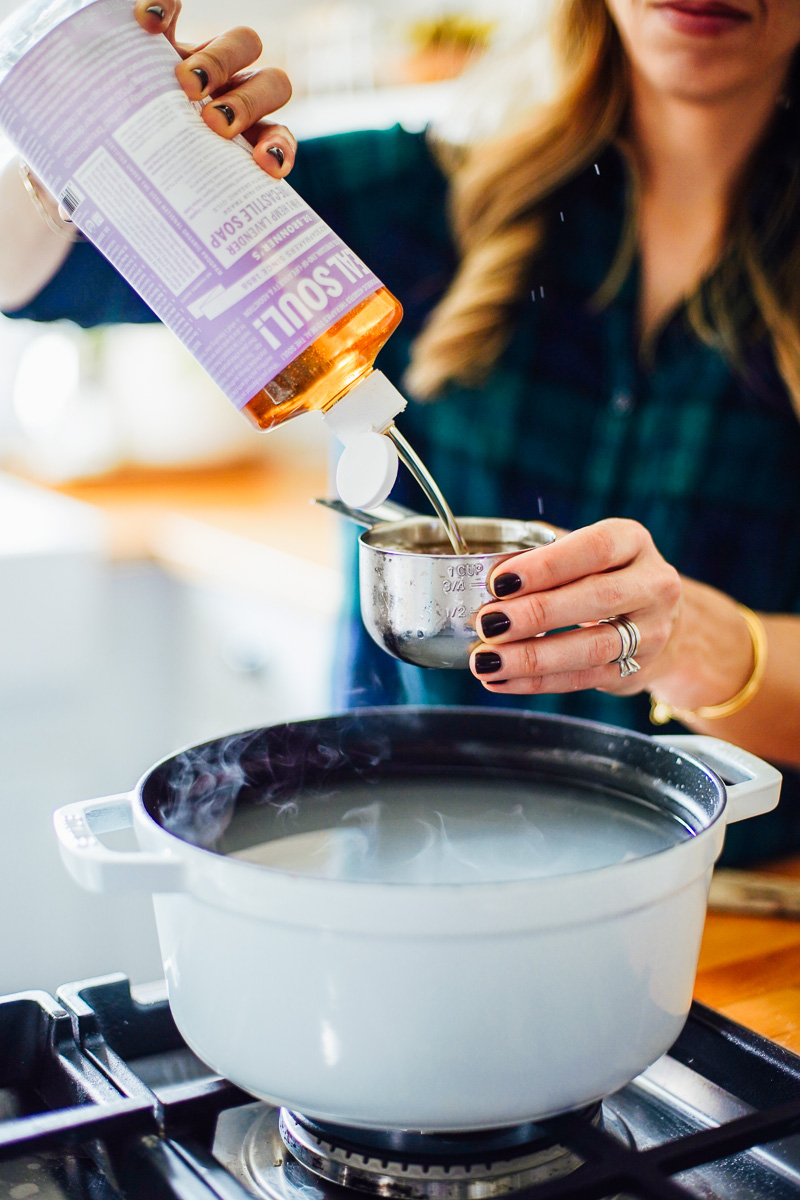
- Step 2 Add Borax, Washing Soda, More Water, and Castile Soap: Add the Borax and washing soda. Stir to dissolve. Then add 9 cups of room-temperature water and 1 cup of liquid castile soap. Give the ingredients a stir to combine.
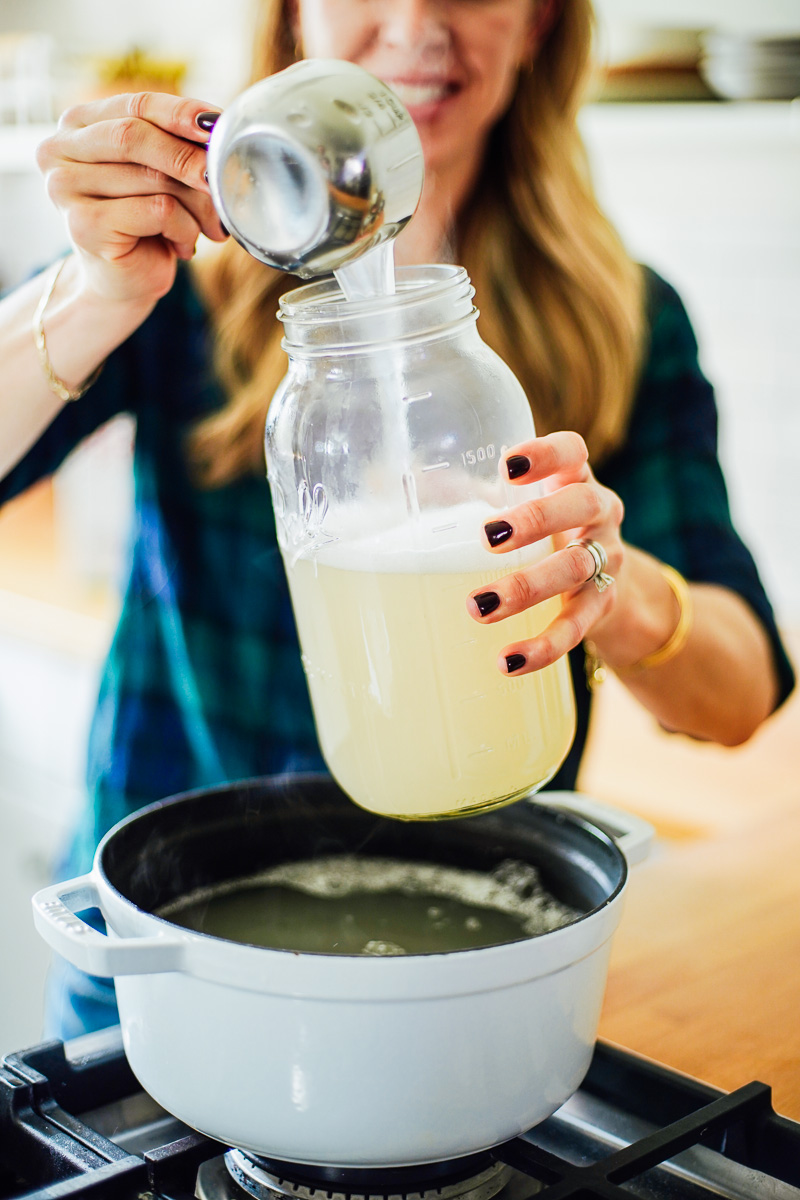
- Step 3 Cool for 5-10 Minutes: Allow the soap to cool for a few minutes before pouring into one large gallon-size jar or smaller containers, like quart-size jars. Make sure your jar(s) are heat-safe. If not, wait until the soap is cool, then spoon the soap into the jar(s).
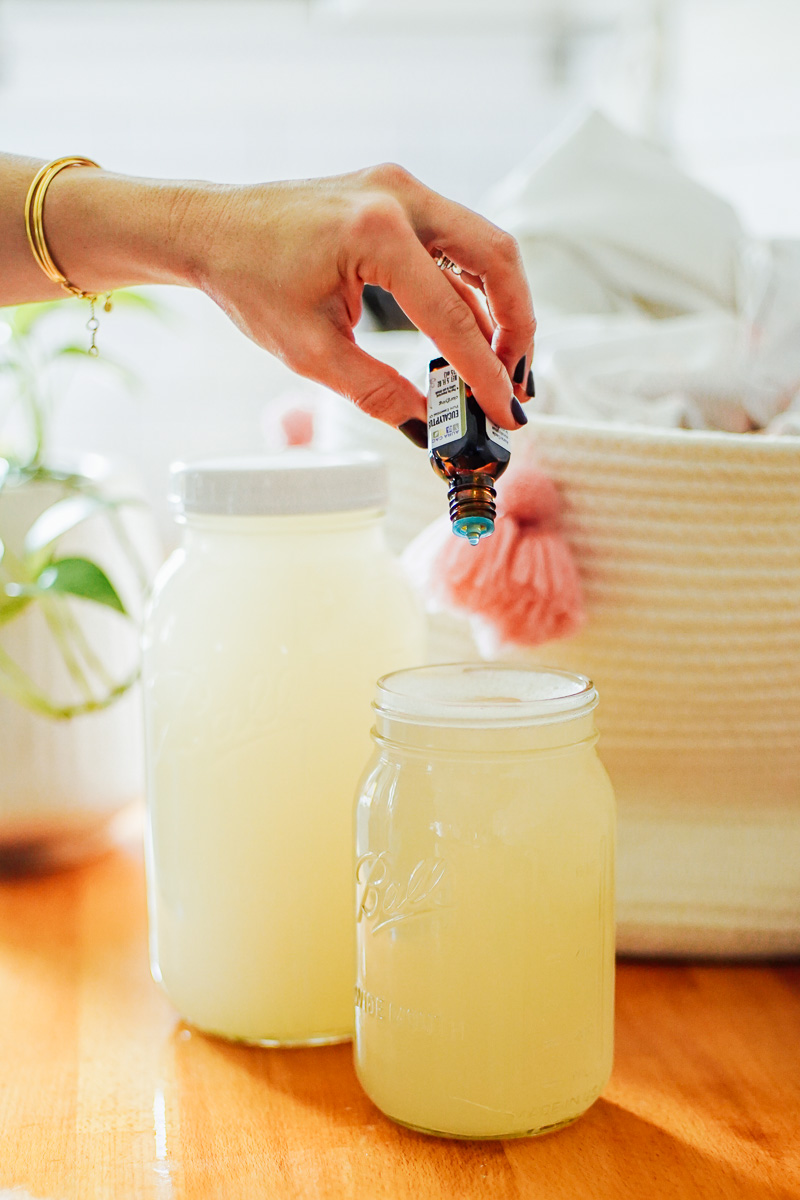
- Step 4 Add Essential Oil For Scent: Add an essential oil of choice (if using) to the soap (now in the jar) and stir to combine with the detergent.
What to Avoid Doing
- Baking Soda – Don’t use baking soda in place of washing soda. Washing soda has a different chemical composition and will not work in this recipe. It is NOT a substitute.
- Dish Soap – Don’t use other dish soaps in place of the castile soap. Dish soap will cause the soap to have too many bubbles in the wash.
- Lack of Suds – Don’t assume that a lack of suds and bubbles means the soap isn’t effective. Suds and bubbles don’t equal clean.
- Plastic Containers – If you’re reusing an old detergent bottle for storage, make sure the laundry detergent is fully cool before adding to a plastic container.
- Heat-Safe Glass – Use a heat-resistant glass jar (if using glass for storage), and also allow the detergent to cool a bit (about 10 minutes) before adding it.
- Essential Oils – The essential oil will add a subtle fragrance, but shouldn’t be added until the soap cools as heat will cause the essential oil to evaporate.
How to Prevent Chunky or Gelled Detergent
After a few days the liquid laundry detergent may clump or gel. This is a completely normal chemical reaction that is usually caused when the outside temperature is cooler. There’s no way to completely prevent this from happening; however, one option is to use more water (2-3 cups more) to make a less concentrated soap.
The laundry soap is 100% usable if it gels up (l actually love this form). Simply scoop the detergent from the container and add to the washer.
Key Takeaway: Whether the laundry detergent gels up or remains liquid, it’s 100% effective and usable in both forms.
How to Use This Liquid Laundry Soap
The detergent is ready to use immediately after making. And may be stored for later use.
- Give the jar a good shake or stir (with a long spoon) before use.
- Use this detergent just as you would any laundry soap to clean clothes.
- This homemade liquid laundry soap is highly concentrated, which means you need only a tiny amount to get a dirty job done.
- For top-loading washer machines, use 1/8-1/4 cup.
- For an HE front loader, use 1-2 tablespoons.
- Add the detergent directly to your washer or the laundry soap compartment.
Can I use this in an HE washer?
I do, so I can only speak to my personal experience. I use 1-2 tablespoons per load. If it’s in gel form, add it straight to the washer on top of the clothes.
Always consult your machine’s user guide before using any laundry detergent to know what your machine can and can’t handle.
How long does this recipe last?
- Use the soap within 1 month.
- Store in your laundry room, at room temperature.
- Learn more about the safety of making your own natural cleaners.
FAQs
- Can I use a castile soap bar instead of liquid castile soap? Yes, you can. Use a cheese grater to grate a bar of castile soap into the hot water (along with the borax and washing soda). Stir and continue to boil the ingredients to dissolve fully (takes about 10 minutes). I also use a bar of castile soap to make powder laundry soap.
- Is it normal that it’s more watery than soapy? Yes, this is normal. For a thicker, more concentrated detergent, there are two options: use Sal Suds instead of castile soap OR reduce the water to 10-12 cups for a more concentrated detergent.
- The detergent is chunky (or gelled) after cooling, is that normal? Yes, this is normal. Depending on your home’s temperature, the soap may be more liquid or even chunky (like a gel). Both are normal and usable!
- My laundry soap didn’t gel. What happened? If your environment is cooler, your laundry soap may gel after cooling. Or it may not. This is normal. Both forms are 100% good and usable. A reader recently shared this tip you can try as well, “I also like the the detergent to be more gelatinous and I use my immersion blender for a few seconds after it is cool to whip it. It turns white and jelly.”
- Is borax safe? Borax is a debated ingredient in naturally-minded circles. I personally don’t see any reason to avoid it. This borax article from Wellness Mama has fantastic information.
- Can I use this soap to lift stains? Yes, you can. You can either add the garment to the washer or add the garment to your kitchen sink with the soap and water and soak the garment to lift the stains. Or, apply the soap directly to the stain and scrub. If you’re dealing with tough stain, I recommend using this homemade stain remover before washing the garment.
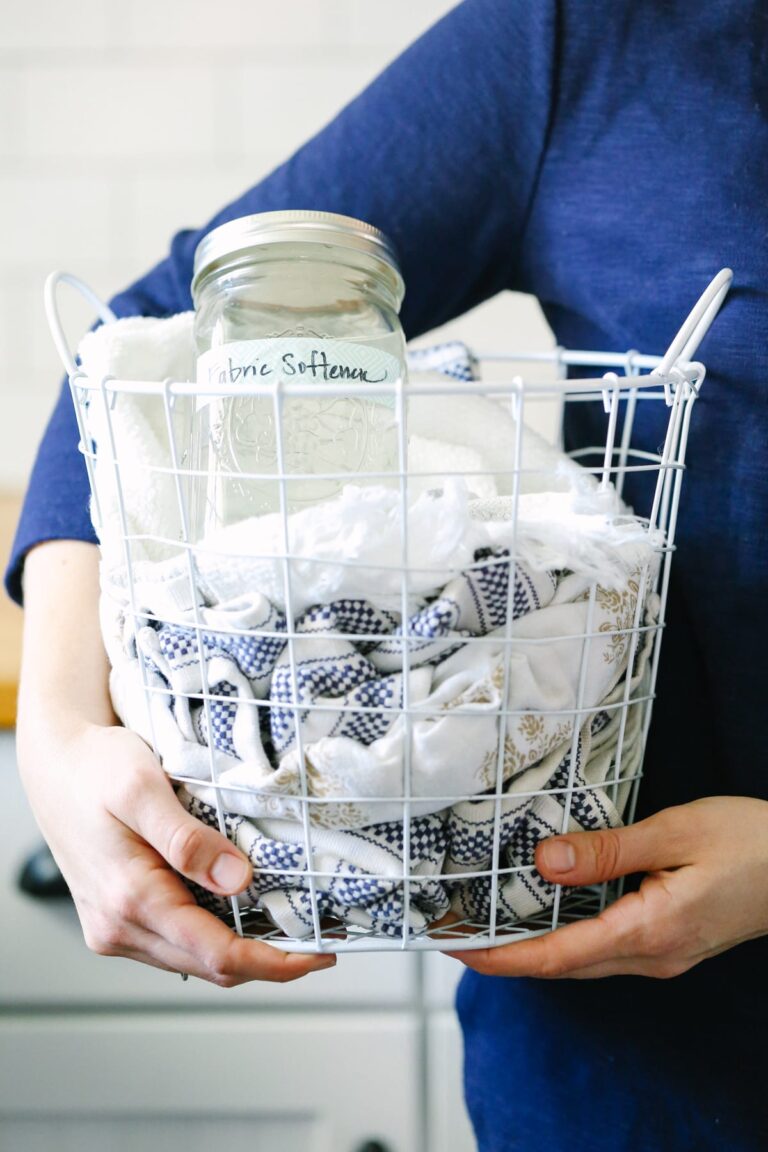
- Does this soap work with hard water? Yes, it does. I have hard water and this soap works great. You may want to use this laundry softener recipe as well.
Conclusion: Does this detergent work?
People always ask me, “Will homemade soap work as well as a store-bought product?” The answer, “YES! It will.”
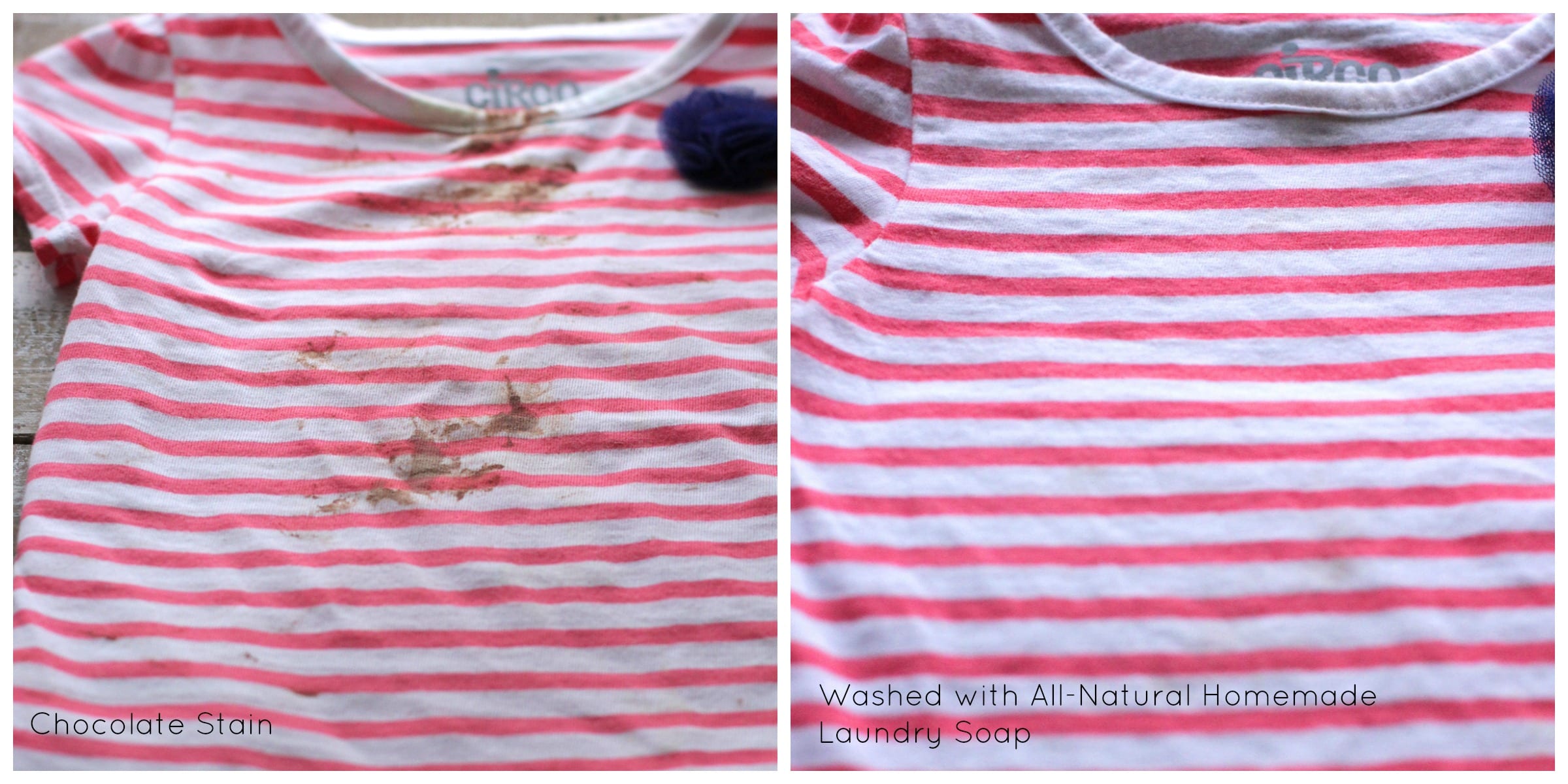
My daughter’s chocolate stain on the left and after using this detergent in the wash. The stain lifted and the shirt was saved. If you need need extra help lifting a stain, you can also use my homemade stain remover first.
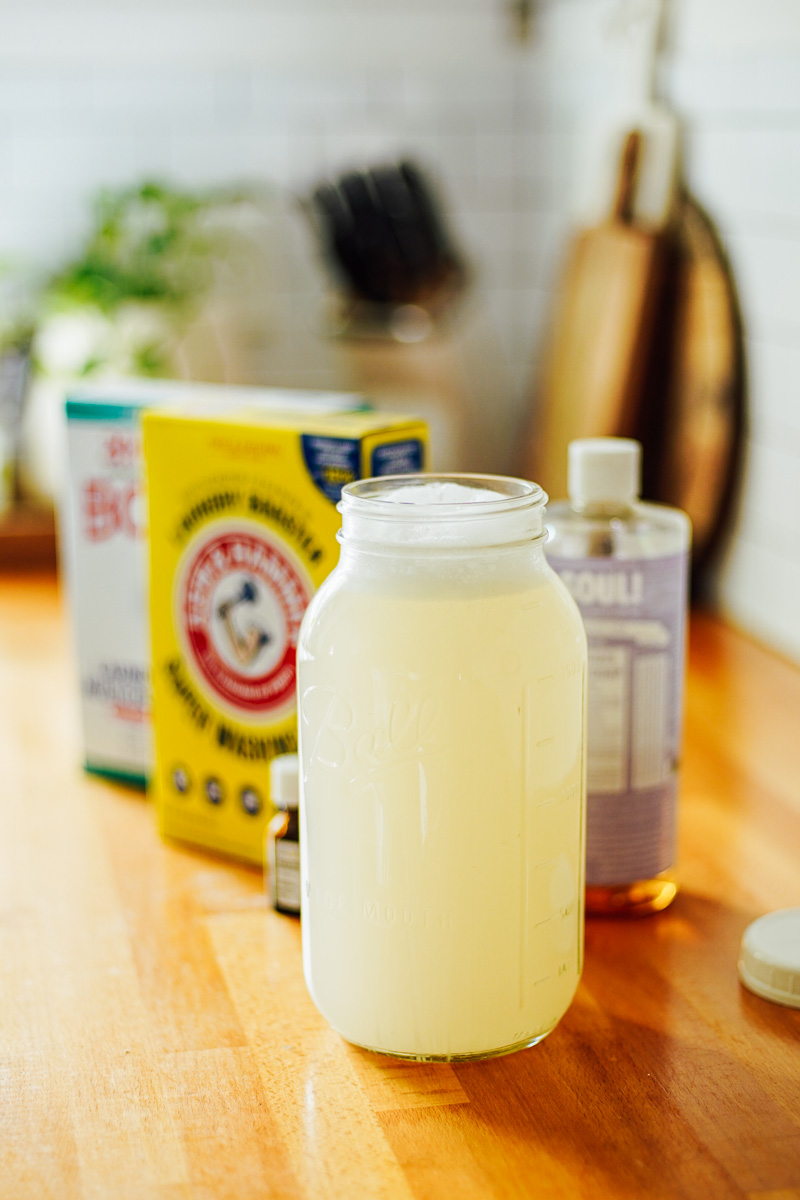

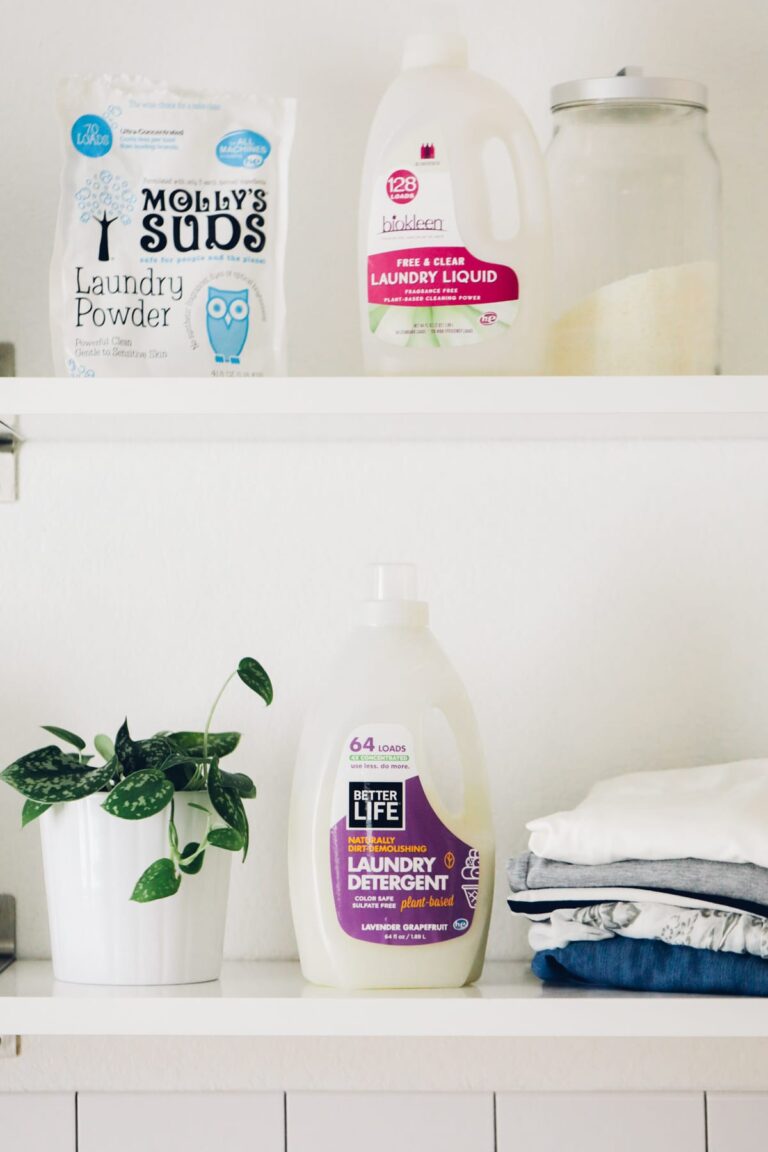
The Best Natural Laundry Detergent Brands: I’ve researched and tried many different laundry soap brands and narrowed down the best 11 brands!
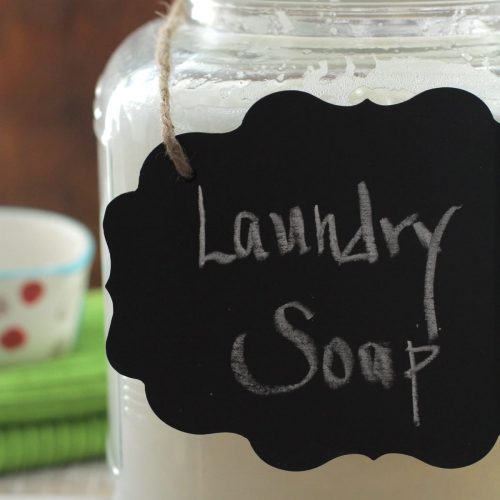
Homemade Liquid Laundry Detergent Recipe
Equipment
- 1 large saucepan or dutch oven (big enough to hold 15 cups of liquid)
- storage jars (such as 2 half gallon-size glass mason jars, 1 gallon-size jar, or reuse an old detergent bottle) for storing the laundry soap
Ingredients
- 1 cup borax
- 1 cup washing soda
- 1 cup liquid castile soap unscented or scented
- 15 cups water divided
- 50 drops essential oil optional for scent
Instructions
- In a large saucepan or Dutch oven, bring 6 cups of water to a slight boil. Once the water begins to boil, turn off the burner.
- Add the Borax and washing soda. Stir to dissolve. Then add 9 cups of room-temperature water and 1 cup of liquid castile soap. Give the ingredients a stir to combine.
- Allow the soap to cool for a few minutes before pouring into one large gallon-size jar or smaller containers, like quart-size jars. Make sure your jar(s) are heat-safe. If not, wait until the soap is cool, then spoon the soap into the jar(s).If you're reusing an old detergent bottle, make sure the soap is fully cool before adding to a plastic container.
- Add an essential oil of choice (if using) to the soap (now in the jar) and stir to combine with the detergent. The essential oil will add a subtle fragrance, but shouldn't be added until the soap cools as heat will cause the essential oil to evaporate.
- As the soap sits, the mixture may form into a gel and become chunky. There may also be liquid and gel separation, simply stir or shake. This is normal.
How to Use
- For top loading washer machines, use 1/8-1/4 cup. For a front loader, use 1-2 tablespoons. Add the detergent to the liquid soap compartment of the washer.
- Stain Treatment – Use a small amount of soap directly on the stain, scrub or rub the stain with a cloth. Repeat as needed, then wash the garment. Or use this stain remover spray.
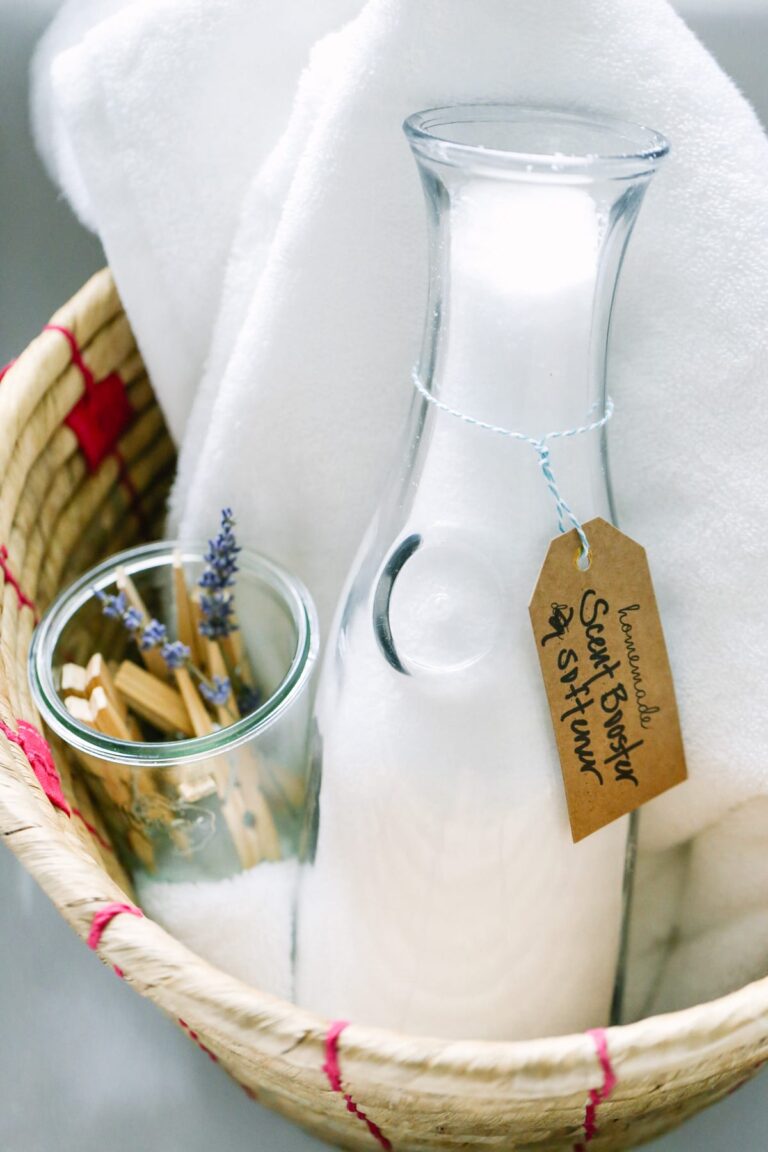
- Laundry Softener – This laundry detergent may be used with a fabric softener. I use vinegar added to the softener compartment or this salt scent booster & softener added directly to the wash basin before running a wash cycle.
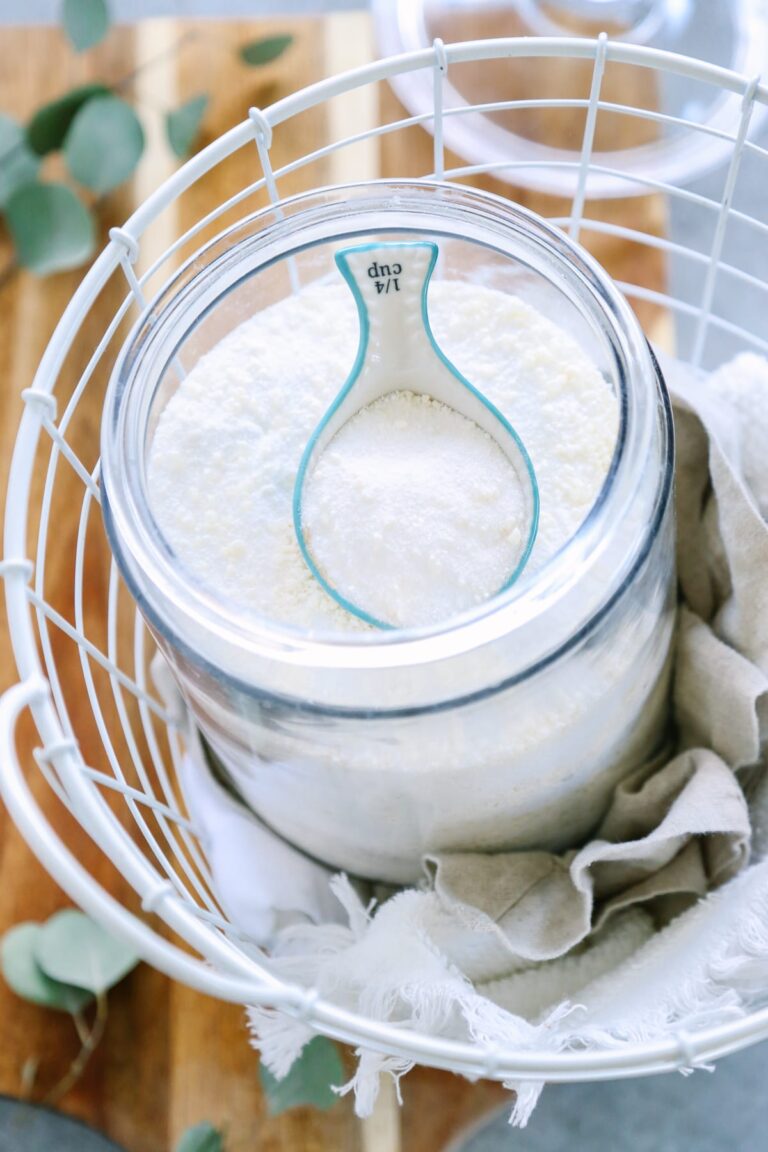

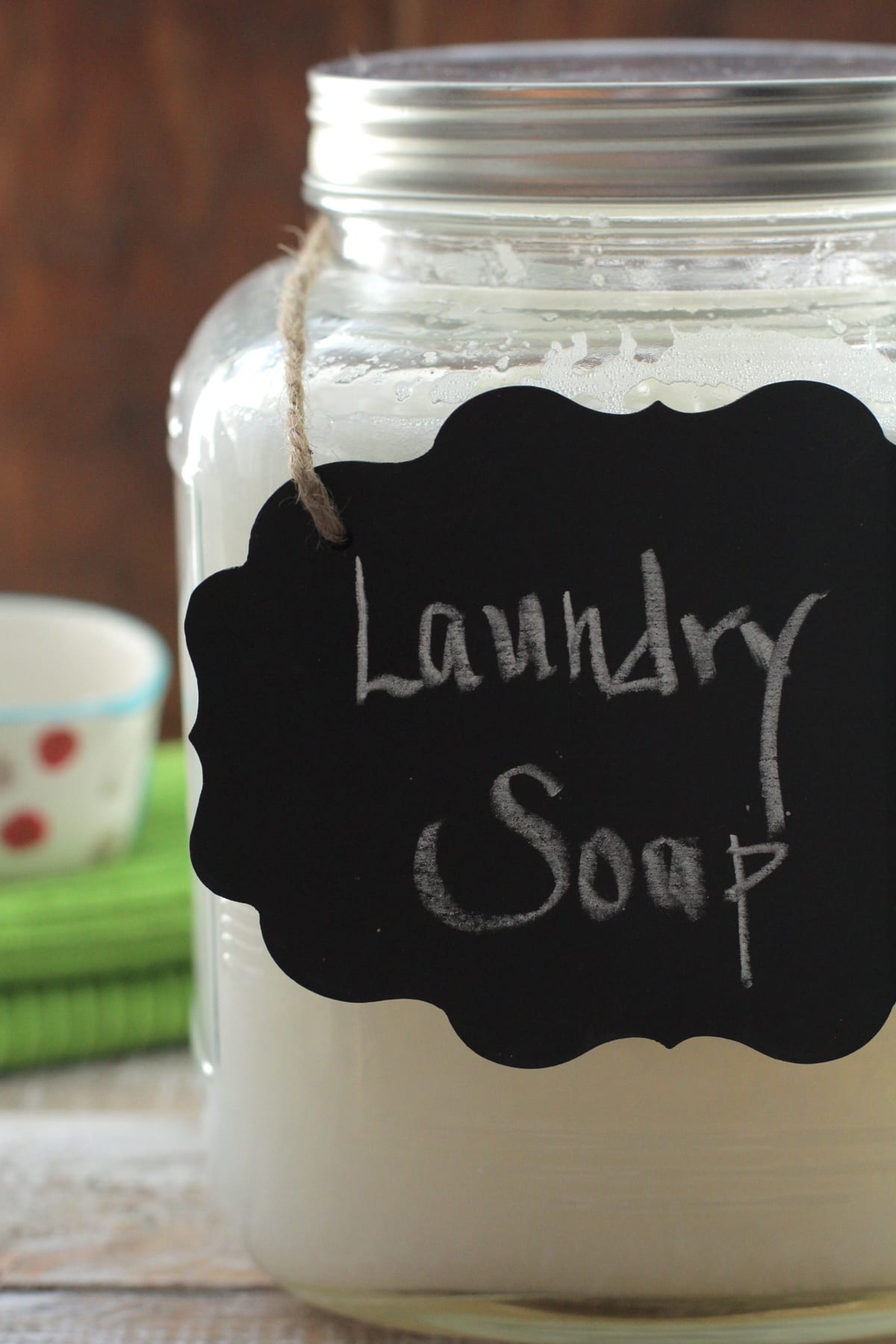
Enough about the detergent 🙂 where did you get that cute scoop?
Hey Lisa, Lol, I love that little scoop. It’s actually part of a measuring cup set I picked up from Home Goods. I’ve also seen the same ones at Pier One Imports. 🙂
Hello! I want to try this, but I’ve had a problem in the past with DIY laundry soap making our clothes fade. Have you noticed this at all with this recipe? Thanks!
Hi E, That’s actually the very reason I created this recipe. I had the same issue with DIY laundry soap recipes in the past. This soap doesn’t fade clothes. 🙂
What do you use to stir it with and to measure it out? I want to try this, but seems like it would get messy.
Hi K, I usually only stir it once or twice. After about 24 hours of making the soap and then again when it gets toward the bottom of the jar. I either shake it or stir with a wood spoon. I use a small cup, similar to what’s pictured above, just plastic. It scoops out well, without mess.
I use the borax/washing soda/grated ivory or fels naptha mixture all the time.
Two tablespoons for a load.
I never have streaking problems – here is why: Start the machine and when a little water has run add the laundry powder. Let the tub fill almost half-way and then add the garments.
Just kidding, last one! Other recipes that are liquid detergents, have you let the detergent sit overnight before using. Do you have to do this with this recipe? I used a bar of castile soap instead of the liquid castile soap. I am not sure if that would make a difference. Thanks again!
I usually let this sit overnight, it tends to gel after about 24 hours, which I like. However you can use it successfully immediately after it’s made too.
Thanks! One more question 🙂 Have you ever tried adding baking soda as well to the laundry detergent?
Approximately, how much does this make? Just wondering how big of a container I should buy 🙂
This recipe makes a bit over a gallon of soap. Around 18 cups of liquid.
Can I store this in a plastic container? I actually have one from pretzels from Costco,
Hi Karen, Yes, this laundry soap can be stored in plastic. Those large pretzel tubs would be perfect.
Just made this and was wondering what your thoughts are in regard to it being ok for baby clothes? It would be nice to not have to use two different detergents. My husband is in farming so I need heavy duty but gentle enough for baby skin as well.
Hi Allison, I use this on my toddler’s clothes. I personally feel safe using this on my kids (including) baby clothing and linens.
Hello I’m new to the “make your own soap” but plan on making tomorrow/Tuesday. I have read up on Dr. Bronners (btw love dr.bronners) they said if predilute you loose the preservative (vitaminE) bc it gets diluted so you should use in 18 uses. Thank you again for sharing your frugal tips and yummy recipes I have been pinning away for the last week.
Hi Samantha, I haven’t heard that, but I dilute Dr. Bronner’s in a lot of homemade products as it’s very concentrated. I haven’t had any issues.
I am glad to see you tried and are going to start making your own again! I have not yet made my own detergent but I have switched to a green one that I have used for months now along with using vinegar as a fabric softener and using balls of tinfoil for static cling in the dryer!
This sounds like a great recipe so I think I am going to have to try it once I am all out of my stuff! Thanks for posting!
Hi Miss Dee, I’ve never heard of tinfoil for static cling. Very interesting, thank you for sharing that tip. Hope you enjoy the recipe!
I make and use the powdered detergent as well, in cold water, and have always been very pleased with the results. I have seen comments on other sites that it works very well in HE machines.
Hi Lynne, That’s good to know about the HE machines. Thank you for sharing.
I have made.my own laundry detergent before, but I always thought there was still a smell in my daughter’s laundry (she’s potty training) so I have gone back to tide. I am going to give this one a try and hope for the best.
I do have a question, what do you use for fabric softener. I use vinegar in the wash, but that’s not enough. I have gone back to using bounce sheets in the dryer.
Hi Jana, I had the same problem with smell. I absolutely love the way this soap leaves our clothes smelling. I don’t use softener, but have used vinegar successfully.
I just wanted you to know, I just finished my first wash with this recipe. It was bed clothes that had been wet in. The smell is gone! I can’t wait to try this on dirty clothes and see the spots come out. Thank you for sharing this!
Ladies, Try the hair conditioner and vinegar fabric softener. After mixing with water, I tried every thing to get it in the dryer! Wash cloths, balls etc. Finally ended up with cutting a sponge in half, put them in a prepacked meat, or Tupperware with lids and pour the DIY softener to cover. Toss them both in with your clean wet clothes. Act like balls and smells good too. AND my husband hasn’t a clue that I’m using DIY soaps or fabric softener made with vinegar! HAHA! ( got him and saving $$!!!)
You can find recipe on LizMarie Blog OR use a bottle of your favorite CHEAP hair conditioner, a cup or two of wht. Vinegar, fill up a 5 ? liter with water. Will separate so give it shake before you use!
Hi Jana,
I do not recommend using fabric softener or dryer sheets because of the toxic chemicals in those- they even damage the air quality when it vents outside, from what I have heard. Wool balls work fantastically in place of dryer sheets and they are all natural and not in the least toxic!
I am a yarn fanatic (I knit and crochet). I just made the wool balls for my drying to replace dryer sheets and I absolutely LOVE them. So easy to make. I happened to have lots of wool yarn sitting around from my yarn addiction, but you could get some inexpensive wool yarn at Michael’s or Hobby Lobby (Walmart, Joanne’s, etc).
If you want to add a little scent, just drop a few drops of essential oils on one of the balls before starting the dryer.
Hey Kristin, So, did you try this laundry soap too? What did you think? It’s the perfect compliment to homemade dryer balls. You can find our tutorial here: https://livesimply.me/2014/09/04/homemade-wool-dryer-balls/.
I tried a number of things for getting rid of unwanted laundry odors (such as wet sheets from a preschooler). I finally found the solution in using a blend of essential oils. I use Purify from Native American Nutritionals, but have also used Purification from Young Living when a friend gave me some for free. Both worked really well. Now I add about 5 drops to each load that contains smelly laundry and the smell is gone before it hits the drying rack. I sometimes also add baking soda on top of the load if there are a few days before it’s going to washed. That helps some, but the Purify works really well for us. Not sure if it’s okay to post the website . . . (http://www.nativeamericannutritionals.com/purify.htm)
Thanks for the blog post. I’m enjoying your website!
That’s great, Janet! Thank you so much for sharing :)!
I just make the powdered kind, I use one grated bar or fels Naptha, two cups borax and two cups washing soda, in hard water, and I’ve never had any problems with it leaving chalky stuff anywhere. It does help maybe to dissolve it in a bit of hot water before you put the clothes in the washer, but I don’t even bother doing that and I haven’t had a problem. I find it washes my clothes really well, doesn’t suds up (so I can’t see why it wouldn’t work in an HE machine) and I will never go back to Tide as long as I can still find borax and washing soda in the stores. I love it!
Hi, I just made this last night and this morning, there was about 2-3 inches of a very thick, almost glycerine type separation at the top of the container. Down below, it’s still very thin. SHould I be mixing it?
Hey Stephanie, Perfectly normal. Just stir or shake it up in the container and you’ll be good to use.
I use my stick blender at this point and like Kristen said – put it in smaller containers. Then give a shake and go. Works wonderfully in a HE machine due to its low sudsing ability. I have used this soap over a year now, and so does my family and friends. Haven’t needed Tide in a LONG time and my clothes smell fresh and are so clean.
Great idea, thanks for sharing :).
Suzanne,
Since you have used this in an HE machine, curious on your results. Additionally, how much do you use per load?
Thanks,
Amber
Hey Amber, I hope Suzanne is able to answer. For the regular ol’ machine I use 1/4 cup per load. That amount probably varies with an HE machine.
Thanks… I have an HE machine and that was my question! Didn’t want to risk sudsing out my machine but have been wanting to try homemade.
Awesome, Sandra! I’m so glad readers come back and share their experience so others can benefit :). Enjoy!!
So with an HE machine, do you put the liquid soap in the dispenser like normal or do you put it on top of the clothes directly into the washer? Thank you!
Hey Victoria, I put the liquid soup in the dispenser (I have an HE top loader). Some folks have had issues with this (if the soap is really thick), so they choose to put it directly in the washer with the clothes. When using powder, I put it directly in the washer with the clothes.
So glad I stumbled upon your comment! I have a HE washer too and have been reluctant to make this because I wasn’t sure how well it would work in my machine. Question though, how much do you use? I generally have large sized loads, and I always use cold to protect my clothes from fading as well as save a bit on energy 🙂 any tips you could share?
hi there! thanks for posting this recipe! i’ve heard conflicting opinions on the safety/toxicity of borax. any thoughts??
Hi Oksana, I’ve read many conflicting reports on Borax too. In the end, I had to realize Borax is much, much safer than 99% of the affordable laundry detergents out there. It’s also a very powerful and effective cleaning agent and my family needs clean clothes. I use it with confidence knowing there are far worse I could be using instead.
You said too use quickly for the liquid! What time frame are we looking at?
Hey Linda, I use this within a month.
Curious how your water is? I am in central Texas, with some seriously crazy hard water. We use dr bronners Castile soaps for many things, e.g. body wash, hand soap, etc., but it reacts so harshly with the hard water, that it leaves a white/grey residual scum all over every surface it comes into contact with. Small price to pay for something that is so cost effective and non-toxic, plus I can scrub it off the sinks and tubs with vinegar, but I’m not sure I’m willing to risk having dull grey clothes, that I can’t just scrub down. :-/I’m scared to try it! Haha!
I mostly just use country save (what I buy and use for diapers anyway), and whole foods store brand liquid detergent on some specific things (rated 0 on ewg). Your thoughts would be appreciated. 🙂
Hi Monica, We have hard water. I haven’t had any of those experiences with Dr. Bronner’s, yet. I might try testing a small amount with a couple towels. I’ve also been using this as a cleaner, so if it doesn’t work for the laundry, that might be an option.
Hard water in my area too! I’m about to make my second batch of this awesome laundry detergent this week! One batch lasted 4 months for us and we are VERY happy with the results. Clean clothes for pennies. I use a vinegar+hydrogen peroxide+lemon juice combo in my rinse cycle with every load also. The combination works great!
That’s awesome, Megan! I’m so glad you love the laundry soap. I’ll have to try the vinegar+hydrogen peroxide+juice combo…that sounds great! Do you mix the ingredients together and then add the liquid during the rinse cycle?
I mix 1 cup lemon juice + 3 cups hydrogen peroxide + 1 cup white vinegar. Vóila! Color safe “bleach!” With a small european washer I use two TB per load in the rinse cycle.
What is the difference between this and any other homemade detergent? I’ve tried twice and am always disappointed.
Hi Marj, This soap is liquid and highly concentrated, not a powder or watered down liquid. All three ingredients are effective cleaning agents many people already add to their laundry for extra cleaning power.
Can this be used in high efficiency washers and if so how much do you use?
Hi Elisha, I wish I knew. Unfortunately I only have an old 1980’s washing machine, so I don’t have any experience with the HE machines and homemade detergent.
I was wondering if you have determined out if this can be used on front loading HE washing machines. I’d love to use a homemade detergent.
Hey Maureen, We tested this recipe in HE washers for the DIY Natural Cleaning Challenge eBook, and found that it worked well for users.
Thank you for this post! I’m a closet tide using crunchy mom too and I’m so excited to try something with similar results as my favorite detergent! Just a few questions though… Do you wash in hot, cold, or warm water? Does the use of different temperatures affect the outcome with the homemade detergent? Thanks again for this recipe.
So glad to meet another closet Tide user ;). I usually wash our clothes in warm water, with kids and lots of stains, I find it works best. But, when testing this soap I tried using cold water and it worked wonderfully. If you use cold water, I’d recommend swishing the detergent in the water with your hand, just to be sure it dissolves fully.
Help! My soap looks nothing like this! Pure liquid. What could I have done wrong?
Hey Brandi, The soap should be liquid (won’t be thick like store-bought soap), but still lathers when you wash your hands.
Mine also looks just like liquid water with bubbles and not a gel is that ok? thanks for the tips 🙂
Hey Amber, Yep, 100% okay! The gel is just an added perk, but it doesn’t always happen.
I have another question in regards to temperature settings. I’m using the powder formula with essential oils. I’ve heard that if I were to wash in cold the essential oils would “linger” on clothes and once placed in the dryer at a high temp could cause a flash fire. Is this true, or is the amount of essential oils in detergent small enough that water and dryer temperature shouldn’t cause this. Thanks
Hey Melissa, Any natural scent won’t last, from my experience. That’s why synthetic fragrances are used in so many products–the scents last. The temp may help, but I don’t think it will make a big difference.
Hi Kristin, I am so excited to have found your blog. I am a new mom, and apparently having a baby brought out the “crunchy” side I never knew I had. Now, here I am cloth diapering! Have you or anyone you know used this on cloth diapers? Is there any reason why this detergent wouldn’t be cloth friendly? We currently use Charlie’s soap but I would love a make-at-home option.
That made me chuckle. Having kids brought out my “crunchy” side too ;). I’m not sure about the soap on cloth diapers. I asked around to other crunchy bloggers, who use cloth diapers, and all said once you use Charlie’s Soap, it can be hard to switch to other detergents. So, I’m not really sure, sorry.
Hi
just joined. looked up your liquied soap. Loove the measuring cup!
http://mycrunchymamas.com/1/post/2014/03/cloth-diaper-detergent.html
Here is a great Homemade cloth diaper detergent recipe. Castile soap, while fantastic for most things, can lead to build up that holds smell and reduces absorbency in cloth diapers. Just thought I’d chime in. I can’t wait to try this recipe for the rest of our things 🙂
Hey Magan, Thanks so much for sharing.
I been using my homemade laundry bar both powder and liquid with pure castile, Bastile or 100% coconut soap. I have no problem in my laundry, no residue whatsoever.
That’s great, Luzvi! I’m so glad it’s working well.
I just made the laundry soap today and can’t wait to try it. When you say to use it quickly as water could breed bacteria, how fast do you mean?
Hey Ruth, Within a couple of months.
What if I add vinegar to the laundry soap? Would that help the bacteria problem? Kinda like pickling, but not. Lol! I know it’s good for your clothes and to maintain a clean washing machine.
You could, it will also freshen them, remove odors, and act as a fabric softener.
I just made this for the second time. I use 3 of my old commercial detergent containers to store and pour from. The measuring cap is handy and the jugs have the ‘no drip’ spout. Also, I had 2 cups left over so I used it to damp mop my hard wood floors. This worked great and no tacky floors either. BONUS.
Thank You,
Lisa
That’s awesome, Lisa! I can’t wait to try using some of this laundry soap on my wood stairs. Thank you for the tip.
I use the same recipe, but only mix the 2 powdered ingredients together. When starting a load of laundry, add the dry ingredients to the washer with the water temp set on “hot”. Squirt the liquid Dr. Bonner’s into the water. You only have to have use hot water for a minute or 2-just long enough to dissolve the powder. You only need 2-3 tablespoons of powder and one squirt or (1 tablespoon) of liquid. I use peppermint or eucalyptus Dr. Bonner’s. It is very simple to use and never leaves a residue. The powder combination also works well as a pan scrub.
Sounds great, Reenie. Thank you for sharing!
Thank you Reenie for posting this. I stumbled on this recipe looking for laundry soap that uses liquid Castile vs shaved bar soap. I wanted to try it, but was concerned about making such a large amount with not knowing if it would work for me. I was going to make a smaller batch, but then I found your comment. If it works, I will probably just do it this way each time and not even mix it up in advance. My kids (teens) do their own laundry so it will depend on the ease of use for them. I really hope this works. I still can’t believe the “green” detergent I’ve been using has SLS in it. I also can’t believe I never noticed it on the ingredients list! (Duh to me!)
I have a question for you and/or Kristin and/or anyone else who reads this: I have been making my own fabric softener with vinegar and hair conditioner. It’s not great, but not horrible (I mean it’s better than no softener). It took me a lot of perusing the aisle to find a cheap conditioner that doesn’t have dimethicone in it! Anyway, what do you diy’ers use for softener? I live in Florida where I believe our water is hard with limestone deposits. Don’t quote me on that though! Thanks for any and all of your help 🙂
Hey Deana, I actually have a DIY laundry softener post going up this month ;). I use two methods for softening my laundry: 1/ vinegar: just 3/4 cup in the final rinse cycle of the washing machine 2/kosher salt: this helps to break down hard water–around 1/2 cup. I live in Florida, too, so I have the same issues, but these methods work well for me.
So far so good. I mixed equal parts of borax and washing soda and use 2 tablespoons for a regular sized load. Then I measure up to 1 tablespoon of castille soap. I had been using lavender, but I just got some unscented that I’m going to use to play around with some different essential oils. Clothes are coming out just as clean, if not cleaner than with the supposed “green” brand I was using.
When I made the fabric softener, I replaced most of the water in the recipe for vinegar. I also dissolved 1/2 cup of kosher salt; whole recipe was about 5 cups. I measured 3 capfuls of an old softener container I repurposed for my own. It’s probably somewhere around 1/3 cup. Just finished my first load and my clothes are oh so soft! Thank you Kristin and Reenie :)))
Awesome, Deana! I’m so glad your laundry is coming out so well!! Thank you for sharing.
I live in the desert in CA and just started using this for fabric softener:
1 gallon distilled white vinegar
2 cups baking soda
20-30 drops Lavender EO
10 drops Lemon EO
Put vinegar in a large pot/bucket and SLOWLY (about 1/8 C at time to avoid a major boil over) add the baking soda until all fizzing is gone and it is all dissolved. *I forgot about this reaction initially and had a HUGE mess on my hands and all over my garage floor, whoops*
Add EO’s and stir well.
Add 1/4 to 1/2 cup per load of laundry
I put mine in a glass drink dispenser I found at Walmart (http://www.walmart.com/ip/Tabletops-Gallery-5-liter-Glass-Yorkshire-Drink-Dispenser-with-Metal-Lid/28833200) and use my old downy ball for ease. I also use doTERRA brand oils, but I am sure others would work just as well.
Hey Julia, Thanks for sharing. Something to keep in mind when it comes to baking soda and vinegar is that they cancel each other out (which is what causes the bubbly action), basically making salty water. Here’s more information: https://livesimply.me/2015/11/18/4-natural-cleaning-ingredients-to-avoid-combining/.
I never use fabric softener haven’t for 12+ years. I don’t have staticy clothes either. I separate what I dry by type of fabric then I only dry on low except jeans, sheets and towels. My loads are as follows
Synthetics athletic ware anything made of synthetic–I wash on cool/warm and dry low for only 30 minutes in my dryer–you have to figure out how long in your own dryer–they come out of mine with a hint of damp but then cool to dry and NO STATIC
I do the same for all other types inc. T-shirt/cotton jersey, cotton–ironable broad cloth, heavy denim or canvas and so on. Static comes from generating energy by rubbing dry stuff together mostly plastics like synthetic or polyester in clothes. If you take your clothes out the dryer just as they are dry or a minute before completely dry then you have no STATIC! Good Luck–this also is good for getting wrinkle free clothes—I hate ironing too!
Thank you for sharing, April!
Making my first batch of liquid castile laundry soap, no borax. So excited! I have used 3 tinfoil balls in the dryer (when I seldom use it) and NO static 🙂 It works! 🙂
YAY! So happy, Deb! Thanks for sharing!
LS Team
Wow, great idea, I’m trying your per load recipe right now. I love not have to worry about bacteria/expiration dates. I microwaved some water to boiling to dissolve the dry ingredients and also mixed in the castile soap because my washer was already full. It worked like a charm. I had one concern from this other blogger that said homemade detergent can cause problems over time to your clothes, your washing machine and void your washing machine warranty. I’m wondering if anyone has been using this recipe long term and had any issues? Thank you so much Kristin for this recipe and Reenie! Here’s the link to that article I mentioned: https://www.goingzerowaste.com/blog/why-you-should-never-make-laundry-detergent/
Hey Sylvie, I haven’t had an issue but everyone is different (hard or soft water, washer, clothing type–all the variables). Just like one store-bought soap doesn’t meet everyone’s laundry need, I’m sure homemade soap is the same way. If it works for you, awesome. If not, here are some awesome store-bought options: https://livesimply.me/switching-to-natural-products-laundry-detergent-and-soap/
Hi Kristin, It’s so fun to hear from you, thanks! I LOVE this laundry soap, my clothes were cleaner than with Biokleen Sport which I’ve loved and used for years. I’m trying to cut out plastic bottles so this helps a lot. Although Dr. Bronner’s products come in plastic bottles, at least they are made from recycled plastic and a little of it goes a long way. I think I’ll experiment with a teaspoon of Sal Suds (per load) as a castile soap replacement to try to steer clear of any issues. I also really love the soft scrub on your site. Thank you, thank you, thank you for sharing all your hard work (and your team’s hard work) to help us all make better choices. I am so grateful!
You say to use water for this laundry soap. Does it need to be distilled water like most of your other recipes?
Thanks in advance!
Hey Marty, If you’re storing it long-term distilled is the safest route. Although I’ve used tap water in this recipe quite a bit without issue.
I have an HE washer. Can I safely use this homemade soap?
Hey Rachel, Yes, you can. You’ll only need 1-2 tablespoons.