
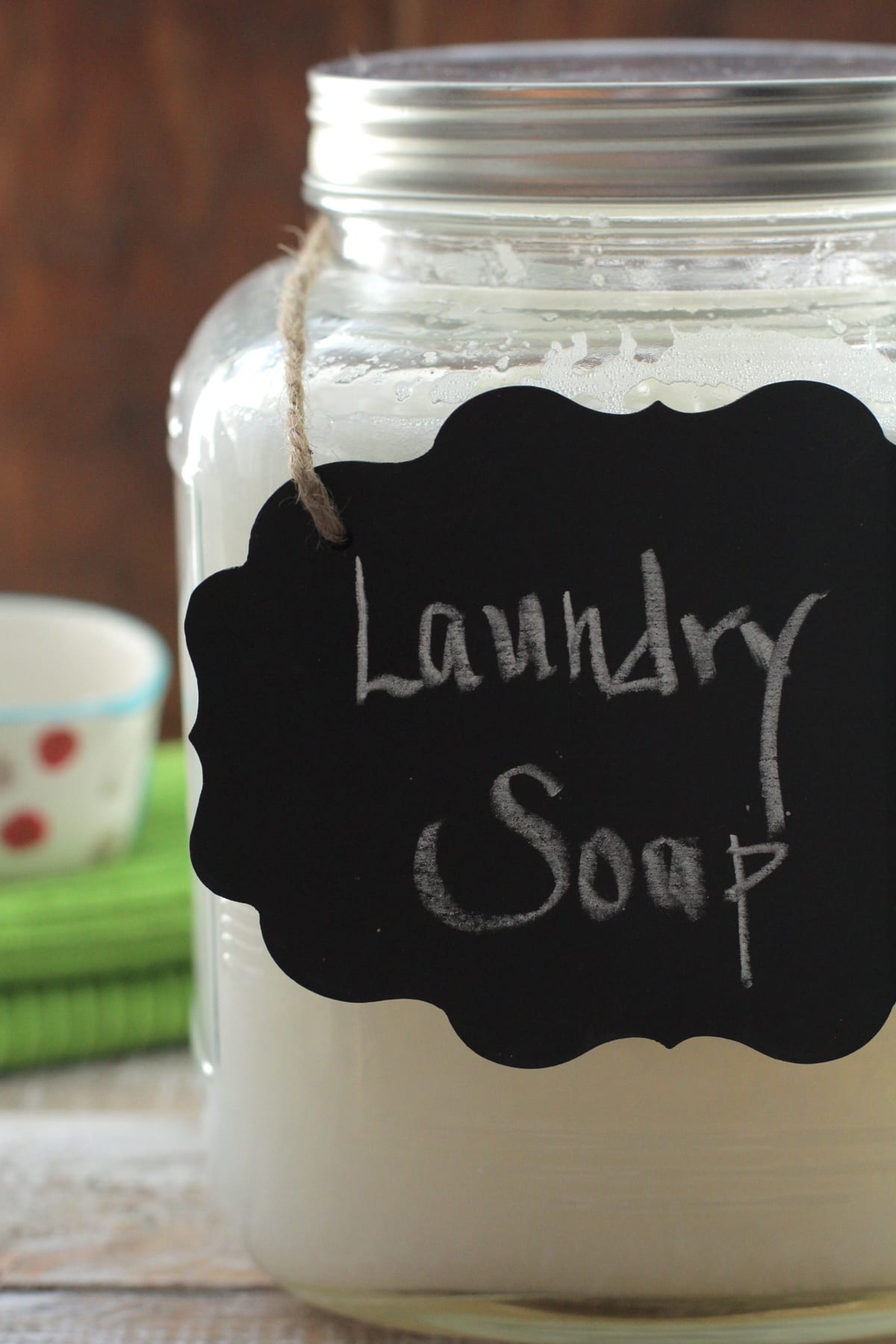
Want to make an all-natural laundry detergent as effective as commercial detergent? Your search is over. Here’s how to make the best DIY homemade laundry detergent. And all you need is 3 key ingredients and 15 minutes.
Want to Save This Article?
Enter your email & I’ll send it straight to your inbox. And you’ll get new recipes & tips each week.
11 years ago, I started making the switch to natural cleaning products, including laundry detergent!
At that time, the majority of recipes online called for a bar of fels naptha, washing soda, and Borax. But there was one problem: our clothes came out with chalky white spots.
So I made a simple swap: liquid Dr. Bronner’s castile soap instead of the fels naptha soap bar. With this one change, the detergent worked just as good as Tide.
This recipe is non-toxic, fights stains better than commercial detergent, and is cheap! I’ve been making this liquid laundry detergent for over 11 years (originally created in 2014) because of its extraordinary cleaning power.
Homemade Laundry Detergent Benefits
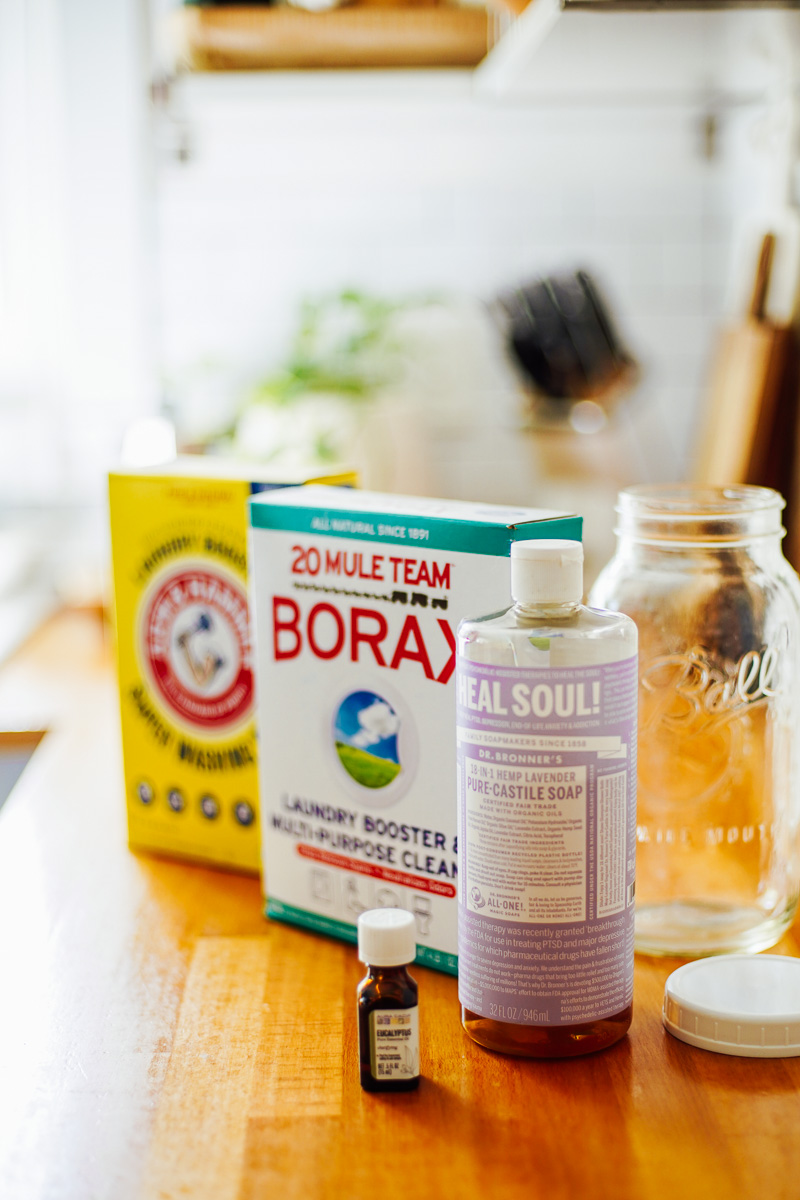
Before You Get Started: What You’ll Need
Ingredients
This recipe, made with simple ingredients, makes 1 gallon of homemade soap.
- 1 cup borax – freshens, deodorizes, and lifts dirt and stains
- 1 cup washing soda – freshens and deodorizes
- 1 cup liquid castile soap or Sal Suds – the main cleaning agent, lifts dirt and cleans
- 50 drops essential oil – optional for a scent
- 15 cups water – distilled water, found in any grocery store, is best as it doesn’t contain containments found in tap or filtered water
Equipment
- Large saucepan or Dutch oven – enough to hold 1 gallon of liquid, 15 cups
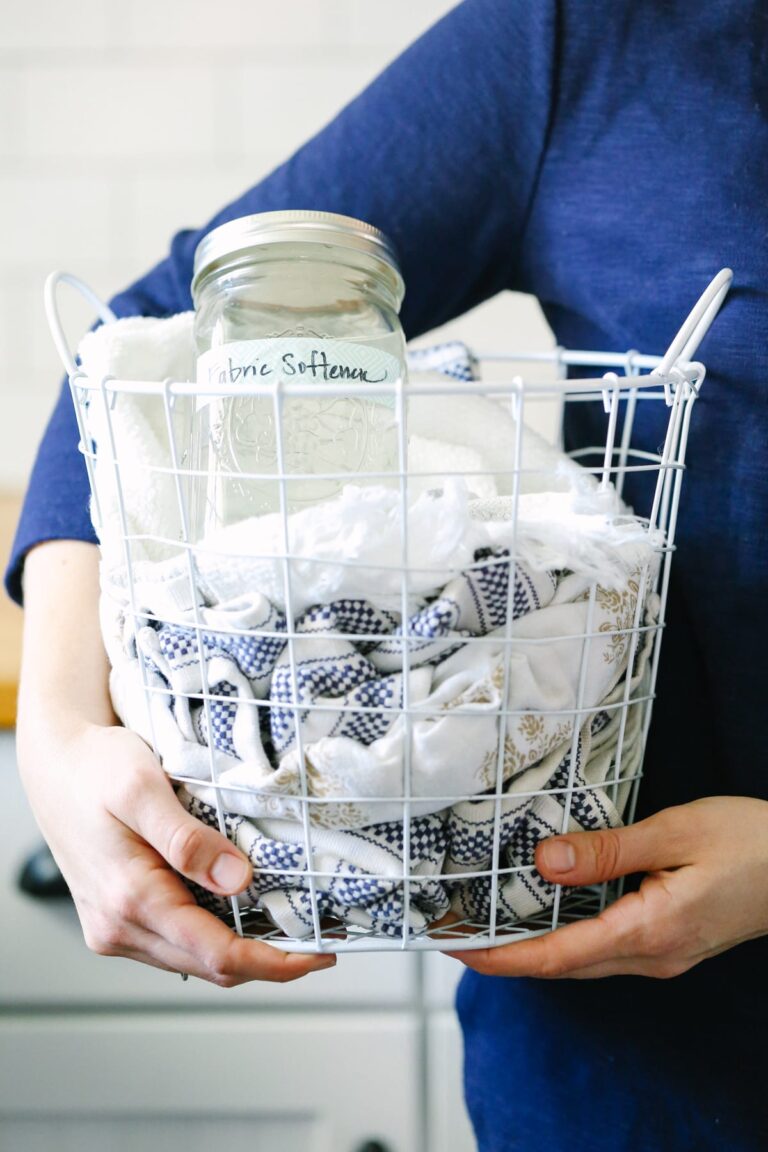
- Storage Jars – such as 2 half gallon-size glass mason jars, 1 gallon-size jar, or reuse an old detergent bottle
Thicker Detergent Tip: This recipe calls for 15 cups of water. If you’d like a thicker, more concentrated soap, use 10-12 cups of water.
How to Make Homemade Laundry Detergent: Recipe Steps
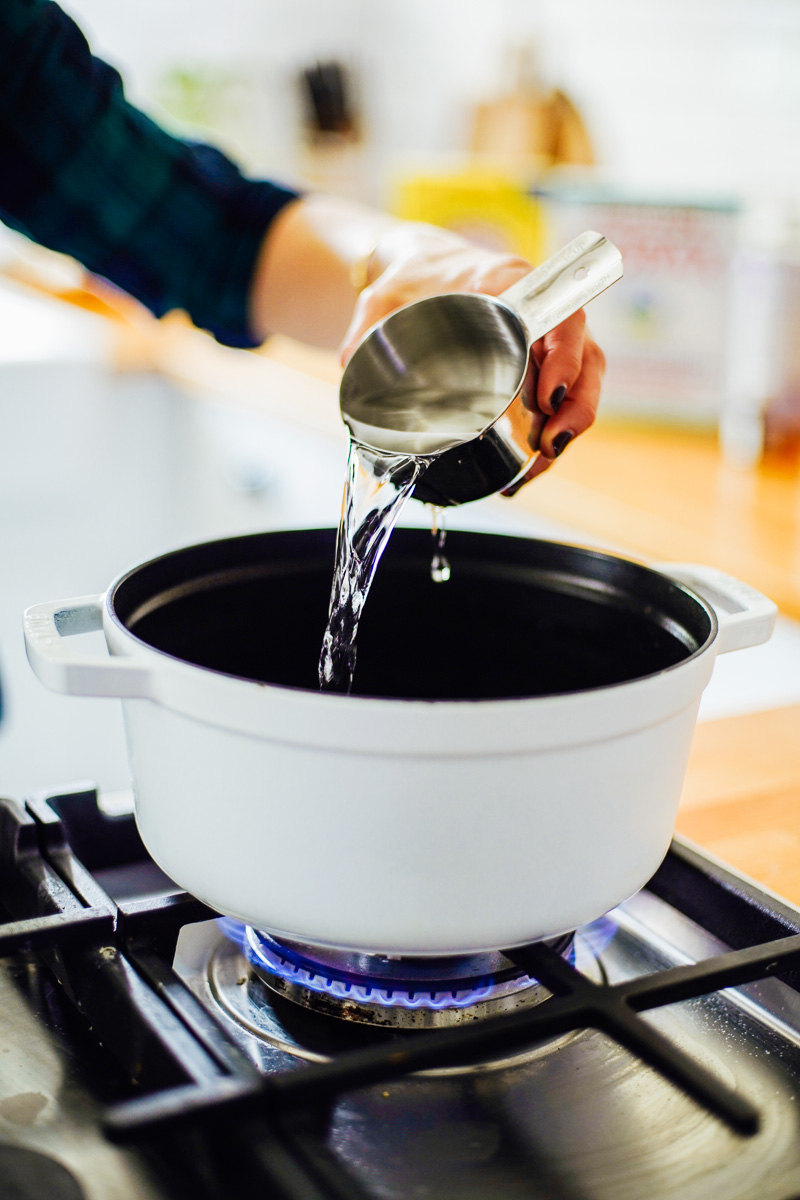
- Step 1 Boil 6 Cups of Water: In a large saucepan or Dutch oven, bring 6 cups of water to a slight boil. Once the water begins to boil, turn off the burner.
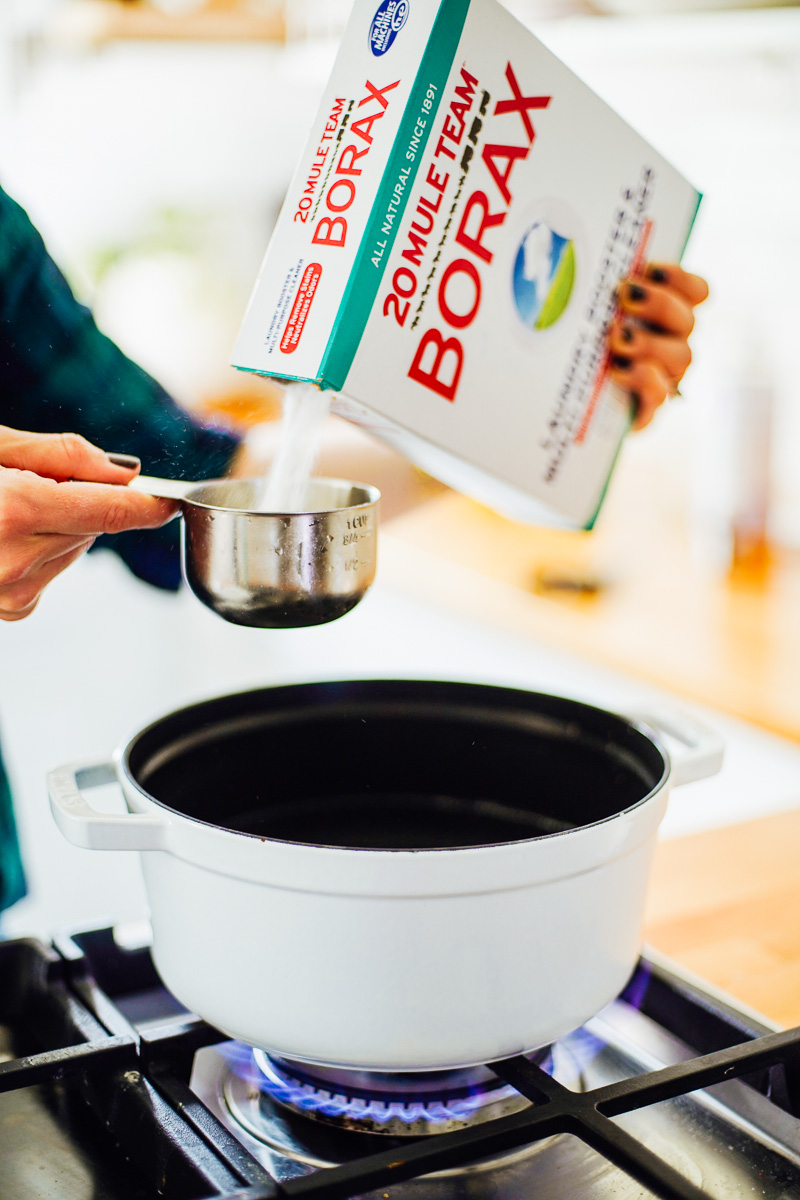
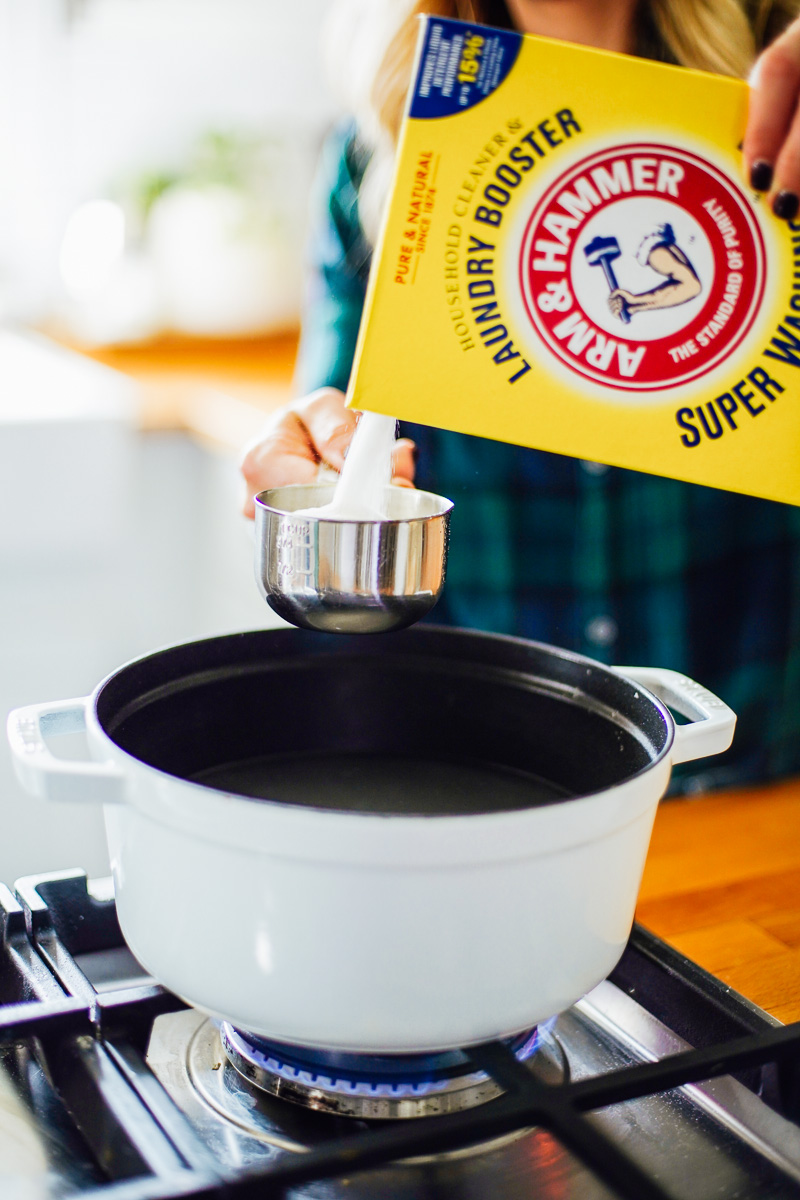
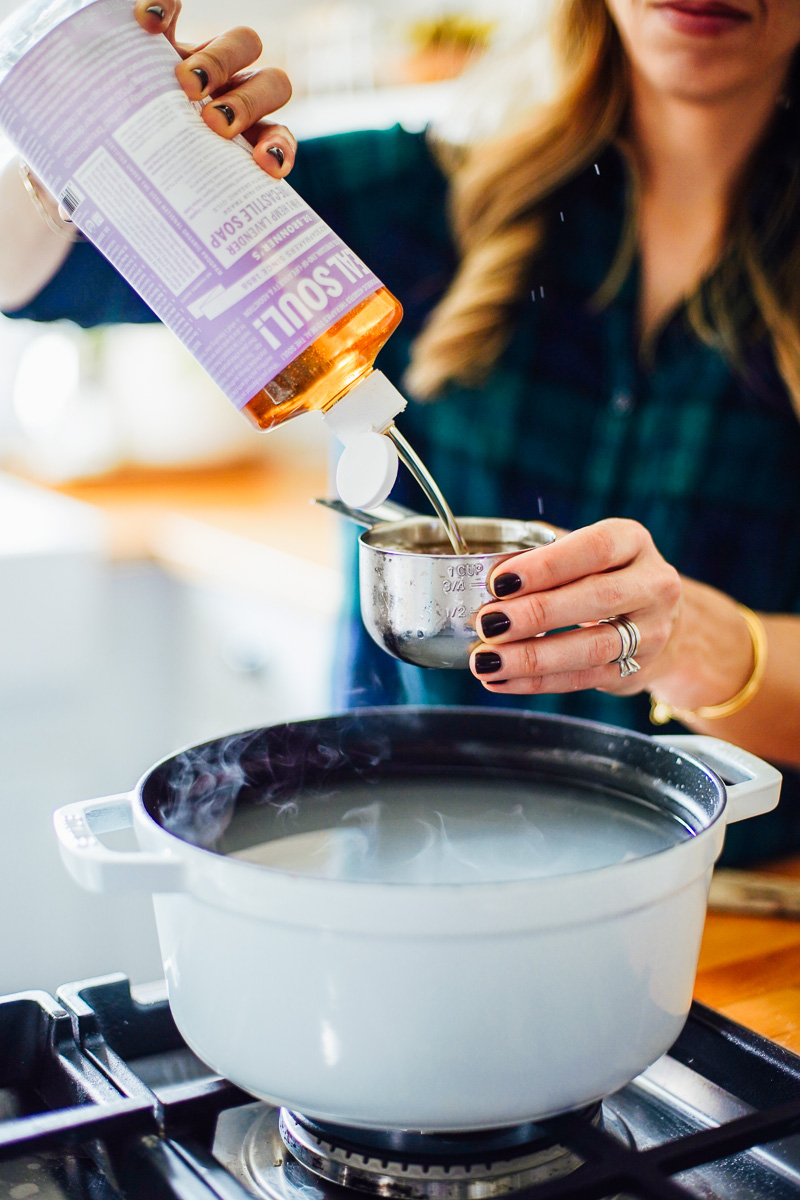
- Step 2 Add Borax, Washing Soda, More Water, and Castile Soap: Add the Borax and washing soda. Stir to dissolve. Then add 9 cups of room-temperature water and 1 cup of liquid castile soap. Give the ingredients a stir to combine.
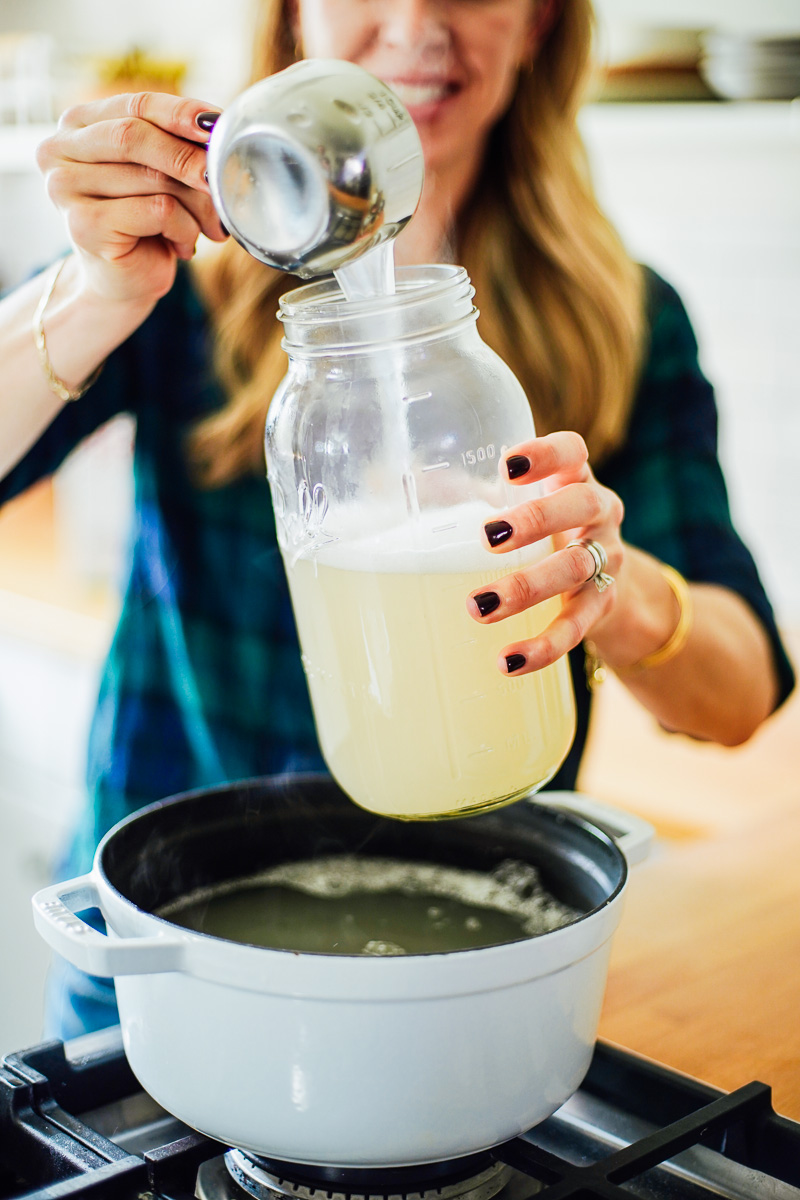
- Step 3 Cool for 5-10 Minutes: Allow the soap to cool for a few minutes before pouring into one large gallon-size jar or smaller containers, like quart-size jars. Make sure your jar(s) are heat-safe. If not, wait until the soap is cool, then spoon the soap into the jar(s).
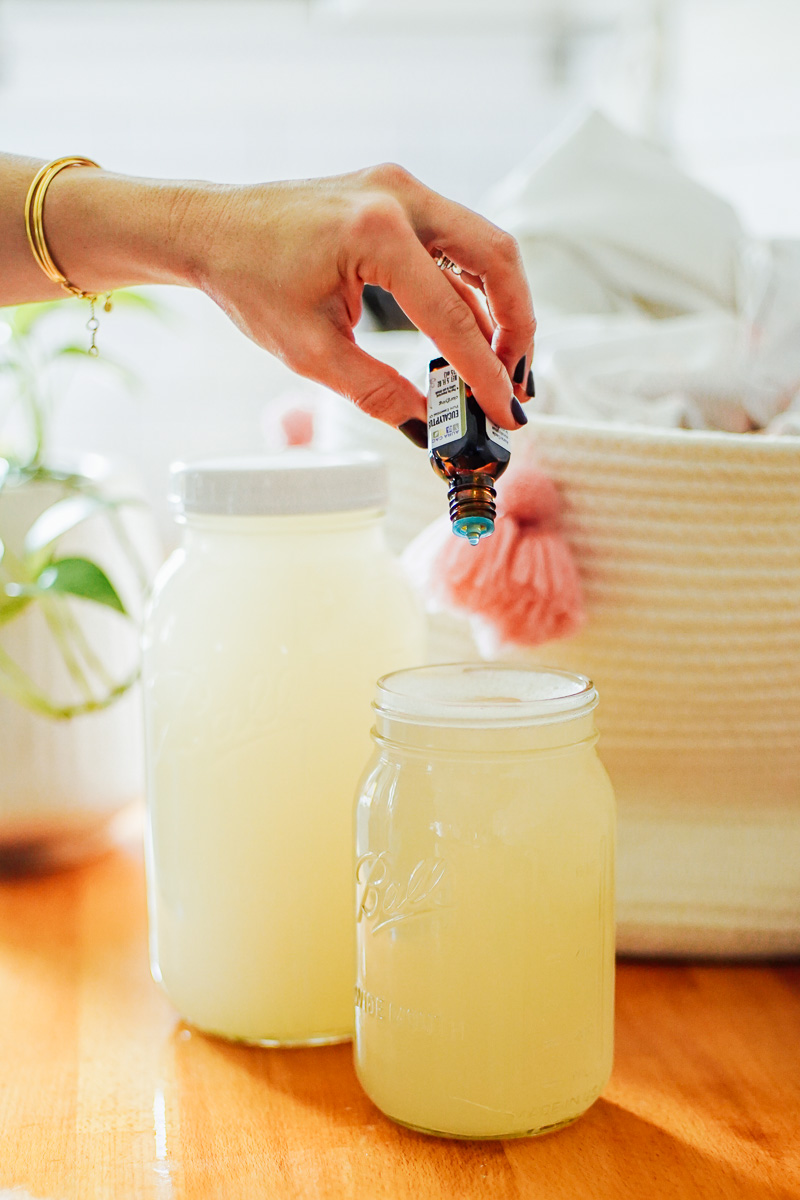
- Step 4 Add Essential Oil For Scent: Add an essential oil of choice (if using) to the soap (now in the jar) and stir to combine with the detergent.
What to Avoid Doing
- Baking Soda – Don’t use baking soda in place of washing soda. Washing soda has a different chemical composition and will not work in this recipe. It is NOT a substitute.
- Dish Soap – Don’t use other dish soaps in place of the castile soap. Dish soap will cause the soap to have too many bubbles in the wash.
- Lack of Suds – Don’t assume that a lack of suds and bubbles means the soap isn’t effective. Suds and bubbles don’t equal clean.
- Plastic Containers – If you’re reusing an old detergent bottle for storage, make sure the laundry detergent is fully cool before adding to a plastic container.
- Heat-Safe Glass – Use a heat-resistant glass jar (if using glass for storage), and also allow the detergent to cool a bit (about 10 minutes) before adding it.
- Essential Oils – The essential oil will add a subtle fragrance, but shouldn’t be added until the soap cools as heat will cause the essential oil to evaporate.
How to Prevent Chunky or Gelled Detergent
After a few days the liquid laundry detergent may clump or gel. This is a completely normal chemical reaction that is usually caused when the outside temperature is cooler. There’s no way to completely prevent this from happening; however, one option is to use more water (2-3 cups more) to make a less concentrated soap.
The laundry soap is 100% usable if it gels up (l actually love this form). Simply scoop the detergent from the container and add to the washer.
Key Takeaway: Whether the laundry detergent gels up or remains liquid, it’s 100% effective and usable in both forms.
How to Use This Liquid Laundry Soap
The detergent is ready to use immediately after making. And may be stored for later use.
- Give the jar a good shake or stir (with a long spoon) before use.
- Use this detergent just as you would any laundry soap to clean clothes.
- This homemade liquid laundry soap is highly concentrated, which means you need only a tiny amount to get a dirty job done.
- For top-loading washer machines, use 1/8-1/4 cup.
- For an HE front loader, use 1-2 tablespoons.
- Add the detergent directly to your washer or the laundry soap compartment.
Can I use this in an HE washer?
I do, so I can only speak to my personal experience. I use 1-2 tablespoons per load. If it’s in gel form, add it straight to the washer on top of the clothes.
Always consult your machine’s user guide before using any laundry detergent to know what your machine can and can’t handle.
How long does this recipe last?
- Use the soap within 1 month.
- Store in your laundry room, at room temperature.
- Learn more about the safety of making your own natural cleaners.
FAQs
- Can I use a castile soap bar instead of liquid castile soap? Yes, you can. Use a cheese grater to grate a bar of castile soap into the hot water (along with the borax and washing soda). Stir and continue to boil the ingredients to dissolve fully (takes about 10 minutes). I also use a bar of castile soap to make powder laundry soap.
- Is it normal that it’s more watery than soapy? Yes, this is normal. For a thicker, more concentrated detergent, there are two options: use Sal Suds instead of castile soap OR reduce the water to 10-12 cups for a more concentrated detergent.
- The detergent is chunky (or gelled) after cooling, is that normal? Yes, this is normal. Depending on your home’s temperature, the soap may be more liquid or even chunky (like a gel). Both are normal and usable!
- My laundry soap didn’t gel. What happened? If your environment is cooler, your laundry soap may gel after cooling. Or it may not. This is normal. Both forms are 100% good and usable. A reader recently shared this tip you can try as well, “I also like the the detergent to be more gelatinous and I use my immersion blender for a few seconds after it is cool to whip it. It turns white and jelly.”
- Is borax safe? Borax is a debated ingredient in naturally-minded circles. I personally don’t see any reason to avoid it. This borax article from Wellness Mama has fantastic information.
- Can I use this soap to lift stains? Yes, you can. You can either add the garment to the washer or add the garment to your kitchen sink with the soap and water and soak the garment to lift the stains. Or, apply the soap directly to the stain and scrub. If you’re dealing with tough stain, I recommend using this homemade stain remover before washing the garment.
- Does this soap work with hard water? Yes, it does. I have hard water and this soap works great. You may want to use this laundry softener recipe as well.
Conclusion: Does this detergent work?
People always ask me, “Will homemade soap work as well as a store-bought product?” The answer, “YES! It will.”
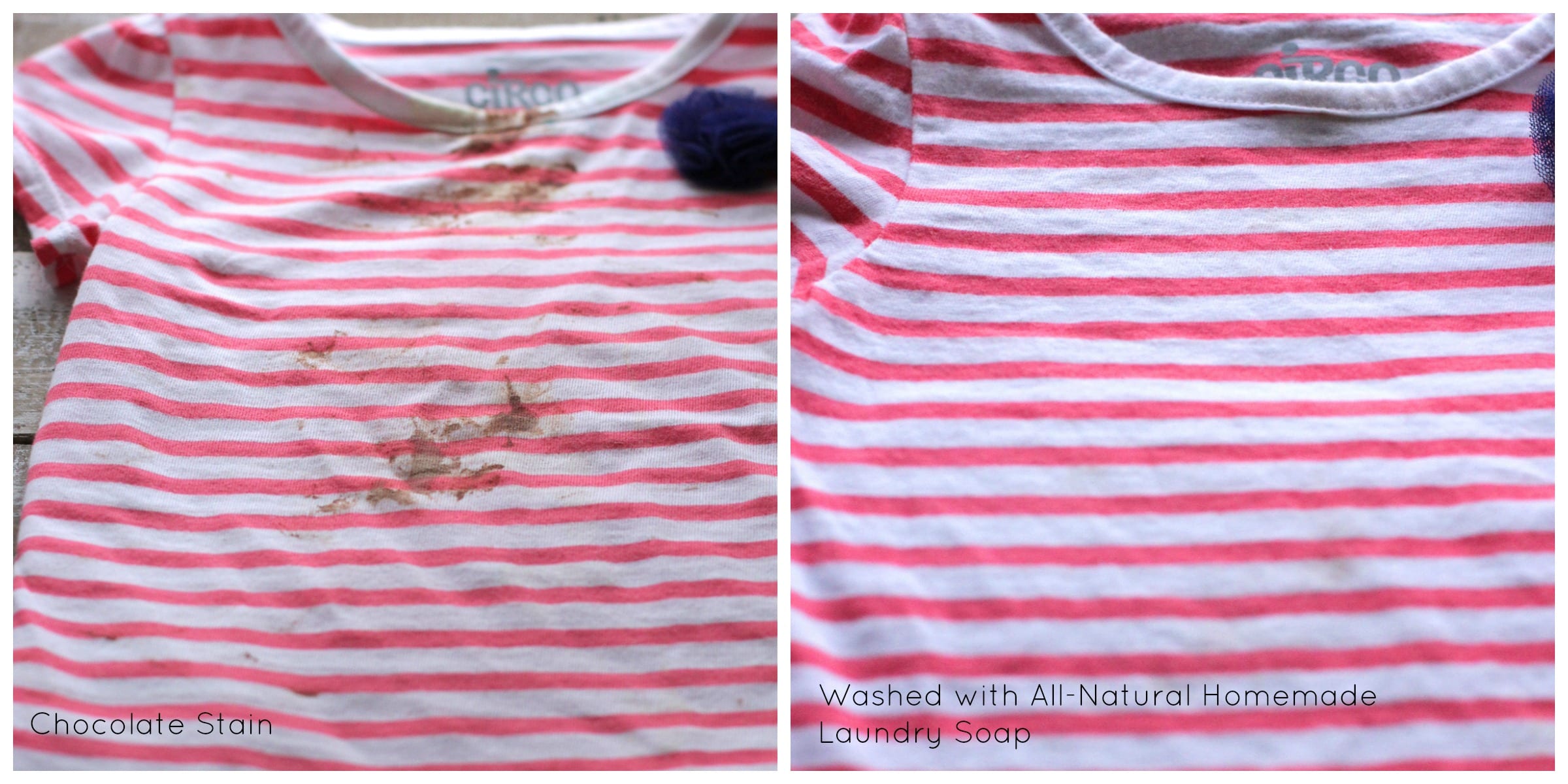
My daughter’s chocolate stain on the left and after using this detergent in the wash. The stain lifted and the shirt was saved. If you need need extra help lifting a stain, you can also use my homemade stain remover first.
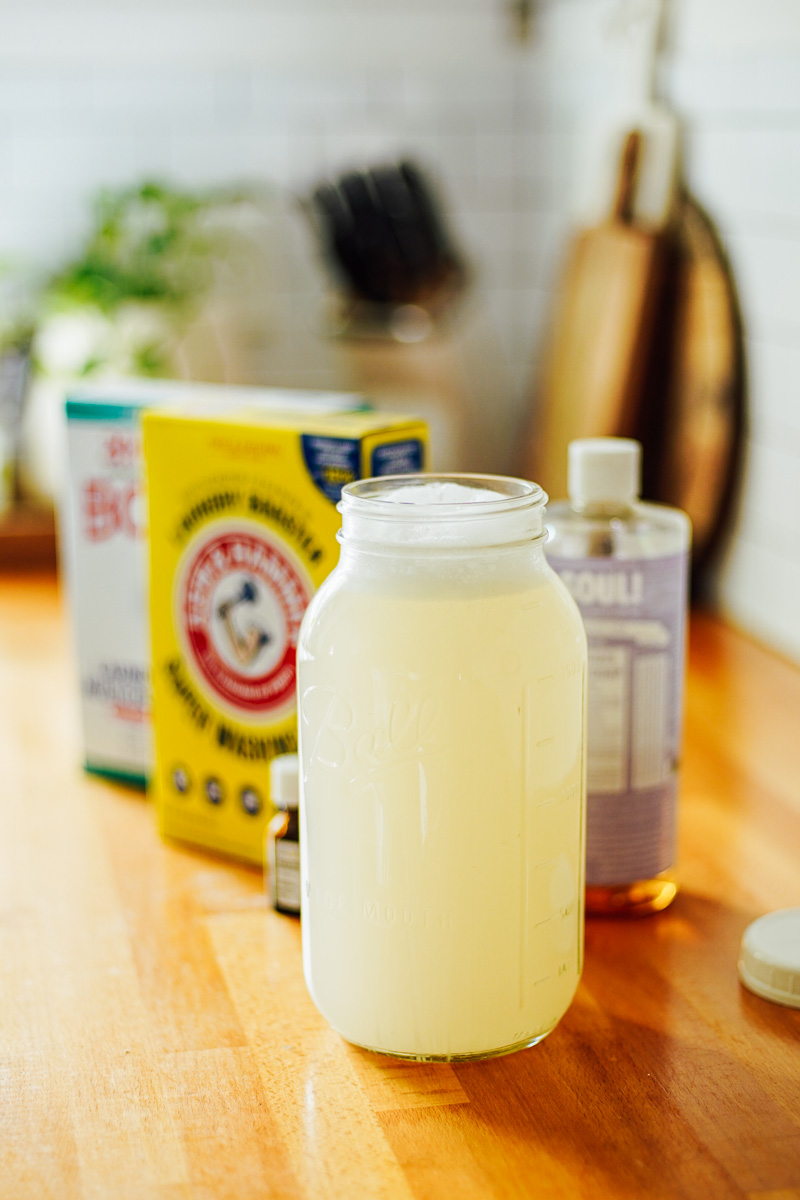

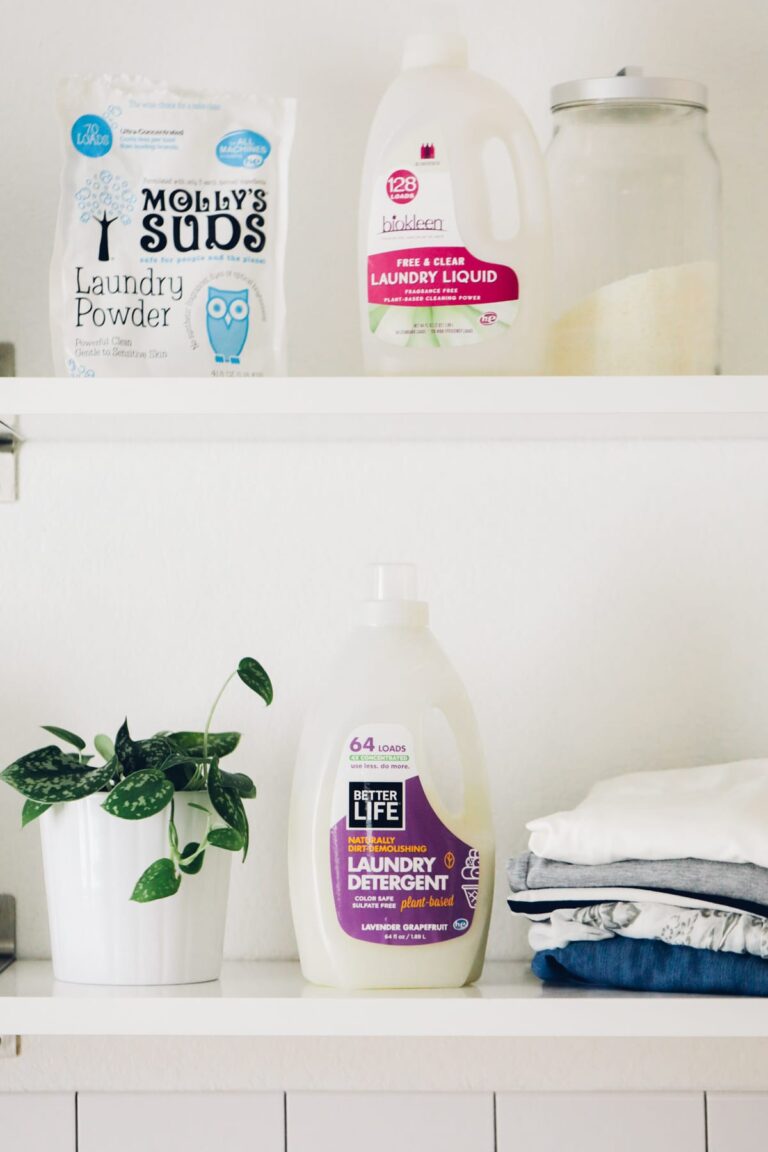
The Best Natural Laundry Detergent Brands: I’ve researched and tried many different laundry soap brands and narrowed down the best 11 brands!
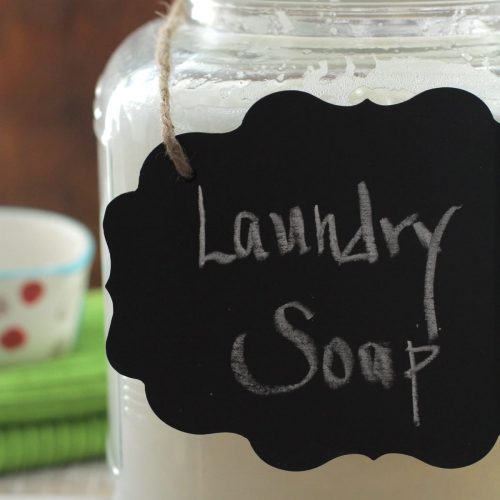
Homemade Liquid Laundry Detergent Recipe
Equipment
- 1 large saucepan or dutch oven (big enough to hold 15 cups of liquid)
- storage jars (such as 2 half gallon-size glass mason jars, 1 gallon-size jar, or reuse an old detergent bottle) for storing the laundry soap
Ingredients
- 1 cup borax
- 1 cup washing soda
- 1 cup liquid castile soap unscented or scented
- 15 cups water divided
- 50 drops essential oil optional for scent
Instructions
- In a large saucepan or Dutch oven, bring 6 cups of water to a slight boil. Once the water begins to boil, turn off the burner.
- Add the Borax and washing soda. Stir to dissolve. Then add 9 cups of room-temperature water and 1 cup of liquid castile soap. Give the ingredients a stir to combine.
- Allow the soap to cool for a few minutes before pouring into one large gallon-size jar or smaller containers, like quart-size jars. Make sure your jar(s) are heat-safe. If not, wait until the soap is cool, then spoon the soap into the jar(s).If you're reusing an old detergent bottle, make sure the soap is fully cool before adding to a plastic container.
- Add an essential oil of choice (if using) to the soap (now in the jar) and stir to combine with the detergent. The essential oil will add a subtle fragrance, but shouldn't be added until the soap cools as heat will cause the essential oil to evaporate.
- As the soap sits, the mixture may form into a gel and become chunky. There may also be liquid and gel separation, simply stir or shake. This is normal.
How to Use
- For top loading washer machines, use 1/8-1/4 cup. For a front loader, use 1-2 tablespoons. Add the detergent to the liquid soap compartment of the washer.
- Stain Treatment – Use a small amount of soap directly on the stain, scrub or rub the stain with a cloth. Repeat as needed, then wash the garment. Or use this stain remover spray.
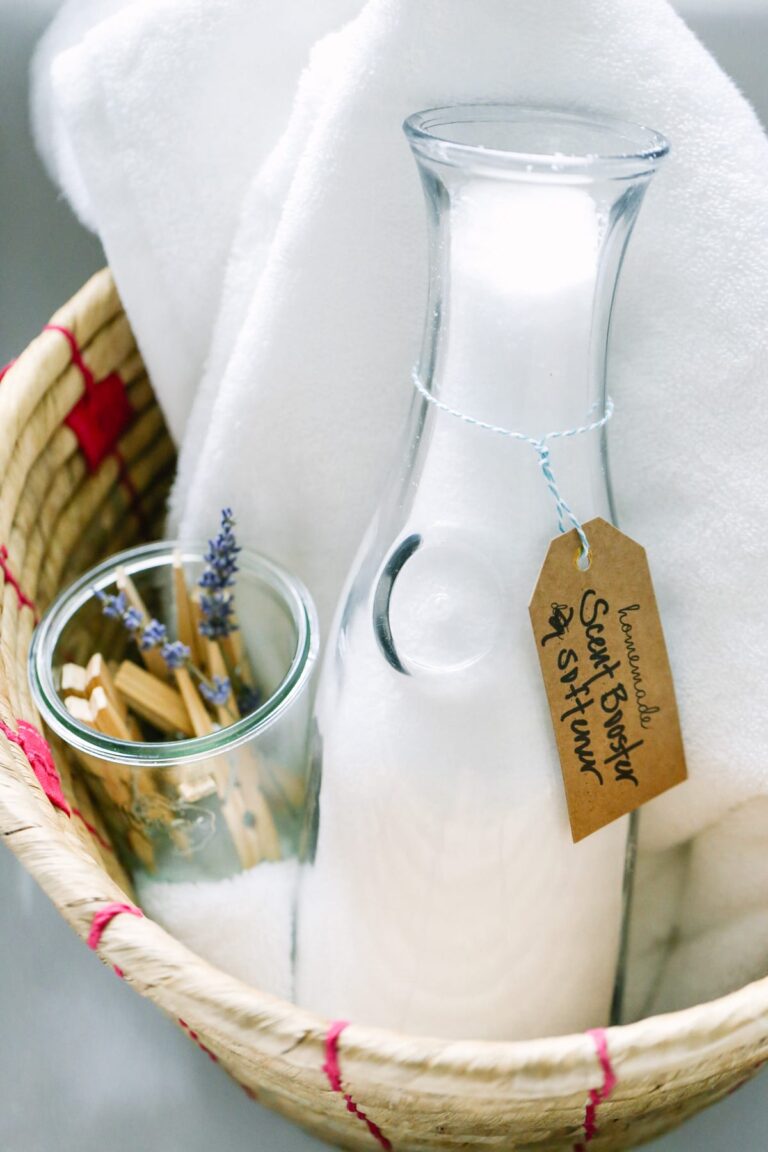
- Laundry Softener – This laundry detergent may be used with a fabric softener. I use vinegar added to the softener compartment or this salt scent booster & softener added directly to the wash basin before running a wash cycle.

Can I quarter the recipe or would the ratios change? I only want to make about a litre, as any more would be wasteful for my small family. Thank you!
Hi Savannah!
Yes, you can absolutely quarter the recipe—no need to change any ratios. It scales perfectly since it’s just dissolving the ingredients in water.
Quartered amounts for ~1 litre (about 4 cups):
¼ cup borax
¼ cup washing soda
¼ cup liquid castile soap
About 3¾ cups water total (boil 1½ cups, then add 2¼ cups room-temperature water)
Follow the same steps: boil the smaller amount of water, dissolve the powders, add the rest of the water + castile soap, cool, and store in a smaller jar. It should last you well for your small family (use within a month).
Is this safe for septic systems?
Hi Tracy! Yes, this homemade liquid laundry soap (borax, washing soda, Dr. Bronner’s castile, and water) is generally safe for septic systems.
Dr. Bronner’s castile soap is readily biodegradable and explicitly septic/greywater-safe per their site.
Borax and washing soda are commonly used in septic-friendly recipes in moderate amounts—they don’t harm bacteria like harsh chemicals do (many homesteaders and sources confirm this).
The liquid form breaks down easily, with no fillers or phosphates to clog things.
Stick to the recommended dose per load to avoid excess, and you’re good!
Today I made my 10th batch of this laundry liquid. This recipe is definitely my go to.
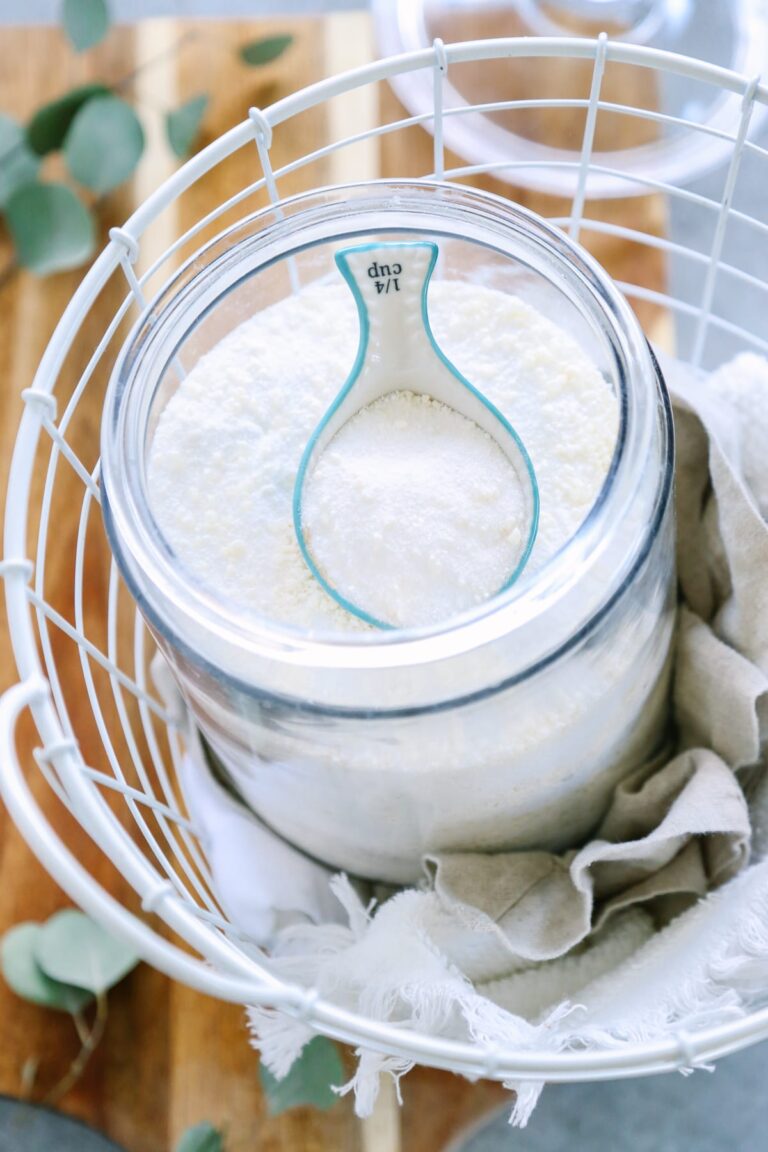
I store it in a wide mouth glass gallon jar and have a 1/4 cup measuring cup especially for it. It does go gloopy after a few days but by giving it a stir it is still usable.
For those wondering if it works as well as store bought detergent, I would say there is no noticeable difference. And you get the bonus of knowing exactly what products are cleaning your clothes.
Thanks for the great recipe.
How in the world could I use up a batch of this DIY laundry detergent in a month? Why does it have to be used up so quickly?
It is water-based and made without any preservatives, so there is a risk of bacterial or mold growth over time if stored beyond the recommended one month, especially in larger batches or warmer/humid conditions (as noted on the blog). The high pH from borax and washing soda helps inhibit it somewhat, but the guideline is there to minimize that potential issue while keeping things natural. If you want to extend shelf life safely, consider adding a few drops of tea tree or grapefruit seed extract as natural antimicrobials next time, or just make smaller batches.
Can I quarter the recipe or would the ratios change? I only want to make about a litre, as any more would be wasteful for my small family.
Thank you!
Hi Savannah!
Yes, you can absolutely quarter the recipe—no need to change any ratios. It scales perfectly since it’s just dissolving the ingredients in water.
Quartered amounts for ~1 litre (about 4 cups):
¼ cup borax
¼ cup washing soda
¼ cup liquid castile soap
About 3¾ cups water total (boil 1½ cups, then add 2¼ cups room-temperature water)
Follow the same steps: boil the smaller amount of water, dissolve the powders, add the rest of the water + castile soap, cool, and store in a smaller jar. It should last you well for your small family (use within a month).
Mine became a very thick gel as soon as it cooled (the consistency is similar to soft serve ice cream) can I put it back into the pan and mix water with it to thin it out??? What did I do wrong??
I will add this recipe is super easy and if I can solve the thickness issue, I will make it over and over again.
Thanks!
Hi Rose! The gel-like thickness (like soft serve) is super common with this borax + washing soda + castile recipe, it happens naturally as it cools and isn’t a mistake. The soap works great either way!
To make it more liquidy/pourable right now:
Warm it gently (place the jar in hot water or microwave in short bursts).
Add warm distilled water a little at a time—start with 1–2 tablespoons per cup of soap, stir well, and repeat until it’s the consistency you want (many readers add 2–3 extra cups total water upfront in future batches for a thinner result from the start).
For even smoother results:
Use an immersion blender for a few seconds once slightly cooled—it whips it into a nice, uniform jelly-like texture that’s easier to pour.
Store in a warmer spot (>70°F) and shake/stir before each use to prevent re-gelling.
If you want to experiment for next time, some folks add a small amount (like 1/4 cup vegetable glycerin or 1 tablespoon liquid aloe vera gel) during mixing for a smoother, less prone-to-gelling texture without changing cleaning power.
Let me know how the thinned version works!
This works great.
I think you have a typo under baking soda where it says washing soda will not work. But it’s one of the ingredients for the soap .”Washing soda has a different chemical composition and will not work in this recipe. It is NOT a substitute.”
The wording can be a bit tricky there. What it means is that you should not substitute baking soda for the washing soda (which is one of the key ingredients, along with borax and liquid castile soap). Baking soda (sodium bicarbonate) and washing soda (sodium carbonate) are chemically different, and baking soda won’t provide the same strong cleaning and alkalinity needed for this recipe to work effectively. That’s why the warning is there to prevent people from swapping them and ending up with a less effective soap.
It’s not saying washing soda won’t work, it’s saying don’t use baking soda instead of it. I can see how the phrasing might read as a typo or mix-up at first glance, thanks for pointing it out! I’ll consider clarifying that section to make it even clearer for future readers.
I’m glad the recipe is performing well for you.
Before making the recipe, I have a question pertaining to what was mentioned. Did I read correctly that it is recommended to use the laundry detergent within a month?
Yes, you read that correctly! In the recipe for the Homemade Liquid Laundry Soap, it is recommended to use the soap within 1 month (or up to 1 month for best results). This is because it’s a homemade product made with water and natural ingredients like liquid castile soap, borax, and washing soda, without any preservatives. Storing it longer can sometimes lead to separation, changes in texture, or reduced effectiveness, though many people find it still works fine a bit beyond that if it looks and smells okay.
The post specifically notes: “Use the soap within 1 month” and “Store this liquid laundry soap for up to 1 month” at room temperature in the laundry room.
If you make a smaller batch, it helps ensure you use it up quickly. Some readers in the comments have shared that they refrigerate it to extend the time slightly or make it in smaller quantities.
This is my second year making this. You read that correctly. Year.
Granted the kids are out of the house and there is a lot less laundry, but that’s the longevity you can get outta this recipe ❤️
Thank you for sharing your experience with my Homemade Liquid Laundry Detergent recipe, Gina!
i got this from dr bonner too, it does give these white dried soap on my laundry
but it does clean, boy does it clean. but dr bonner is a little different
Limor, thanks for chiming in! Dr. Bronner’s cleans fiercely but yeah, residue city for some. Pro fix: 1 tbsp max + 1/4 cup vinegar in fabric softener spot.
I followed this recipe and the next morning it solidified. I’m not sure what I did wrong. I will try to put some into another container and add water to see if that helps.
Any other suggestions?
Hi Tara,
Thanks for trying out the homemade liquid laundry soap recipe and reaching out about the solidification issue! Don’t worry, this is a common hiccup with recipes like this, especially since ingredients like castile soap can behave differently depending on factors like temperature or water hardness.
Adding water to loosen it up, as you mentioned, is a great first step. Try diluting it with small amounts of warm distilled water (about 1-2 tablespoons at a time) and stir gently until you reach a pourable consistency. Distilled water helps avoid mineral interactions that might contribute to the issue. Here are a few other suggestions to prevent or fix solidification:
Check Your Soap-to-Water Ratio: If you accidentally used less water than the recipe’s 10 cups, it can cause the mixture to thicken too much. Double-check measurements, and if needed, add more hot water to the mix while stirring over low heat.
Temperature Control: Castile soap-based detergents can gel up in cooler temps. Store your detergent in a warmer spot (above 70°F) or gently warm the container in a hot water bath to reliquify it before use. Shake well after.
Hard Water Fix: If your tap water is hard (high in minerals), it can cause the soap to solidify. Switching to distilled or filtered water for future batches should help keep it liquid.
Add a Natural Softener: Stir in 1/4 cup of vegetable glycerin or a tablespoon of liquid aloe vera gel to the batch. These can help maintain a smoother, more liquid texture without affecting cleaning power.
If it solidifies again or doesn’t quite work as expected, let me know what ingredients you used or if you made any substitutions
Dr Bronner makes scented Castile soap. I prefer the lavender. I use a couple drops of lavender EO on my dryer ball and my laundry smells great when it’s done.
Hi Caroline,
Thanks for sharing your tip! I love the idea of using Dr. Bronner’s lavender Castile soap and adding a few drops of lavender essential oil to the dryer ball. That must make your laundry smell amazing. Appreciate you taking the time to comment!
Hi there. I am wondering why my clothes don’t smell like anything? I put in the recommended amount of essential oil, waited until the detergent cooled etc. The detergent smells nice but my clothes don’t. Why would this be?
Hi Marta,
Thank you for trying the homemade laundry soap recipe and sharing your experience! It’s great to hear the detergent itself smells nice, but I’m sorry the scent isn’t lingering on your clothes. This is a common issue with natural laundry detergents, as essential oils are volatile and tend to evaporate during the wash and dry cycles, unlike synthetic fragrances in commercial detergents that are designed to cling to fabrics. Here are a few tips to help boost the scent on your clothes:
Increase Essential Oils Slightly: The recipe calls for 20-30 drops of essential oils per batch. You could try adding a bit more (e.g., 40-50 drops) to strengthen the scent, but be cautious not to overdo it, as too much oil can leave residue.
Add Scent at the Rinse Cycle: Try adding a few drops of essential oil to a washcloth and tossing it into the rinse cycle or dryer (if using a dryer). This can help the scent stick to clothes better.
Check Water Temperature: Hot water can cause essential oils to evaporate faster. If you’re washing with hot water, try a warm or cold cycle to help retain the scent.
Dryer Balls with Essential Oils: If you use wool dryer balls, add 2-3 drops of essential oil to each ball before drying to infuse clothes with scent.
It might also depend on the type of essential oil you’re using—citrus oils (like lemon) fade faster than heavier ones like lavender or cedarwood. Could you share which oils you used? That might help pinpoint the issue. Let me know how these tips work or if you have other questions. Happy laundering!
Hi there! Thank you so much for this recipe! I have used it twice now! However I find that I am using the suggested amount for essential oils, and once my laundry goes through the drier, it doesnt smell like anything. The second time I made this i doubled the essential oils and still no smell. I feel like im wasting essential oils, and I did what you instructed, waited until it was completely cool in the jar to add them. I have tried both adding it into the detergent compartment and directly into the drum. I have a HE top loader so I use 1/4 to 1/2 cup of the detergent. I get a hint of the small when I transfer from the washer to the drier, but once the drier cycle is done. There is no scent. Any advice?
Hi Marta, thrilled you’re loving the homemade laundry soap recipe! Sorry to hear the essential oil scent isn’t lasting through the dryer. Here are a few tips to boost the fragrance:
Increase Essential Oils Slightly: You’ve doubled already, but try adding a bit more (e.g., 50-60 drops per batch) and mix well. Oils like lavender, lemon, or tea tree tend to hold up better. Add them after cooling, as you’re doing, to preserve potency.
Scent Boosters: Try adding 1-2 tablespoons of scented Epsom salts (infused with essential oils) or a few drops of essential oil on a wool dryer ball or damp cloth tossed in the dryer. This can help carry the scent through the drying cycle.
HE Machine Adjustment: Since you’re using an HE top loader, ensure the detergent is fully dissolved by adding it to the drum before clothes. You might also try a smaller load size to see if better agitation helps the scent stick.
Check Water Temp: Hot or warm water in the wash can help the scent adhere better than cold. If you’re using cold, test a warm cycle if safe for your fabrics.
If none of these work, your dryer’s heat might be dissipating the oils. Happy washing!
If you’re not adverse to fragrance oils, you could try that. Fragrance oils tend to stick to the fabric more than essential oils. Overall you’re still going to have a product that has FAR less chemicals than commercial detergents. Hope this helps.
The article title says 3 ingredients. There are five listed. Where is the 3-ingredient soap?
Thank you for your comment and for pointing out the confusion! In the recipe, I referred to the core 3 ingredients—1 cup borax, 1 cup washing soda, and 1 cup liquid castile soap—as the base for the soap, not counting water since it’s a carrier. The essential oils (50 drops) are completely optional for scent and not part of the core recipe.
Do you think I can use a homemade castile soap in this? I use coconut oil as my oil.
Hi Brooke,
Thanks for your comment and for trying the liquid laundry soap recipe! Yes, you can definitely use your homemade castile soap made with coconut oil in this recipe. It should work well as a substitute for the store-bought castile soap bar, providing great cleaning power and lather. Just make sure your soap is fully cured and grated finely so it dissolves smoothly in the hot water. The coconut oil might make it a bit sudsier, which is perfect for laundry, but give your clothes an extra rinse if you notice any residue on delicate fabrics.
Hi, is impossible to skip the borax and just add citric acid as needed to each load? I do have hard water, but have a water softener. Thanks!
Hi Erin, thanks for your question! With a water softener in place, you’re already tackling most of the hard water issues, so skipping the borax and adding citric acid per load is definitely possible. Borax softens water and boosts cleaning, but your softener should handle most of the mineral content, and citric acid (about 1/2–1 teaspoon per load, dissolved in a bit of warm water) can help with any residual hardness. Just note that borax also helps with stain removal and keeps the detergent stable, so without it, you might need to shake the soap well before use, and cleaning power could be slightly less for tough stains.
I’d suggest trying it without borax for a few loads to see how it performs with your water and laundry. If you find it’s not quite cutting it, you could add a smaller amount of borax (like half the recipe’s amount) for extra cleaning oomph. Let me know how it works out or if you have more questions—happy laundering!
Hi! Tried making and it did not solidified even slightly. It is still watery. I think I used too much water…
I used dr. Bronner liquid Castile soap (peppermint)
If yours is still fully watery and didn’t show any gelling even after cooling/sitting, the most likely cause is using a bit too much water (easy to do when measuring large amounts) or the specific interaction with the castile soap and your water temperature/environment. The post notes that it’s normal to be more watery than soapy, and for a thicker result, you can reduce water to 10-12 cups next time or try Sal Suds instead of castile (Sal Suds tends to create a more concentrated, gel-like consistency).
No need to toss this batch, though! It’s still 100% usable as a liquid detergent. Just shake or stir well before each use (separation is normal), and use the usual amount (about 1/4 to 1/2 cup per load, depending on your machine and soil level). It should clean just as well, even if it’s thin.
I substituted borax for baking soda and added some Epsom salt to enhance the cleaning in color retention. It is separating super bad after sitting for a little bit. Anything I can do to help that?
Hey Claire, Separation is normal. Just stir or shake as needed.
According to the environmental working groups website EWG.ORG Borax is not a safe ingredient, someone recommends LA’s totally awesome oxygen, wish you well
Okay thanks for your opinion, Kevin.
Is this safe for septic systems and grey water systems?
Hey Claire, I don’t know.
Do you have this recipe worked out for large batches?
Hey Theresa, I don’t recommend making a water-based product like this in large batches, unless you plan to use it quickly. There’s too much risk for bacterial growth. That said, you could always double or triple the recipe amount.
Hi Kristin!
I never thought that bacteria could grow in laundry detergent, it seems like the PH would be pretty high with the soda ash and borax. I asked Chatgpt to give me the pH of this recipe (using 15 cups water) and it says it’s around 10.5.
I highly doubt anything could grow in that, hence my hunch that this detergent can keep for very long, especially if you use less water. The ph would probably be a bit higher too if you used less water, and made it more gel like, thus enhancing it’s shelf life
Just my theory!
Anyways thank you so much for the recipe!
Thank you so much for sharing, Narjy! Enjoy!