
The first of September is just one week away, and my social media feed is already buzzing with talk of pumpkin baked goods and cozy soups. I’ve even read a few status updates that mention cooler weather.
Want to Save This Recipe?
Enter your email & I’ll send it straight to your inbox. And you’ll get new recipes & tips each week.
I haven’t embraced a can of pumpkin just yet, and the temperatures in Florida are still close to 100 degrees. But I’m all for thinking about cooler weather foods, like cozy soups, warm yeast bread, and a chai latte. Then again, I don’t think I ever stopped enjoying cooler weather foods. September just means that it’s safe to talk about them in public, right?!
As the weather begins to cool down (and we Floridians lower the temperature of our air conditioning systems to pretend), there’s no better time to make a loaf of homemade bread.
I must stop here and tell you: I don’t make yeast bread very often. In fact, 99% of the time, I purchase bread from a local market in our area. The market bakes and sells this incredible sourdough bread, which is perfect for toast and sandwiches. Just recently, I attended a sourdough class and “birthed” my first successful sourdough starter (see the photo, here), so hopefully with lots of practice and patience, I’ll be able to make amazing sourdough bread in the future, too. In the meantime, I purchase bread from the market.
In the fall, when soup graces our table far more often than it did during the summer grilling season, and the kids are in school during the day (which means a few quiet hours during the day to work and think), I’ll sometimes whisk together a few simple ingredients to make a loaf of homemade bread to have with dinner.
There’s nothing, in the kitchen, like the smell and gratification that comes from mixing together the ingredients to make a yeast bread, watching the sticky dough magically double in size, and then breathe in the aroma of the bread baking in the oven.
And when I actually take the time to make a homemade loaf of bread, the slices are usually gone within a few hours, leaving just a couple of slices left to enjoy (and fight over ;)) with an evening soup. When I remember to sneak some of the homemade bread out of sight before school pickup, the thick slices are used to make the best French toast on Saturday morning. There’s just something incredible about thick-sliced French toast that’s made from soft homemade bread!
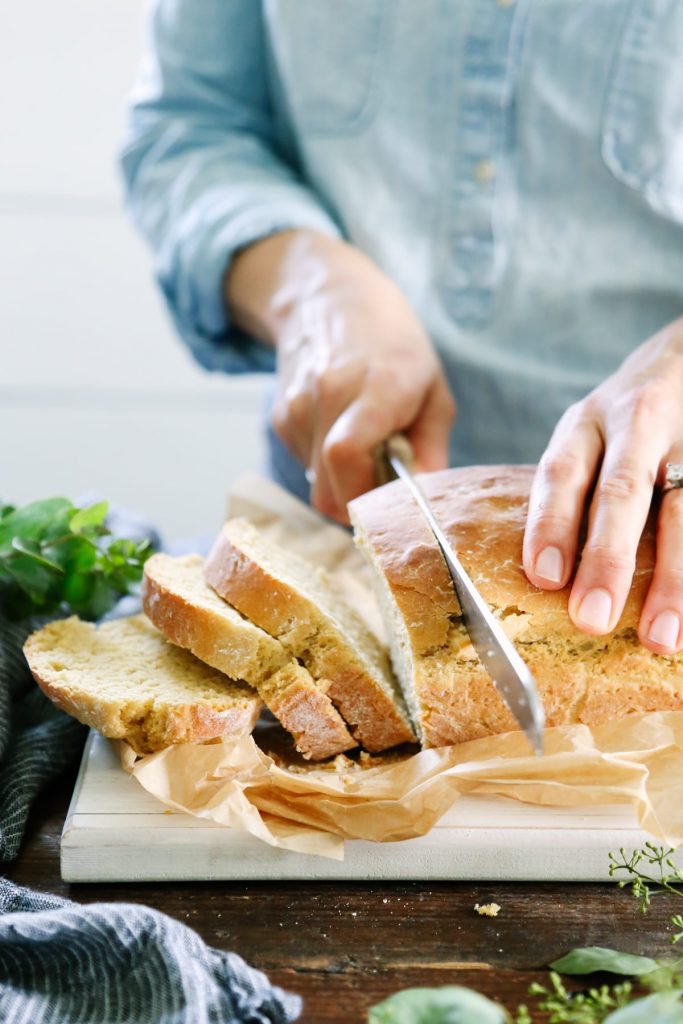
As you’ve probably guessed, today’s recipe is for homemade bread. A couple of years ago, I shared a whole wheat bread recipe and crusty bread recipe, both of which have become reader favorites. Today’s recipe is a whole grain-based bread, but it doesn’t call for whole wheat flour; rather, this recipe is made from einkorn flour.
If you’ve been around Live Simply for a while, you may already know about einkorn flour. If you’re new to Live Simply, or just need a refresher, let’s chat for just a second about this special flour, and why it makes such great homemade bread.
What is Einkorn Flour?
Einkorn is known as the oldest variety of wheat making it an “ancient” grain. The ancient grain is believed to have originated in the Tigris-Euphrates region and is possibly the main grain referenced in the earliest accounts of the Bible. To put it simply, einkorn is the wheat men were eating in the earliest days before modern-day wheat varieties. While modern wheat has undergone hybridization, einkorn still holds true to its original properties. Einkorn is slowly gaining popularity, but is still grown in only a few regions in Europe.
The sweet, ancient grain has a lighter texture and taste than modern-day wheat, and contains a more favorable gluten ratio. People with minor gluten sensitives may be able to consume einkorn without the issues associated with whole wheat due the lack of D-genome, however, einkorn is not gluten-free. Einkorn is packed with nutrition, containing high levels of protein along with the antioxidant beta-carotene lutein and minerals.
Einkorn looks and tastes similar to white flour, so it’s the perfect healthy flour to use when making soft, fluffy bread. Einkorn is sold in some health food stores and online.
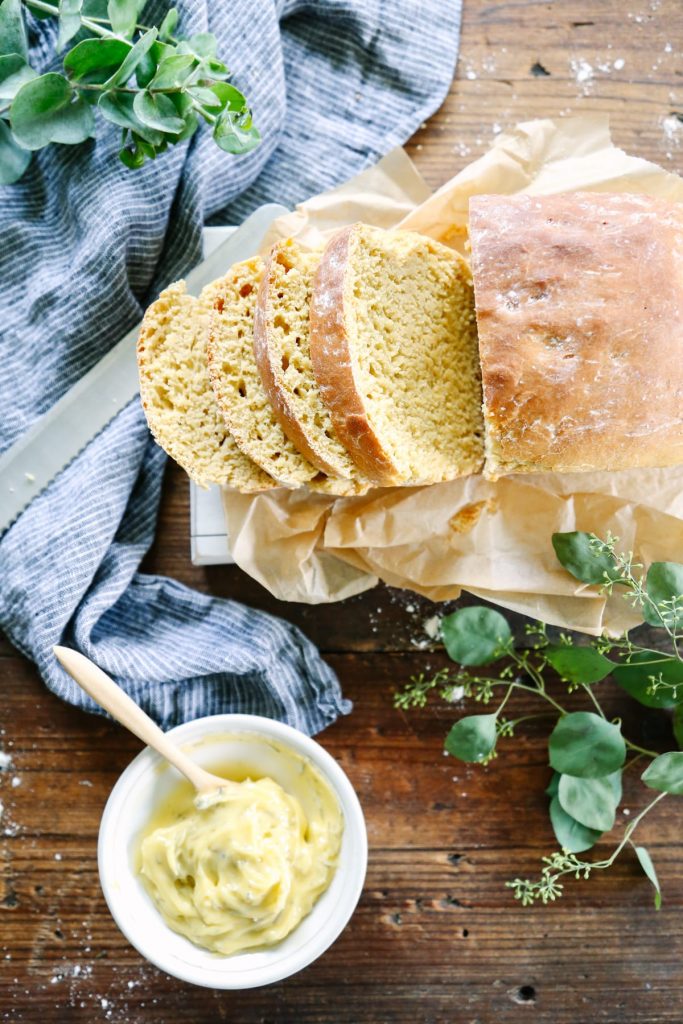
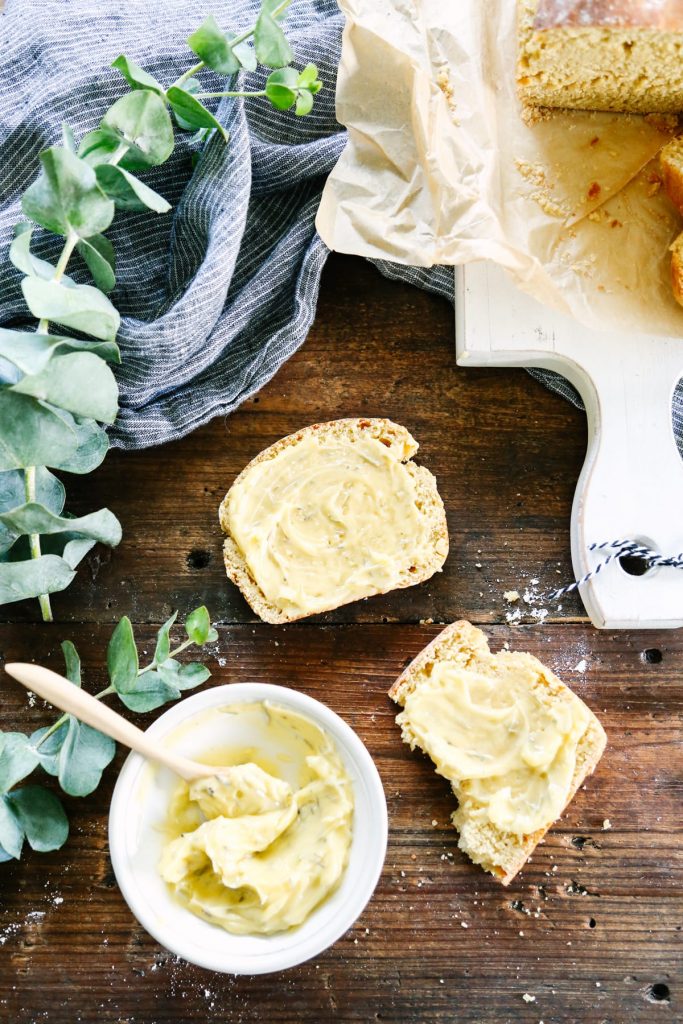
Today’s recipe uses just four simple ingredients to make a soft and sweet homemade bread that’s delicious to serve with butter and soup, or turn into French toast. I personally find that this bread is a bit too soft for sandwiches, although I may be biased since I prefer my sandwiches to made with dense sourdough bread. If you’d like to try to make this bread for sandwiches, you may want to reduce the honey to only 2 tablespoons. This may also mean upping the flour amount by just a tablespoon or two.
Happy soon-to-be fall, and happy baking!
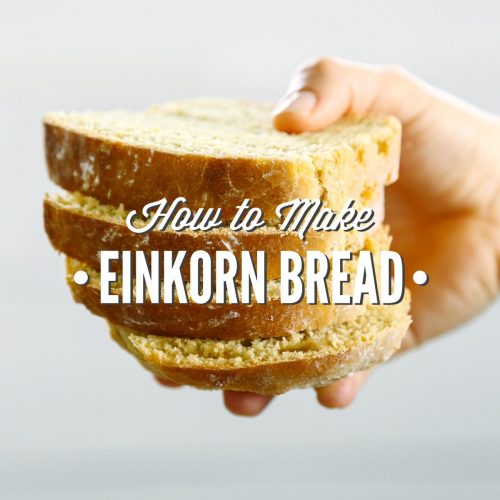
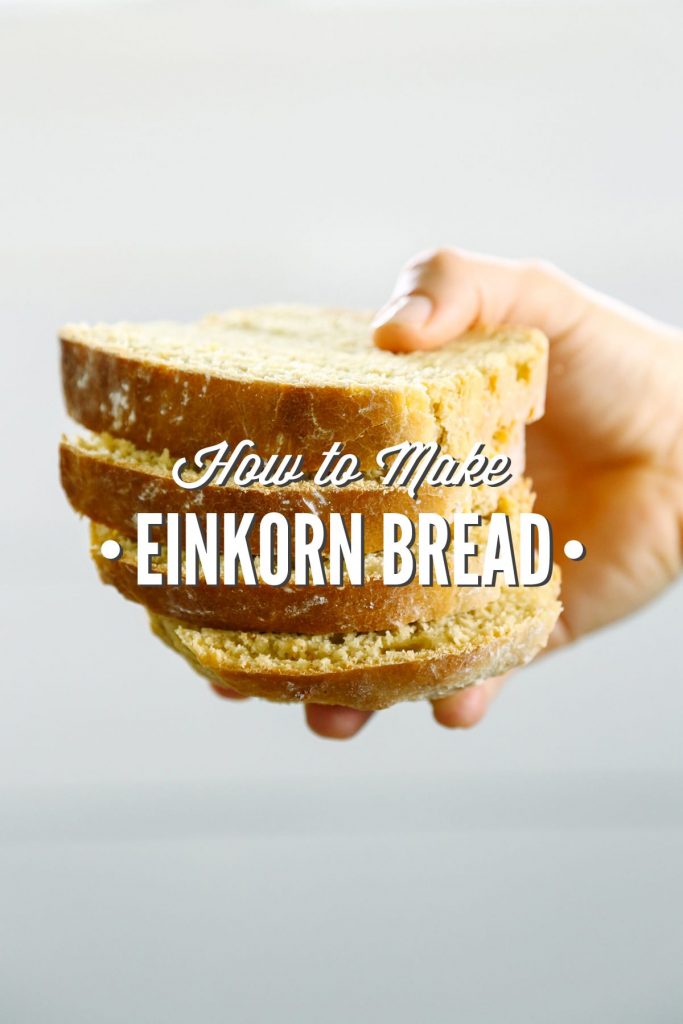
How to Make Einkorn Bread
Ingredients
- 1 cup water room temperature, 230 g
- 2 tsp active dry yeast
- 1/4 cup honey 80 g
- 2 TB extra virgin olive oil 20 g
- 1 tsp salt
- 3 1/2 cups all-purpose einkorn flour See “Ingredient Notes” for using whole wheat einkorn flour or freshly-milled einkorn flour., 440 g, where to buy
Instructions
- In a large bowl, sprinkle the active dry yeast over the water. Let the mixture rest for about 5 minutes. You’ll notice that the yeast begins to foam and sink.
- Whisk in the honey, extra virgin olive oil, and salt. Add the flour, and stir with a wooden spoon just until it becomes too hard to stir the mixture with a spoon. Your hands will get messy for this next part, that’s just part of the bread-making process.
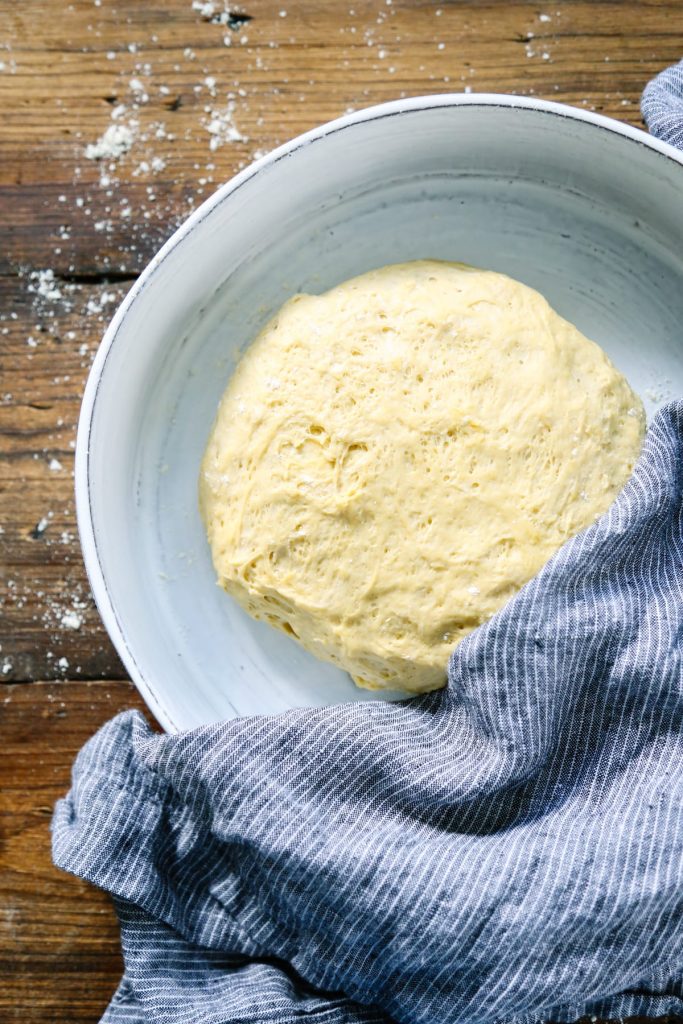
- Use your fingertips to bring the rest of the flour into the dough mixture. This may require gently kneading the dough a couple of times. Einkorn doesn’t like to be messed with, so do not overwork the dough. Stop “kneading” once the flour has been combined with the wet ingredients. The dough will probably feel and look sticky. That’s okay! Einkorn slowly absorbs liquid ingredients, so as it rests, it will absorb more of the liquids.
- Cover the dough with a towel, and let it rest and double in size for about an hour. I’ve let my dough rest for an entire afternoon without issue. The goal here is at least an hour resting time. Keep in mind that if your home is very humid and hot, the dough may get stickier.
- Once the dough has doubled in size (about an hour), coat your hands with a bit of flour (this is optional, but it makes working with the dough easier), and form the dough into a loaf. I simply grab the dough, and shape it into a loaf. Einkorn is a bit sticky to roll out. If your dough is too sticky to handle, add just a couple of tablespoons of flour to the dough (until you reach a workable consistency), but remember not to overwork the dough while adding the flour.
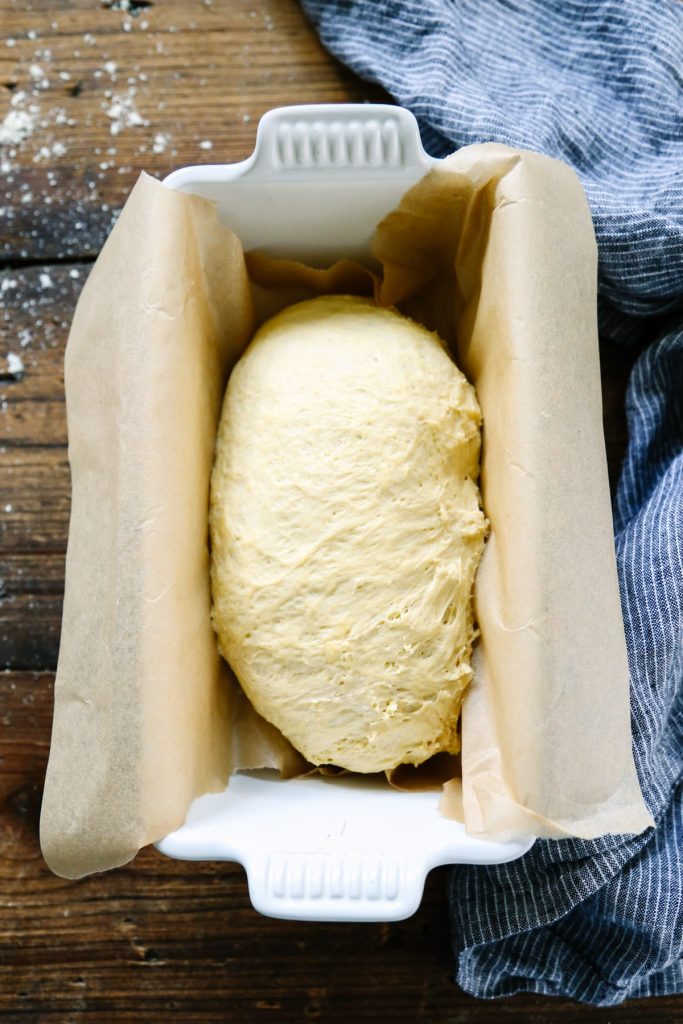
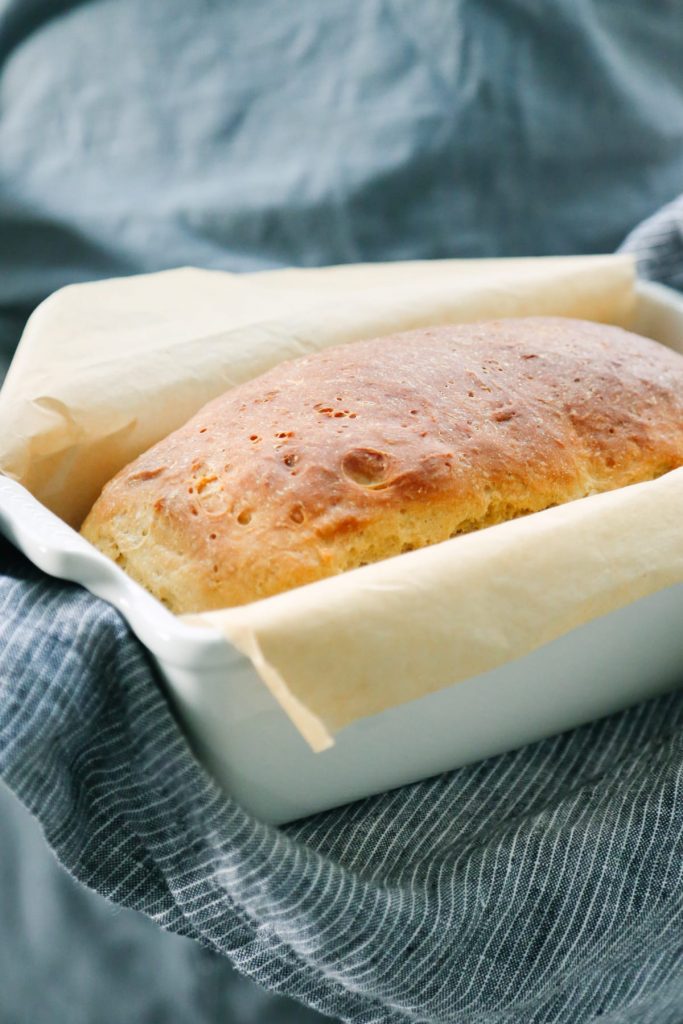
- Place the loaf in a standard-size bread pan that’s been greased or lined with parchment paper. Preheat the oven to 375F. Cover the bread with a towel, and allow it to rest for 30 minutes. The bread will again begin to rise and double in size. After 30 minutes, place the bread (with the towel removed) in the oven (preferably in the center of your oven), and bake for about 35 minutes. I’ve had to go as long as 40 minutes in the past, due to opening the oven door a couple of times while baking. The bread should have a golden crust and should have (imperfect) “lifted” sides.
- I know it’s tempting to eat the bread fresh from the oven, but it’s best to allow the bread to cool to room temperature before slicing.
Video
Nutrition
Ingredient Notes
If you’d like a “richer” loaf, try using whole milk and butter instead of the water and oil.
This recipe needs to be made with all-purpose einkorn flour. If you’re using whole wheat einkorn flour (either Jovial brand or freshly milled flour), you’ll need a different flour amount. You could use this recipe as a base (the liquid ingredients), and add whole wheat einkorn flour until you reach the ideal dough consistency.

crumbly product. is this recipe always very crumbly? first day is was very nice. held together very nice. next day, not so much. couldn’t hardly slice it. definitely hard to toast. couldn.t get it out of the toaster without it breaking up. has a very nice flavor. thanks. and you have a very nice site.
Einkorn bread is naturally a bit more delicate it doesn’t have as much gluten as modern wheat. That’s pretty common with 100% einkorn loaves.
A few things that help a lot:
Add 1–2 tablespoons of vital wheat gluten to the dough (this is the #1 tip from many readers for better structure).
Make sure the dough is well-kneaded (it benefits from a longer knead than regular bread).
Store the loaf in a paper bag or bread box on the counter (not the fridge) and try to use it within 2 days, or slice and freeze it right away for toasting later.
Confused…. in step #3 we are warned not to over work the dough, just mix until combined. Here, it says it benefits from a longer knead than regular bread. Is this referring only to the addition of gluten? Thanks!
The “do not overwork the dough” instruction in the recipe is for the original 100% einkorn version. Einkorn has weaker gluten, so gentle handling is best.
When you add the 1–2 tablespoons of vital wheat gluten (the tip I gave for better structure), that’s when a longer knead helps. The added gluten needs some development, so you can knead a bit more at that point.
Without the vital wheat gluten, stick with the original “mix until just combined” method.
Can you please tell us the size of the bread tin. Standard size doesn’t clear the confusion. Thanks
I use a standard 9×5 inch loaf pan (sometimes labeled as 8.5×4.5, which is very close). That’s the most common size for sandwich-style loaves.
Hi I’m new to baking bread, after I let it rise the first time, I just left the bread in my glass dish for 40 more minutes then I popped it in oven. I put the oven at 360 instead, think it came out great! I oiled the glass dish first of course. Thank u!
Hi Karen!
Welcome to bread baking, I’m so glad you tried the einkorn bread recipe!
That’s wonderful that it turned out great for you
WOWWW!!! Only my 2nd time making bread with einkorn….but this recipe is absolutely perfect!! Moist with a noticeable honey flavor, which we love. Tastes like an artisan honey wheat, but a million times better!! Definitely will be trying out more of your recipes!!! I’d be excited to serve this to anyone, anywhere!! Would make a great base dough to add banana, apple/cinnamon, blueberries, carrot cake muffins
or savory too!! Thanks SO SO much!!
Wow Michelle, thank you SO much!! 😍
This just made my day! I’m thrilled that the einkorn honey bread turned out so well for you
On my third time making it .
The only bread I eat now @ 10.99 for 2lb bag it works out to be 7.00per loaf which is excatly what we pay for for crap at the store
Worked great for me and this my second time using this recipe. I followed the recipe exactly the first time and used the suggestion of 2 tbsp honey for a more sandwich-friendly bread. Both versions are delicious. Also, I’m a gluten sensitive person and einkorn seems to sit well with me. Thank you!
There’s no way one cup of water is working. You either got too much flour or not enough water.
Hi Scott! Appreciate you stopping by, einkorn often needs careful hydration balancing (too much flour kills rise, too little makes it impossible to shape). This version keeps water at 1 cup to avoid excess stickiness, with the rest period doing the magic as it absorbs. If it didn’t hydrate enough for you, bumping water by a tablespoon or two (or weighing everything) helps a ton, lots of readers do that for better results. Did you weigh the flour/water, or use cups?
This recipe is wonderful. So far, I’ve made it four times with success. Don’t stress if your dough doesn’t appear smooth- mine never do, but my loafs still come out looking and tasting good.
Not sure what the internal temp should be after it’s finished.
Hi. What if my dough does not rise?
It’s normal for it not to rise hugely (ancient grain thing), but zero rise usually means yeast wasn’t active, kitchen too cold, or dough over-floured.
I accidentally used whole-grain einkorn instead of all-purpose, so it didn’t rise that much. Even though I messed up I still baked it just to see if it would turn out ok and it really did! It was denser but held together really well and tasted amazing! This was my first time making bread and ever using einkorn flour, so I was a little nervous, but I was so pleased with how easy the recipe was to follow and how well my bread turned out! 100% will use this recipe again (with the right flour)!
This recipe makes a really tasty loaf of bread. It was spot on for ingridents and process. Good job.
Ron A.