
The first of September is just one week away, and my social media feed is already buzzing with talk of pumpkin baked goods and cozy soups. I’ve even read a few status updates that mention cooler weather.
Want to Save This Recipe?
Enter your email & I’ll send it straight to your inbox. And you’ll get new recipes & tips each week.
I haven’t embraced a can of pumpkin just yet, and the temperatures in Florida are still close to 100 degrees. But I’m all for thinking about cooler weather foods, like cozy soups, warm yeast bread, and a chai latte. Then again, I don’t think I ever stopped enjoying cooler weather foods. September just means that it’s safe to talk about them in public, right?!
As the weather begins to cool down (and we Floridians lower the temperature of our air conditioning systems to pretend), there’s no better time to make a loaf of homemade bread.
I must stop here and tell you: I don’t make yeast bread very often. In fact, 99% of the time, I purchase bread from a local market in our area. The market bakes and sells this incredible sourdough bread, which is perfect for toast and sandwiches. Just recently, I attended a sourdough class and “birthed” my first successful sourdough starter (see the photo, here), so hopefully with lots of practice and patience, I’ll be able to make amazing sourdough bread in the future, too. In the meantime, I purchase bread from the market.
In the fall, when soup graces our table far more often than it did during the summer grilling season, and the kids are in school during the day (which means a few quiet hours during the day to work and think), I’ll sometimes whisk together a few simple ingredients to make a loaf of homemade bread to have with dinner.
There’s nothing, in the kitchen, like the smell and gratification that comes from mixing together the ingredients to make a yeast bread, watching the sticky dough magically double in size, and then breathe in the aroma of the bread baking in the oven.
And when I actually take the time to make a homemade loaf of bread, the slices are usually gone within a few hours, leaving just a couple of slices left to enjoy (and fight over ;)) with an evening soup. When I remember to sneak some of the homemade bread out of sight before school pickup, the thick slices are used to make the best French toast on Saturday morning. There’s just something incredible about thick-sliced French toast that’s made from soft homemade bread!
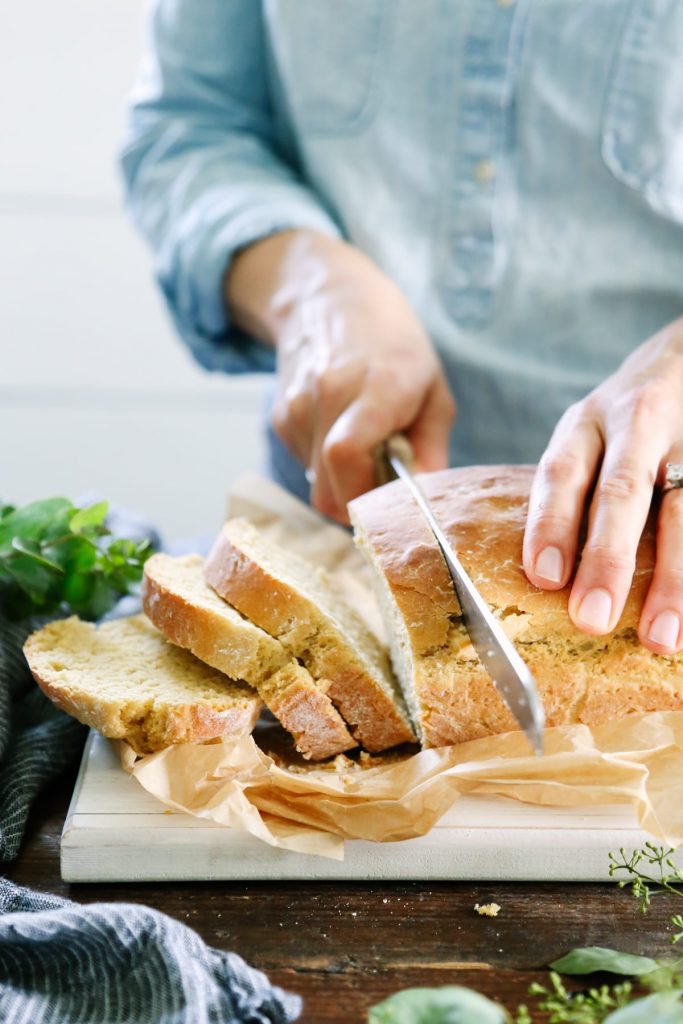
As you’ve probably guessed, today’s recipe is for homemade bread. A couple of years ago, I shared a whole wheat bread recipe and crusty bread recipe, both of which have become reader favorites. Today’s recipe is a whole grain-based bread, but it doesn’t call for whole wheat flour; rather, this recipe is made from einkorn flour.
If you’ve been around Live Simply for a while, you may already know about einkorn flour. If you’re new to Live Simply, or just need a refresher, let’s chat for just a second about this special flour, and why it makes such great homemade bread.
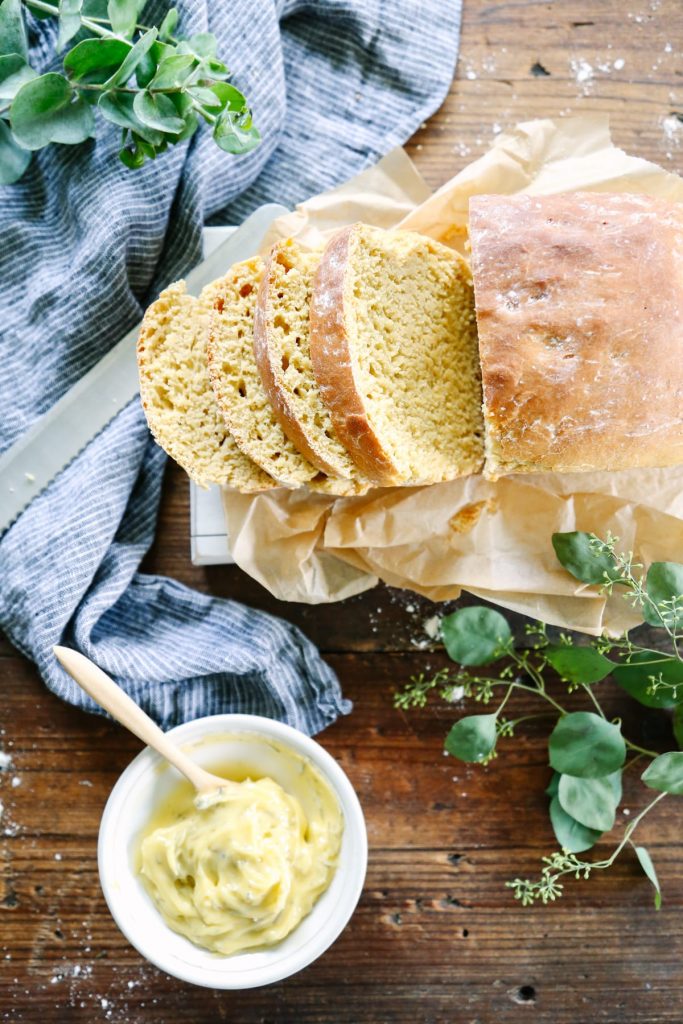
What is Einkorn Flour?
Einkorn is known as the oldest variety of wheat making it an “ancient” grain. The ancient grain is believed to have originated in the Tigris-Euphrates region and is possibly the main grain referenced in the earliest accounts of the Bible. To put it simply, einkorn is the wheat men were eating in the earliest days before modern-day wheat varieties. While modern wheat has undergone hybridization, einkorn still holds true to its original properties. Einkorn is slowly gaining popularity, but is still grown in only a few regions in Europe.
The sweet, ancient grain has a lighter texture and taste than modern-day wheat, and contains a more favorable gluten ratio. People with minor gluten sensitives may be able to consume einkorn without the issues associated with whole wheat due the lack of D-genome, however, einkorn is not gluten-free. Einkorn is packed with nutrition, containing high levels of protein along with the antioxidant beta-carotene lutein and minerals.
Einkorn looks and tastes similar to white flour, so it’s the perfect healthy flour to use when making soft, fluffy bread. Einkorn is sold in some health food stores and online.
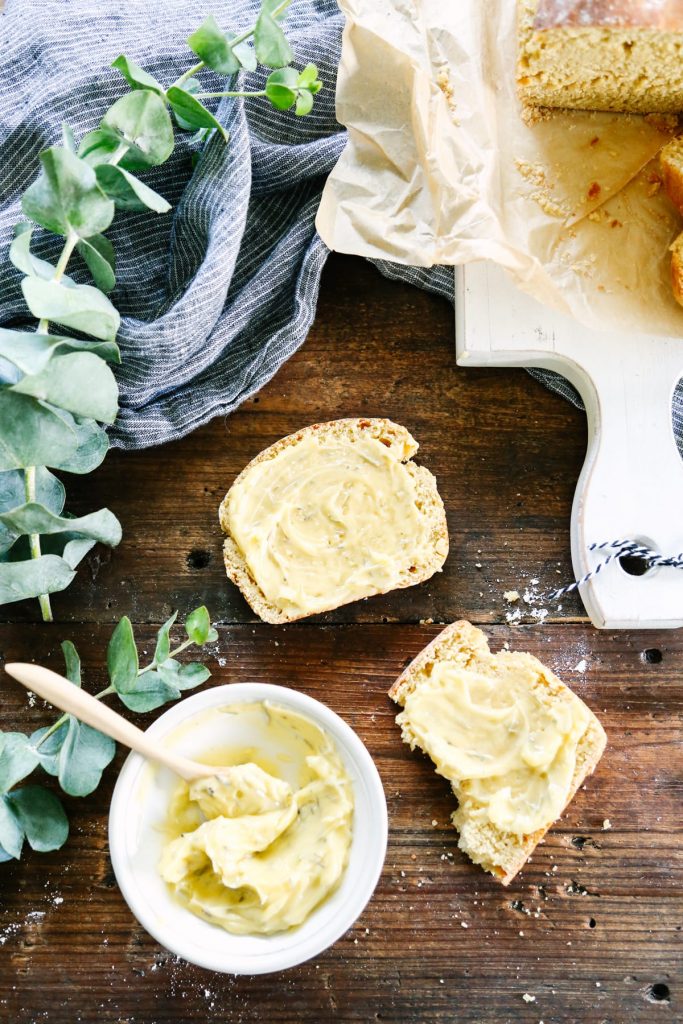
Today’s recipe uses just four simple ingredients to make a soft and sweet homemade bread that’s delicious to serve with butter and soup, or turn into French toast. I personally find that this bread is a bit too soft for sandwiches, although I may be biased since I prefer my sandwiches to made with dense sourdough bread. If you’d like to try to make this bread for sandwiches, you may want to reduce the honey to only 2 tablespoons. This may also mean upping the flour amount by just a tablespoon or two.
Happy soon-to-be fall, and happy baking!
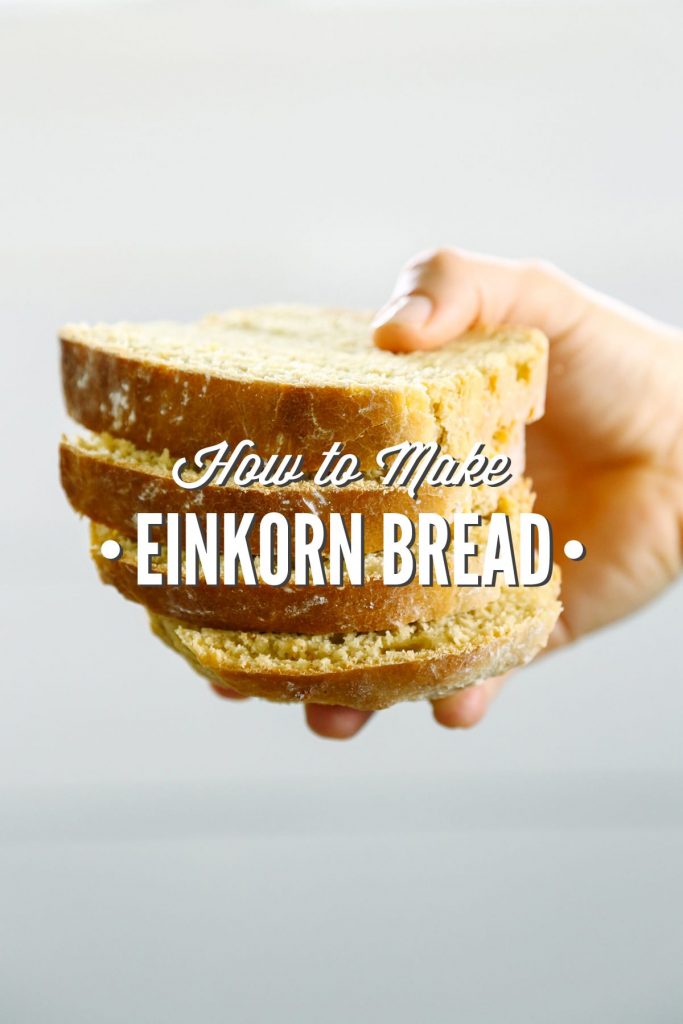
How to Make Einkorn Bread
Ingredients
- 1 cup water room temperature, 230 g
- 2 tsp active dry yeast
- 1/4 cup honey 80 g
- 2 TB extra virgin olive oil 20 g
- 1 tsp salt
- 3 1/2 cups all-purpose einkorn flour See “Ingredient Notes” for using whole wheat einkorn flour or freshly-milled einkorn flour., 440 g, where to buy
Instructions
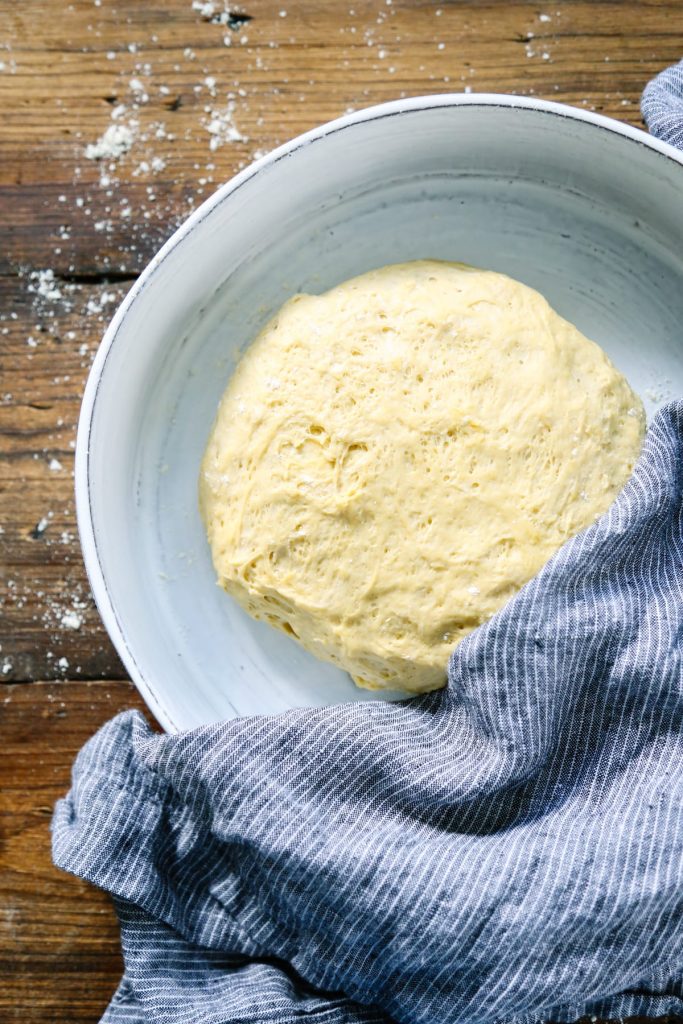
- In a large bowl, sprinkle the active dry yeast over the water. Let the mixture rest for about 5 minutes. You’ll notice that the yeast begins to foam and sink.
- Whisk in the honey, extra virgin olive oil, and salt. Add the flour, and stir with a wooden spoon just until it becomes too hard to stir the mixture with a spoon. Your hands will get messy for this next part, that’s just part of the bread-making process.
- Use your fingertips to bring the rest of the flour into the dough mixture. This may require gently kneading the dough a couple of times. Einkorn doesn’t like to be messed with, so do not overwork the dough. Stop “kneading” once the flour has been combined with the wet ingredients. The dough will probably feel and look sticky. That’s okay! Einkorn slowly absorbs liquid ingredients, so as it rests, it will absorb more of the liquids.
- Cover the dough with a towel, and let it rest and double in size for about an hour. I’ve let my dough rest for an entire afternoon without issue. The goal here is at least an hour resting time. Keep in mind that if your home is very humid and hot, the dough may get stickier.
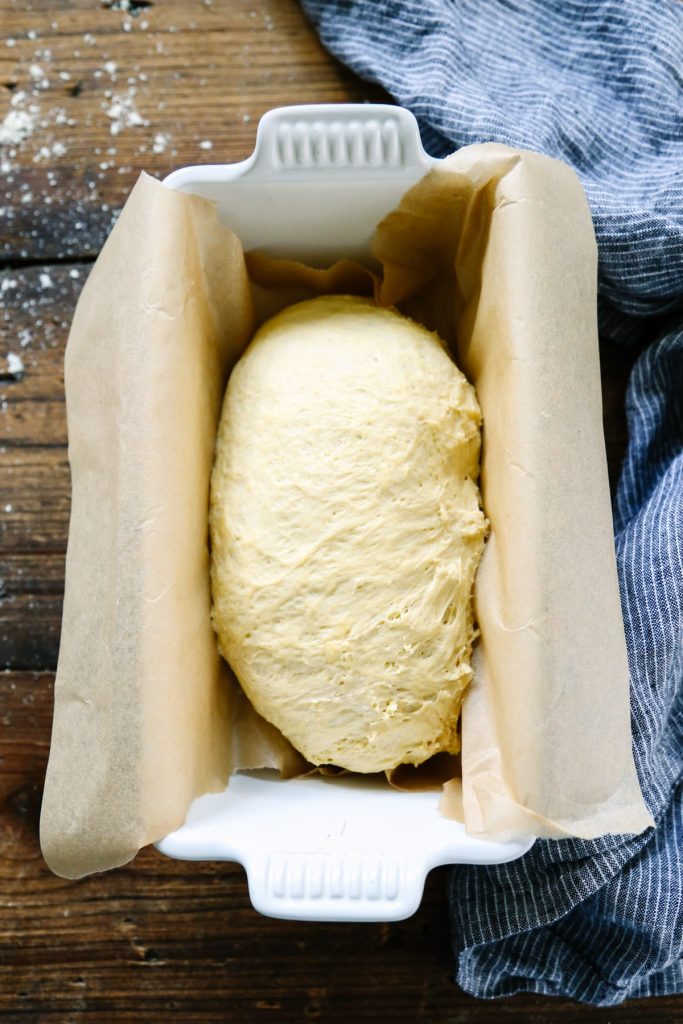
- Once the dough has doubled in size (about an hour), coat your hands with a bit of flour (this is optional, but it makes working with the dough easier), and form the dough into a loaf. I simply grab the dough, and shape it into a loaf. Einkorn is a bit sticky to roll out. If your dough is too sticky to handle, add just a couple of tablespoons of flour to the dough (until you reach a workable consistency), but remember not to overwork the dough while adding the flour.
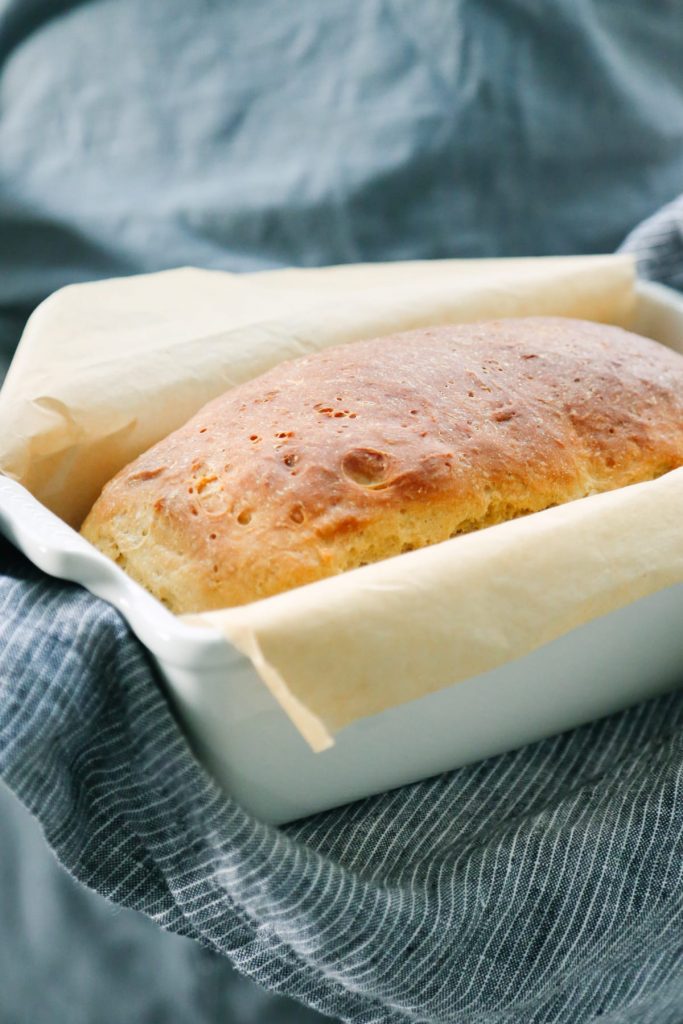
- Place the loaf in a standard-size bread pan that’s been greased or lined with parchment paper. Preheat the oven to 375F. Cover the bread with a towel, and allow it to rest for 30 minutes. The bread will again begin to rise and double in size. After 30 minutes, place the bread (with the towel removed) in the oven (preferably in the center of your oven), and bake for about 35 minutes. I’ve had to go as long as 40 minutes in the past, due to opening the oven door a couple of times while baking. The bread should have a golden crust and should have (imperfect) “lifted” sides.
- I know it’s tempting to eat the bread fresh from the oven, but it’s best to allow the bread to cool to room temperature before slicing.
Video
Nutrition
Ingredient Notes
If you’d like a “richer” loaf, try using whole milk and butter instead of the water and oil.
This recipe needs to be made with all-purpose einkorn flour. If you’re using whole wheat einkorn flour (either Jovial brand or freshly milled flour), you’ll need a different flour amount. You could use this recipe as a base (the liquid ingredients), and add whole wheat einkorn flour until you reach the ideal dough consistency.

Hi Kristin,
I’ve just purchased some Einkorn flour from a lovely mill here in Ontario Canada, that still grinds heritage flours. https://arvaflourmills.com/pages/our-flours. But it is whole grain rather than all purpose Einkorn flour. I was wondering if I substituted 100gms of regular all-purpose flour for some of the Einkorn whether that might solve the gluey problem? Have you tried mixing flours? Also bought some Emmer flour so I have to give that a go too.
Hi Kate, thanks for reaching out and for loving that local Arva whole grain Einkorn!
The gluey texture often happens with whole grain Einkorn because the bran absorbs more liquid, making dough denser and stickier than with all purpose Einkorn (which the recipe uses).
Mixing in 100 to 150g regular all purpose flour (out of the 440g total) is a great fix. It adds gluten strength for better rise and less gumminess while keeping the Einkorn flavor.
Whole grain may also need 10 to 20g extra water. Add gradually and let dough rest after mixing. Handle minimally to avoid gumminess.
Same idea works well for Emmer too.
I‘ve become a complete devotee of EInkorn flour. I can‘t wait to try this. What quantity of milk and butter do you recommend as substitutes for the water and olive oil?
Thank you for your help
Hi Stephanie! So glad you’re loving einkorn, it’s the best! 😊
For a richer loaf, swap the 1 cup (230g) water with the same amount of warm whole milk (105–110°F), and replace the 2 TB olive oil with 2 TB melted (cooled) butter. The dough should still handle well after resting.
I’m new to einkorn and have been slowly trying new recipes. I currently only have whole wheat, but decided to try your recipe anyway (yes, I read the “notes”). The only changes I made was reducing the honey to 4 teaspoons (20ml) – I’m not a fan of sweets. I also have a glass loaf pan, so reduced the heat by 25 degrees and baked 10 minuted longer.
The result? Once in the oven, the bread did not rise any higher.
The taste? DIVINE!
Texture? Nice crumb under the upper crust, denser towards the bottom, moist.
Could I wait until it was room temp? Sadly no.
Final thoughts: I’m very pleased with the result, especially the flavour, even if it isn’t “perfect” by normal bread standards. I’ve been baking bread probably longer than you’ve been alive and (4 yummy slices later) rate this recipe experiment a success. Thanks for a great recipe!
Thank you so much, Gabbie, for diving into einkorn baking as a newbie to the flour and sharing your thoughtful experiment with the bread recipe! It’s wonderful to hear the flavor came out divine (that nutty, lightly sweet einkorn taste really shines), and four yummy slices later sounds like the best kind of success. With your long baking experience, it’s impressive you adapted so well on the first try and still rated it a success. Einkorn takes some getting used to, but the payoff in flavor and digestibility is huge. Next time, if you want a bit more height/loft, try increasing the liquid slightly (by 5-10%) or letting the first rise go longer in a warm spot to help absorption before shaping.
Thanks again for the encouraging review and for sticking with the experiment.
I won’t discuss my first attempt… I’m very new to baking and forgot patience, very important!
I made a couple of adjustments, one being baking at 350° which came out perfect. Also, I prepared the yeast differently which helped (separately in warm water, followed the packet instructions lol).
We love the flavor of einkorn, and the light taste of honey really stands out. Thank you for the recipe, it’s really delicious!
Thank you so much, Eric, for giving the einkorn bread recipe another go and sharing your success this time! I’m glad your patience paid off and the adjustments worked beautifully for you.
Recipe gave me watery glue instead of bread dough. it had no structure and when I finally got it in the pan I had wasted a cup of the dough because it was too sticky for an oiled bowl.
Hi Hayden, I’m really sorry the einkorn bread dough turned out like watery glue with no structure, and that you ended up wasting some because it was too sticky even for an oiled bowl. That’s disappointing after putting in the effort, and I appreciate you sharing the details so we can figure out what went wrong and get you on track for a better loaf next time.
This recipe is designed specifically for all-purpose einkorn flour (like Jovial brand), using 3 1/2 cups (440 g) flour to 1 cup (230 g) water, plus honey, oil, salt, and yeast. Einkorn dough is naturally very sticky and slack due to its weaker gluten (it doesn’t form the strong network like modern wheat), and it absorbs liquids slowly. The instructions note that it will feel and look sticky at first, which is normal, and it firms up during the rest/rise as the flour hydrates over time (often 1+ hours, sometimes longer).
A “watery glue” consistency (super loose, no structure at all, more like thick batter than dough) usually points to one of these common issues with einkorn:
Wrong flour type: If whole grain/whole wheat einkorn (or freshly milled) was used instead of all-purpose, it absorbs way more liquid due to extra bran/fiber. This can make the dough seem too wet initially, but then it might not firm up properly, leading to a gluey mess or dense/gummy bake. The recipe emphasizes all-purpose only; whole grain needs adjustments like adding flour gradually or reducing water slightly.
Measurement differences: Flour can vary by how it’s scooped/packed. If the flour was under-measured (less than 440 g) or water over-measured, hydration spikes and the dough stays too loose. Weighing ingredients (especially flour at 440 g) gives the most consistent results.
Absorption timing: Einkorn takes longer to hydrate than regular wheat. If the dough was handled too soon after mixing (without enough rest), it can feel impossibly sticky. The recipe says to mix minimally, cover, and let it rest to double (at least 1 hour, up to several); stickiness decreases as it sits.
Other factors: High humidity can make it stickier; old/inactive yeast (no good foam) means poor rise/structure; or over-adding flour early to “fix” stickiness can backfire later (dough dries out and bakes dense).
For handling the extreme stickiness and avoiding waste next time:
Grease the rising bowl generously with oil or butter (or line with lightly oiled parchment if needed) to help release.
Use wet or oiled hands (instead of floured) for any handling; flour can make it worse by absorbing into the surface and creating a dry crust while the inside stays wet.
During shaping: Dust the counter lightly, but keep additions minimal (1-2 tbsp flour max total if truly unworkable). Let it rest longer before shaping if it’s still too loose.
Scrape every bit into the pan; even if messy, it bakes fine once risen.
To retry successfully:
Confirm all-purpose einkorn flour (not whole grain).
Weigh everything: 440 g flour, 230 g water (room temp or slightly warm for yeast).
Proof yeast in water first (foamy after 5 min).
Mix gently, cover, and give it plenty of time to rest/rise in a warm spot (80-90F, like oven light on) until truly doubled (could be 1-2+ hours).
If after rest it’s still soup-like, add 1-2 tbsp flour at a time during a quick fold, but err on sticky over dry.
For easier handling, try the richer variation: swap water for warm whole milk and oil for melted butter (proof yeast in the milk). The fats help with structure and make it less gluey.
Many people find einkorn’s stickiness challenging at first, but once the rest/absorption happens and handling is minimal, it comes together. If you used whole grain or have more details (like exact flour brand/type, if it foamed, rise time/environment), let me know and I can suggest specific tweaks. You’ve got this, and I hope the next attempt gives you that soft, nutty loaf your family will love. Thanks for the feedback, Hayden!
I made this bread a few days ago and it did great! I let it rise while I went to do my grocery shopping (approximately 2 hours, I live a few miles away from town) and it was ready for baking when I returned. My husband and I love the flavor and I will be making this on a regular basis. Thank you for the recipe!
Thank you so much, Barbara, for making the einkorn bread and coming back to share how it turned out! I’m thrilled to hear it did great, your husband loves the flavor, and it’ll become a regular in your kitchen. That means a lot!
This recipe is so reliable, I won’t try any other bread recipes. Einkorn is the only flour that I can eat, so I have used it both in recipes for standard wheat and einkorn wheat. This bread recipe is the winner! I use it to make rolls and cinnamon bread and herb bread. Each experiment has been a success with this recipe as the basis.
Hi Dori, thank you so much for this heartfelt comment! It truly warms my heart to hear that this einkorn bread recipe has become your reliable go-to, the only one you need, and that it’s the winner for you since einkorn is the flour your body handles best. Knowing it’s helped make bread accessible and enjoyable again is exactly why I love sharing these recipes.
I’m impressed (and not surprised!) that you’ve turned it into rolls, cinnamon bread, and herb bread with such success. That’s the beauty of this simple base: it’s so forgiving and adaptable with einkorn’s unique qualities. The minimal handling and slow rise let the nutty flavor shine through no matter the variation.
Thank you for your info and tips I could not ever get it fluffy it always cracked and very doughy.
Can I put the yeast with the milk instead of water? I’m excited to try milk and butter vs water and oil.
Does the milk need to be warm?
Hi Josh, thank you so much for the update and for trying the einkorn bread recipe again! I’m sorry the loaves have been cracking on top and turning out very doughy and not fluffy. That’s a common frustration with einkorn because of its weaker gluten structure compared to modern wheat. It naturally makes denser loaves that don’t rise as tall or get as airy, but cracking often comes from under-proofing (not enough rise before baking, so the dough expands dramatically in the oven causing splits), over-proofing (too much rise leading to collapse), or the dough being too dry/stiff from over-flouring during shaping. Doughy centers can happen if the bread is under-baked (check internal temp around 190-200F), sliced too warm (steam makes it gummy), or if the hydration/absorption wasn’t quite right for your flour batch.
I’m excited you’re trying the richer version with whole milk and butter instead of water and oil! The recipe notes this swap for a “richer” loaf, and it should add tenderness, better flavor, and potentially a softer crumb since the fats help with moisture retention and structure in einkorn’s weaker gluten.
On your questions:
Can you put the yeast with the milk instead of water? Yes, you can proof the yeast directly in the milk. Many enriched bread recipes (with milk/butter) do this successfully. Milk has natural sugars that feed the yeast, so it works well without needing extra sweetener for activation (though the honey in the recipe still helps overall). Just warm the milk first to the right temperature.
Does the milk need to be warm? Yes, warm it to about 105-110F (like baby bottle temperature on your wrist: warm but not hot). Too hot (over 120F) can kill the yeast; too cold slows activation a lot. Heat the milk gently (stovetop or microwave in short bursts), then sprinkle the 2 tsp active dry yeast over it. Let it rest 5 minutes as in the original steps; it should foam and look bubbly. If it doesn’t foam much, your yeast might be old/inactive, so test with fresh.
For the swap:
Replace the 1 cup (230 g) water with the same amount of whole milk (warm it as above for proofing).
Replace the 2 TB olive oil with 2 TB butter (melt it and let it cool slightly so it doesn’t kill the yeast when mixed in; add it after the yeast foams, along with the honey and salt).
Proceed with the rest of the recipe: add the flour, mix into a sticky dough, let rest/rise longer if needed (einkorn absorbs slowly, so give it extra time in a warm spot like an oven with the light on to help fluffiness).
The richer ingredients should help reduce doughiness and improve texture, but keep the dough on the stickier side (minimal extra flour during shaping) to avoid density.
To help with fluffier results and less cracking/doughiness overall:
Ensure good yeast activation (foamy proof).
Let the first rise go until truly doubled (could take 1-2+ hours; einkorn is slower).
Don’t over-flour when shaping; a slightly sticky dough rises better.
Score the top lightly with a sharp knife before baking to control expansion and prevent wild cracking.
Bake until golden and internal temp hits at least 190F.
Cool completely on a rack before slicing.
This enriched version often gives people better results with einkorn. Give it a try and let me know how the loaf turns out (or if it still needs tweaks).
Made this and it was so good my hubby and kids are begging for another loaf. I’m out of einkorn, could this same recipe be used with my regular organic AP flour?
Hi Crystal, thank you so much for the wonderful feedback! I’m so glad the einkorn bread turned out great and that your hubby and kids are already begging for more. That’s the best kind of compliment.
Yes, you can definitely use this same recipe with regular organic all-purpose flour (modern wheat AP flour) as a substitute for the einkorn. The recipe was designed specifically for all-purpose einkorn flour (3 1/2 cups or 440 g), which has weaker gluten, absorbs liquids more slowly, and results in a stickier dough with a denser, nuttier loaf compared to regular wheat.
Regular all-purpose flour has stronger gluten and different absorption, so the dough will behave more like a standard bread dough: less sticky, easier to handle, and likely to rise higher and faster with a lighter, fluffier crumb and taller loaf.
For the best results when switching:
Use the exact same ingredient amounts: 3 1/2 cups (about 440 g) of your organic AP flour, 1 cup (230 g) water, 2 tsp yeast, 1/4 cup honey, 2 TB olive oil, and 1 tsp salt.
The dough might feel drier or firmer than the einkorn version since modern wheat absorbs differently and develops stronger gluten. If it seems too dry during mixing, add 1-2 tablespoons extra water gradually until it’s soft and slightly tacky but not overly sticky.
Knead gently if needed (the recipe keeps it minimal, which is fine), but you can do a bit more without overworking since regular flour handles it better.
Rising times may be similar or slightly shorter (check after 45-60 minutes for the first rise instead of a full hour; it should double nicely). The second rise in the pan should be about 30 minutes or until puffy.
Bake as directed at 375F for 35-40 minutes; it might brown a bit faster or need a minute or two less, so keep an eye on it.
The flavor will be a bit less nutty/sweet than einkorn (since einkorn has that unique profile), but it’ll still be soft, delicious homemade bread perfect for slicing. Many bakers use similar simple recipes interchangeably between the two flours with minor tweaks like this.
This is a terrible recipe. You need clarify the difference between einkcorn flour and EinkCorn AP flour up front and give the different ratios. This turned out horribly like a lump of pasta flour. Worst recipe ever.
Hi Meredith, I’m really sorry to hear the einkorn bread turned out horribly for you and felt like a lump of pasta flour. That’s frustrating, especially when you’re excited to try a new recipe. Thank you for taking the time to share your feedback, it helps me improve things.
The recipe is specifically written and tested with all-purpose einkorn flour (like Jovial brand all-purpose einkorn), not whole grain or freshly milled einkorn. It calls for 3 1/2 cups (about 440 g) of all-purpose einkorn flour. There’s a clear note in the ingredient section and instructions: “This recipe needs to be made with all-purpose einkorn flour. If you’re using whole wheat einkorn flour (either Jovial brand or freshly milled flour), you’ll need a different flour amount. You could use this recipe as a base (the liquid ingredients), and add whole wheat einkorn flour until you reach the ideal dough consistency.”
The difference matters a lot here. All-purpose einkorn is more refined (some bran removed), lighter, and absorbs liquid differently than whole grain einkorn, which has more fiber and bran, making it denser, thirstier (it absorbs more liquid), and often requiring adjustments like extra liquid (around 5% more per Jovial’s tips) or different flour amounts to avoid a heavy, gummy, or pasta-like texture. Whole grain einkorn typically weighs less per cup (around 96 g vs. about 120-125 g for all-purpose), and its higher absorption can lead to a sticky or under-risen dough if the ratios aren’t tweaked, which might explain the lump result if that’s what was used.
Einkorn in general (even all-purpose) has weaker gluten than modern wheat, so the dough stays stickier, rises slower, and often ends up denser or more compact than regular bread. The recipe emphasizes minimal kneading, letting it rest to absorb liquids slowly, and not over-flouring to prevent toughness. If the flour type mismatched or if the dough was overworked/added too much extra flour during shaping, that can make it feel pasty or dense.
To help for next time (if you’re open to retrying):
Double-check the flour label: Use all-purpose einkorn specifically (not whole grain/whole wheat einkorn or regular whole wheat).
Stick to the exact measurements, especially weighing if possible (440 g flour to 230 g water is the base hydration).
Let the dough rest longer during rising if needed (einkorn can take more time), and shape gently with floured hands without adding much extra flour.
Test yeast freshness (it should foam well).
For a softer loaf, some swap water/oil for milk/butter as noted.
If you used whole grain einkorn instead, that could be the main culprit, and I’d be happy to suggest tweaks for that version (like starting with the same liquids but adding flour gradually until the dough feels right, often less total flour or more hydration adjustments). Or if it was all-purpose but still went wrong, share more details (like how the dough felt at each step or if anything else varied), and I can troubleshoot further.
How long is the shelf life for this bread? Can I freeze it?
Hi Sue, thanks so much for checking out the einkorn bread recipe and asking about storage! Homemade einkorn bread, like most yeast-based breads without preservatives, doesn’t stay fresh as long as store-bought versions.
At room temperature, it typically lasts 2-3 days when stored properly. Wrap the cooled loaf in a clean kitchen towel, place it in a bread box, paper bag, or breathable cloth bag to let some air circulate (this helps prevent mold while keeping the crust from getting too soft). Avoid plastic bags or airtight containers right away, as they can trap moisture and speed up staleness or mold in humid conditions. If it starts to dry out a bit after a couple of days, toasting slices brings back that great texture and flavor.
Yes, you can definitely freeze it, and it works really well for longer storage! Many bakers find einkorn bread freezes beautifully. Here’s how to do it:
Let the loaf cool completely to room temperature.
For the best results, slice it first (this makes it easy to grab just what you need later).
Wrap individual slices (or the whole loaf if you prefer) tightly in plastic wrap or foil to prevent freezer burn, then place in a freezer-safe zip-top bag or airtight container.
It should keep well for up to 3 months (some say even longer, but quality is best within that window).
To enjoy frozen bread, thaw slices at room temperature for 1-2 hours, or pop them straight into the toaster from frozen for quick toast. If thawing a whole loaf, leave it wrapped on the counter overnight.
Since einkorn has a slightly denser texture due to its unique gluten, it often holds moisture better than some breads, but slicing and freezing is the way to go for freshness. If you try it and have any tips from your own bake, I’d love to hear! Thanks again for the question.
Fantastic!!!
My yeast didn’t work so well, but it didn’t matter to me. I used milk and butter nd the bread turned out a bit dense( yeast issue) but truely delicious with just butter!!! Thanks for this simple recipe!
Thank you so much for trying the recipe and sharing your results, Sasha! I’m glad it still turned out delicious with just butter – that simple combo is one of my favorites too. Einkorn can be a bit finicky with yeast since it has weaker gluten than modern wheat, and it absorbs liquids more slowly. Next time, double-check that the yeast foams really well during the 5-minute rest (if it doesn’t bubble much, it might be old). A warm spot for rising (like an oven with just the light on) can help a lot too. The denser texture is super common with einkorn, but the flavor shines through! I’d love to hear how it goes if you give it another try.
I used wholewheat einkorn flour instead of all-purpose flour in the same quantity and it turned out fine. I also forgot to let the dough rise an extra 30 minutes in the loaf tin before baking and the result was good enough for me. I can’t wait to bake this bread again. I’m sure it will be much better next time. Which proves that this is a very good recipe!
Thank you so much for trying my einkorn bread recipe and sharing your experience! I’m thrilled it turned out well even with whole wheat einkorn flour swapped in equal amounts and skipping that second 30-minute rise in the pan. That really speaks to how forgiving this recipe is.
Einkorn’s weaker gluten often makes whole wheat versions a bit denser (and many bakers recommend adding a touch more liquid or adjusting flour for better absorption), so the fact that yours was “good enough” without changes is impressive. Next time with the full proof, it’ll probably be even airier.
Skipping the second rise can lead to a slightly tighter crumb since it helps redistribute gases for better oven spring, but clearly it didn’t hold you back here. Can’t wait to hear how your next loaf turns out. Enjoy, and happy baking!
Question: Standard pan is what size? I have 4X8 and 5X9 inches.
I’m so glad einkorn flour is now available– without glyphosate, GMO and other dangerous additives. Thanks for the recipe.
A standard bread pan is typically 8.5 x 4.5 inches or 9 x 5 inches.
Your 4 x 8-inch pan is very close to the smaller standard and should give a nice tall loaf. The 5 x 9-inch is similar to the larger one and will work well too (loaf might be slightly flatter).
Either is fine for this recipe. Grease or line it, and check for doneness around 30-35 minutes.
Eventhough I used Rapid Rise yeast, it took about 6 hours for it to rise. I had it in the microwave to rise. I think that some how prohibited the yeast to activate or something. Also, my flour was whole wheat einkorn from my farmer so I used less flour as instructed. I did bake it and it came out great in the end. The load was pretty small, but had great flavor. Are the nutritional facts accurate? They are insanely high.
Polly!! First, huge high-five for sticking with that 6-hour rise and ending up with a delicious loaf anyway! Whole-grain einkorn from a farmer is the dream; slow rises are totally normal with it (and the microwave can sometimes slow things down even more because of low air circulation).
Yes, the nutrition numbers are 100% accurate; they’re calculated for the entire loaf.
It turned out beautifully. Thank you.
YAY, thanks for the feedback
I’m giving it 5 stars but I have not tried it yet but just by the look of it. My question is can you use instant yeast.
Hi Pam,
Thank you for the wonderful 5-star rating and your enthusiasm for the einkorn bread recipe! I’m thrilled you’re excited to try it. To answer your question, yes, you can absolutely use instant yeast instead of the 2¼ tsp of active dry yeast called for in the recipe. Instant yeast doesn’t need to be dissolved in warm water first, so you can mix it directly with the flour and other dry ingredients. Use about 1¾ tsp of instant yeast (roughly 25% less than active dry yeast) to get the same rise. Einkorn flour can be a bit denser, so make sure to give the dough enough time to rise in a warm spot, as noted in the recipe’s 1-1½ hour first rise. I’d love to hear how your bread turns out once you give it a go. Happy baking, and thanks again for the support!
I made this recipe for my family. They all love it and asked me to make it more often. Thank you for sharing it!
Aww thank you for sharing, so glad your family loved the bread.
This is my 3rd attempt to make this bread and all 3 times it didn’t rise into sandwich bread and ended up somewhat crumbly. It’s only 2.5 inches high this time. I had it outside to rise and it’s an 85 degree day, even let it rise extra long. I weighed/measured all the ingredients and made sure all were at room temp. Suggestions?
Hi Sue,
I’m sorry to hear the einkorn bread hasn’t risen well on your three attempts and ended up crumbly at just 2.5 inches high. It sounds frustrating, especially since you’re weighing ingredients, using room temperature items, and giving it extra rise time on a warm 85 degree day. Einkorn flour has weaker gluten than modern wheat, so it naturally produces a denser loaf that doesn’t rise as tall, but we can troubleshoot to improve it. Here are some suggestions based on the recipe and common einkorn issues:
– Check your yeast freshness: Ensure it foams and activates after resting in the water for 5 minutes. If it doesn’t bubble much, try a new batch of yeast.
– Dough consistency: The dough should be sticky at first, as einkorn absorbs liquid slowly. If it’s still too sticky after the first rise, add 1 to 2 tablespoons more flour when shaping the loaf, but avoid overworking it to prevent toughness.
– Rising environment: 85 degrees is great, but humidity might make the dough stickier or affect the rise. Try proofing in a draft-free spot, like an oven with the light on (aim for 80 to 90 degrees) for more consistent results.
– Adjust for density: For better structure, reduce the honey to 2 tablespoons (it can make the dough heavier) and ensure you’re using all-purpose einkorn flour, not whole wheat, as whole wheat needs flour adjustments for proper rise.
– Crumbling: Let the bread cool completely to room temperature before slicing, as cutting it warm can cause it to fall apart.
If these tips don’t help, could you share more details, like the brand of einkorn flour or if the dough doubled in size during rises?
I have not made this yet, but am so excited to try it. I use this flour as a substitute for white flour in my homemade pasta, it is delicious and does not mess with the gut.
Hi Jennifer,
I’m so excited you’re eager to try the einkorn bread recipe! It’s awesome to hear you’re already loving einkorn flour in your homemade pasta. That sounds delicious, and it’s great that it’s gentle on the gut too. I think you’ll enjoy how this flour works in the bread; it gives such a lovely flavor and texture. Can’t wait to hear how it turns out when you give it a go! Thanks for sharing your enthusiasm.
Would it work in a bread maker? Help, new to this.
Hi Rebekah,
Welcome to baking with einkorn! The einkorn bread recipe you’re looking at can work in a bread maker, but it might need some tweaks since einkorn dough is stickier and doesn’t rise as much as modern wheat. Start by using the recipe as written, but select a basic or whole wheat cycle on your bread maker. Keep an eye on the dough during the first knead, if it looks too wet or sticky, add 1-2 tablespoons more all-purpose einkorn flour. Don’t overdo it, as einkorn absorbs liquid slowly. Also, reduce the honey to 2 tablespoons for a less soft loaf, as bread makers can sometimes make einkorn bread overly dense with too much sweetener. Since you’re new to this, I’d suggest trying a small test loaf first. Let me know how it goes, and feel free to reach out with any questions!
Happy baking