
Want to Save This Article?
Enter your email & I’ll send it straight to your inbox. And you’ll get new recipes & tips each week.
I’ve been anxiously waiting to share today’s recipe. Let’s start with a little story…
Last month, Dustin purchased a surprise birthday present for me: a spa day! Dustin’s not a big gift person, so the fact that he took time to look for a naturally-minded local spa, check out spa ratings, and secretly make an appointment for me was a huge deal. I was so grateful and excited for my big spa day, until I arrived at the spa and discovered that a facial was in the package.
I’ve received facials in the past, and each experience has been less than desirable. In fact, every facial has felt like nothing more than a chance for the spa to sell me expensive beauty products. Not exactly relaxing or fun! I was super skeptical about getting a facial, but I knew the hard work Dustin went through to create the spa experience, so I decided to go through with the appointment.
A few minutes into the facial, the gentle esthetician inquired about my skincare routine, “What products do you use on your skin?” I hesitated for a few moments. I figured the relaxed environment might make my delayed response seem intentional. Should I tell her the truth? Friend, I was fearful to admit that I use “green beauty” products. I was afraid of her reaction to such a radical idea. Silly, right?!
A few minutes later, I replied and told her all about my green beauty skincare routine. The esthetician, Gen, softly voiced her encouraging words, “That’s wonderful! Amazing!” Suddenly, I felt comfortable to discuss skincare with Gen. She then asked about my skincare concerns, to which I replied, “I would love to do something about the scars left on my face from my past skincare issues, and the brown spots. Ugh, those brown spots that appeared with my second pregnancy.” Gen offered a solution, which she claimed would dramatically improve my blotchy skin and scars: a vitamin C serum.
Gen knew her stuff, so I decided to act on her advice. But the more natural vitamin C serum the spa sold cost $85 for a 2 ounce bottle, so I passed on the product and decided to research a possible homemade solution.
After a few hours online, I discovered that making a vitamin C serum at home is 100% doable and pretty inexpensive compared to spa brands. I purchased vitamin C powder from my health food store, and started playing around with various ingredient combos using 90% base ingredients and 10% vitamin C powder.

To make a loooong story shorter, let’s talk about my results…
After over one month of using my Homemade Vitamin C Serum in my regular skincare routine (my aloe and honey cleanser, toner, and moisturizing oils), the overall appearance of my skin has significantly improved! My skin feels smooth and soft. Plus, the blotchy dark spots and scars appear to be fading. Thank you, Gen, for your recommendations. And Dustin, feel free to book another spa day.
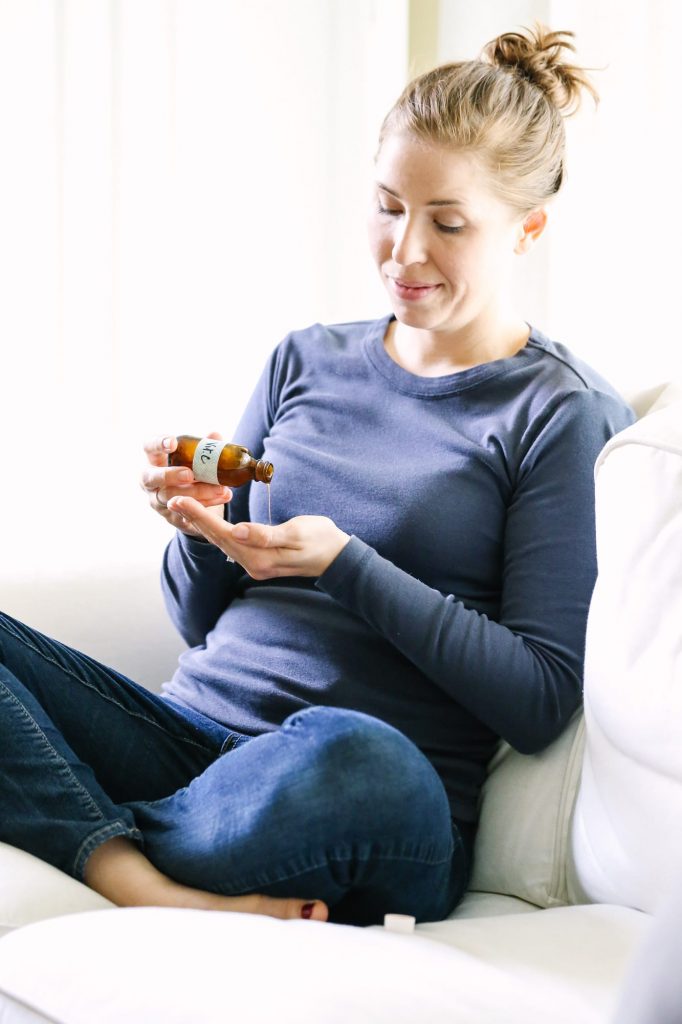
Benefits of Vitamin C
Vitamin C is something that’s naturally found in the makeup of our skin, particularly on the dermis and epidermis. I know, flashbacks to Anatomy and Physiology 101, right?!
Vitamin C plays an important role in skin health due to its antioxidant properties. Just think about everything our skin must work to fight against. Vitamin C aids in the repair and renewal of skin cells. This repair and renewal helps keep our skin looking youthful and healthy. From my reading, this is a natural process that’s continually occurring within the cells of our skin particularly when we sleep. Our skin is very smart. But sometimes our skin needs a bit of help, especially as we age or experience major life events like pregnancy or too much sun, so adding vitamin C to a skincare routine may help someone like myself–a gal frustrated with brown spots and scars. This post explains more about the benefits of using a vitamin c serum on the skin.
According to Gen and my online research, it’s important to apply a serum to the skin for 3 months to see noticeable results. So far, I’ve been using my Homemade Vitamin C Serum for a little over a month, and have been impressed with the results. Some sources encourage starting with a ratio of 5% vitamin C powder and 90% base (water and aloe are my “base” ingredients), then increasing to 10% vitamin C powder and 90% base, and finally 20% vitamin C power and 80% base. I’ve been consistently using the same percentage from the start, but feel free to use my ingredients and work out the math to meet your own skincare needs. My formula is roughly 16% vitamin C powder and 84% water and aloe.
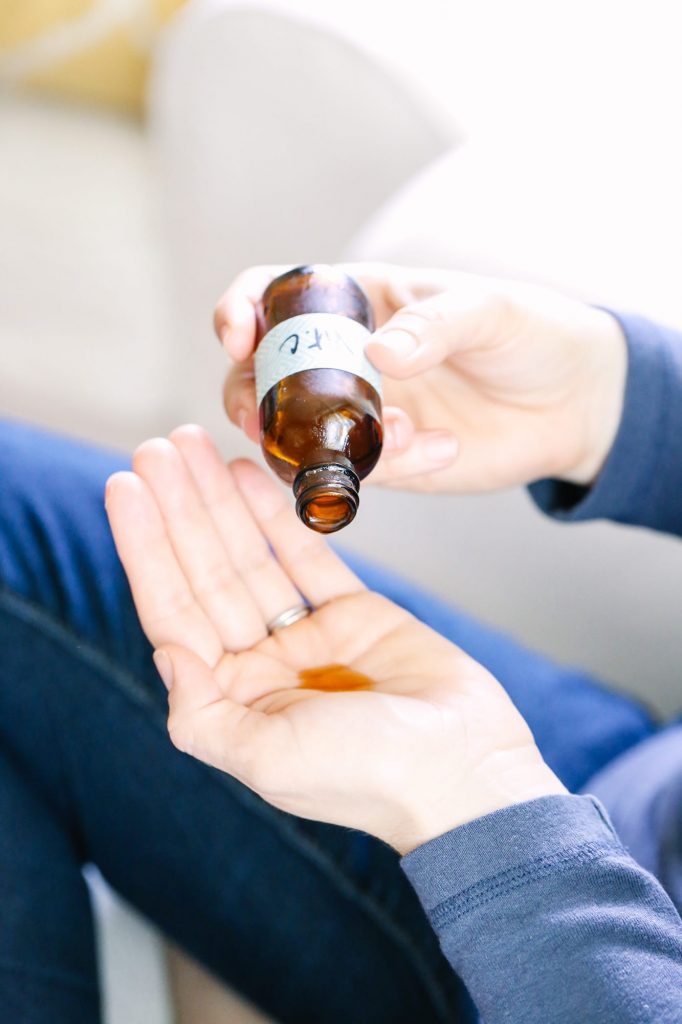
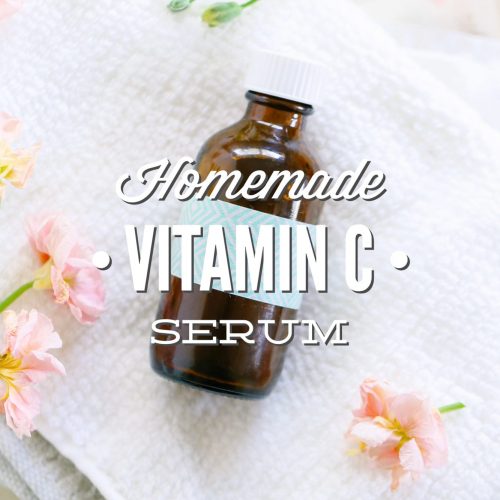
Homemade Vitamin C Serum
Ingredients
- 1 tsp vitamin C powder
- 1 tsp filtered water
- 1 TB aloe vera gel + 2 tsp, I think aloe juice may also work in this recipe. I haven't personally tried aloe juice in my serum, yet.
- 1/4 tsp vitamin E oil optional
Instructions
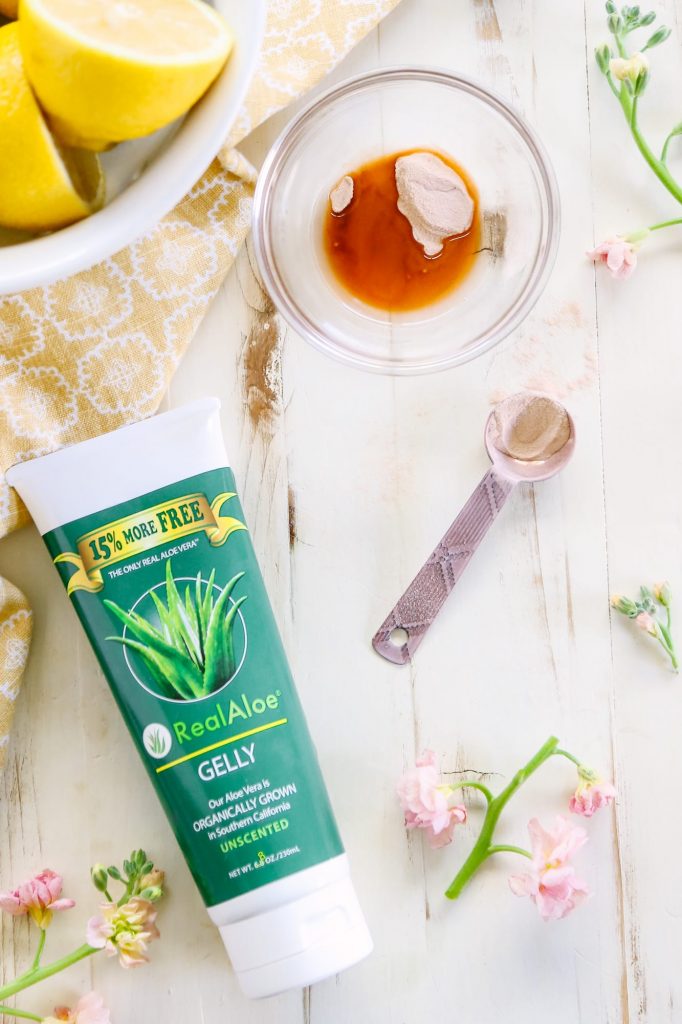
- In a small bowl, combine the vitamin C powder and filtered water. Whisk the ingredients until the vitamin C powder is completely dissolved. Once dissolved, stir in the aloe vera gel and vitamin E oil.
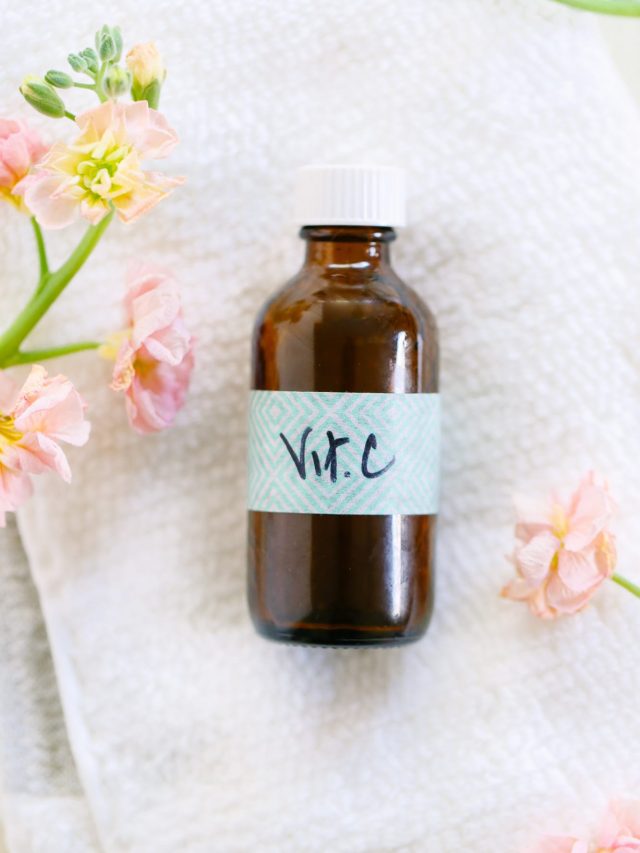
- Pour the serum into a dark amber bottle (a funnel helps). Store the serum in the fridge for 1-2 weeks. Around the two week mark you may notice the serum's pH level change*. Your serum may have a different color and consistency, depending on the vitamin C powder and aloe used to make this recipe. My vitamin C powder is pink, but many are white.
Notes
Recipe Variations:
I’ve played around with the recipe variations over the past month. Vitamin C serum can feel a bit dry on the skin, so I like to add the aloe and vitamin E oil to help compensate for this drying effect. I’ve also used this ratio: 1 tsp vitamin C powder, 1 TB each: water and aloe vera gel. The trick to this ratio is applying a fair amount of moisturizer before the serum fully dries on the skin since it can leave your skin feeling dry at first. I personally prefer the recipe above, with the extra aloe and vitamin E oil, but both have produced the same overall result for my skin. If your skin is irritated with my recipe then decrease the amount of vitamin C powder at first (use 1/4-1/2 teaspoon) and slowly work your way up to more, if desired.
Many sources call for using vegetable glycerin versus aloe, but I found glycerin to be very sticky on my skin. If you have glycerin on hand, it may be subbed for the aloe.
pH Testing:
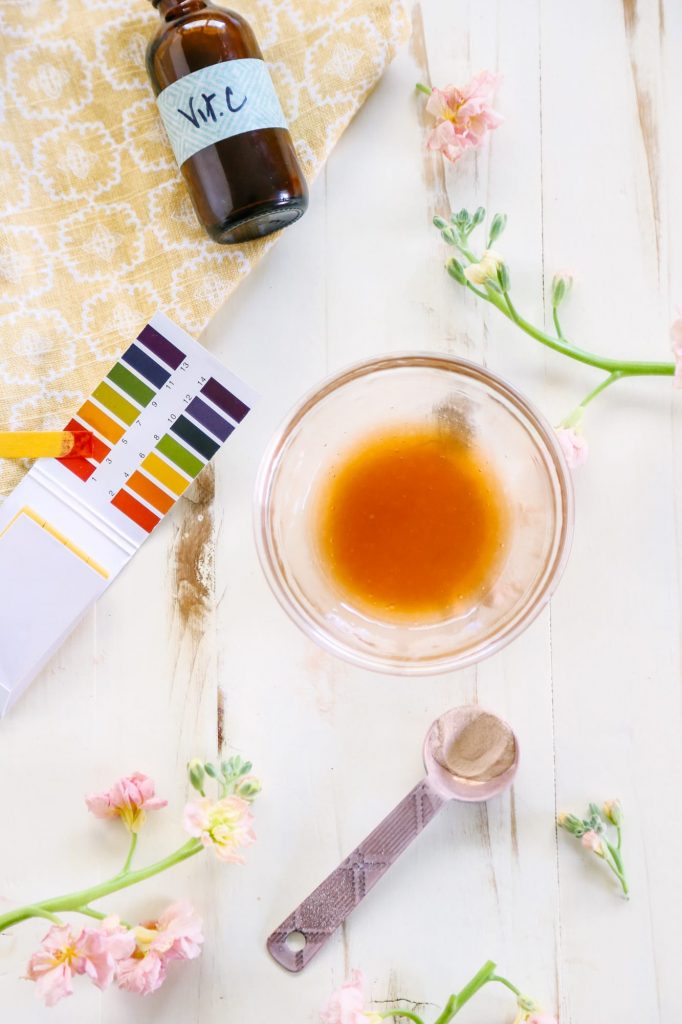
According to my research, an ideal vitamin C serum should have a pH of 3. For reference, a pH of 7 is considered neutral. I purchased a set of pH testing strips from Amazon so I can test each batch of serum. Vitamin C has a very a short life span. The serum may begin to fluctuate in pH when it’s no longer suitable for use on the skin. A change in pH may result in more harm than good when you apply the serum to your skin. So far I haven’t had any issues with pH since I make a batch of serum every 1-2 weeks. At-home pH strips are really easy to use, so if you’re interested in testing the pH, I recommend purchasing a test kit.

Hi Kristin! I’m excited to give this a try! I tried to search Amazon for ph test strips and it looks like there are tons of options. Do you have a particular one you use? Thanks for your help!
Hey Melissa, The ones I have and used are no longer on Amazon. I would look for the highest rated option on Amazon.
I finally found one! All the “works with urine” descriptions were throwing me off. 🙂 I just finished up a batch and it looks like the ph is between 3 and 4. Thanks for the recipe!
Perfect, Melissa! Glad yo found one!
The powder is in crystal form and doesn’t mix with the water properly,how do i fix it?
Hi Raaji, What brand of vitamin C powder are you using?
Hi.instead of making a vit c serum can I apply diluted lemon juice on the face instead as that contains vit c too.wil that be just as effective?
Hi Kirstin
I have really sensitive skin that’s scarred due to acne. It was suggested I try Body Shops Vitamin C spray as a toner. Do you think just the water and the vitamin powder in the correct ratios will suffice as a spritz? Also can I use still(spring) water instead of distilled water?
Hey Sands, Possibly. Maybe something easier would be using rose water as a toner. It’s great for scarred skin.
Hey. I used the brand that you linked above. After my reaction to the serum I spot tested each ingredient and its def the aloe. I’ve never had a reaction to aloe before, so weird. Thank you for your quick response!
My skin has a reaction to aloe (burning, itching, and red!), is there anything I can substitute the aloe for?
Thank you!
Oh wow, Sherri. You could try distilled water possibly. Maybe it’s a reaction to one of the ingredients mixed with the aloe. What brand have you used?
It sounds like your allergic to aloe like me
I thought I was allergic to aloe for years! I had a terrible reaction to aloe gel which was organic and 99% aloe. But I’ve since tried fresh aloe and it’s amazing on my skin…it’s probably something the add to the gel. Try a small amount of fresh aloe and if it doesn’t cause a reaction it isn’t the aloe! Some ppl are allergic to aloe but it’s not common.
I meant to post this on the honey & aloe face wash lol! ?
Hi, as u mentioned me in that comment about your another serum for combination skin can I use this serum
Hey Vaishanvi, The other serum is similar to a moisturizer. This one is not.
Hi,kristin sending love from India.
Actually had a question that where will I get vitamin C powder or can I add a vitamin C tablet.
Hey Vaishanvi, I think a tablet will work well. You’ll just need to dissolve it first before use.
Hi, I’m using it every night for 1 month and it really works. Thank you for sharing it to us.
Thanks,
Evelyn
Yay, Evelyn, That’s awesome!
HI Kristin,
I loved the vitamin C recipe.I am going to start using it and post the results .
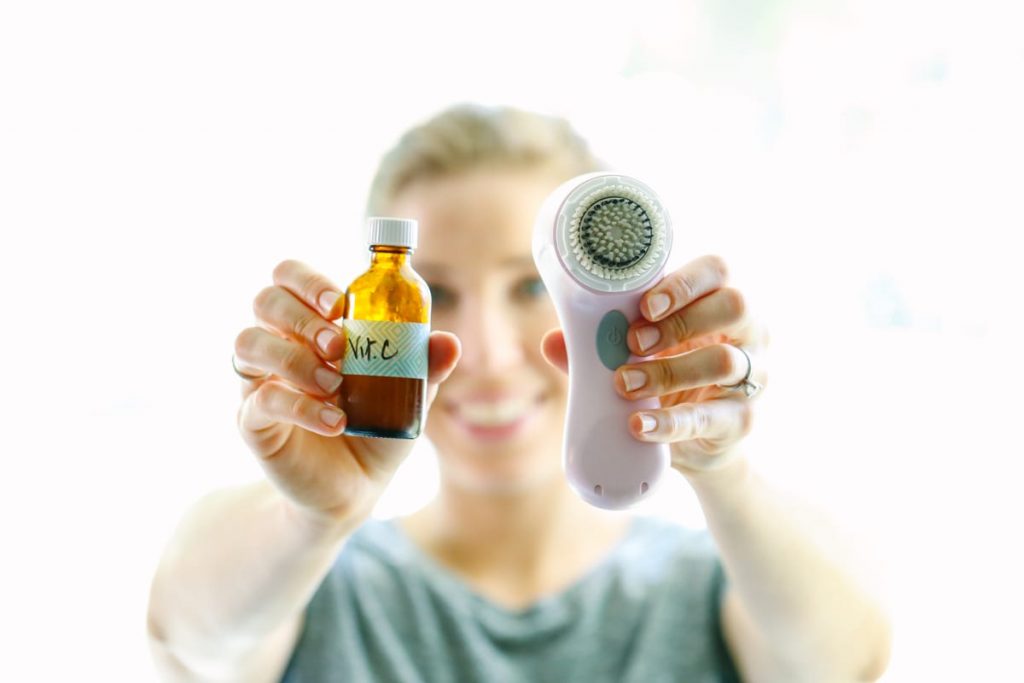
Could you tell me what is the alternate to clarisonic brush as you wrote that vitamin C serum and clarisonic helped rejuvenating your face skin.
Hey shikha, Thanks, I would love to hear your experience with the serum. The clarisonic is basically an electronic facial brush. There are quite a few options on the market now, available both in stores and online.
Hi Kristin, Thank you for sharing. Can I just use the aloe vera directly from the plant or is ti better to use the aloe gel? Looking forward to try this.
Alena
Hey Alena, You can use fresh aloe. The mixture won’t last as long, so I would reduce the amounts in the recipe.
Hello,
Want to test out your DIY Vitamin C serum recipe, however did you know that the Vitamin C product/ link that you listed contains maltodextrin? I tried it (because I love HealthForce and already had some in my kitchen) and it is super sticky!!
Thanks!
Hey Deb, Thanks for sharing. You’re welcome to use the Vitamin C powder you feel most comfortable using.
Hi. Can I use witch hazel liquid instead of water?
Hey Maria, I would stick with water for this.
Hi Kristin
I love the recipe and my skin feels amazing.
Just one thing I want to know please
What good preservative can I add if I want the butch to last like a month.
Kind regards
Leonitta
Hey Leonitta, I’m so glad you’re enjoying. Due to the fragility of vitamin c, it’s best to make it frequently so it’s potent. I wouldn’t add a preservative for that reason.
Hello Kristin, can vitamin c powder be made from vitamin c tablets for this recipe? I live in Nigeria and that’s basically all we have ❤?
Hey Dorinda, I believe so.
No! The vitamin c powder which is meant to be consumed does not penetrate the skin. You really need to buy vitamin c powder which is specifically made for the face. Vitamin C tablets are also full of sugar and other additives. You do not want that stuff sitting in a bottle with water as it encourages bacteria growth.
Hi Kristin
Thanks for your recipe. Im about to try it out this week. I have a small concern, what if the pH dont come out at 3 after we make it? What should we do? Thanks in advance ?
Hey Nguyen, Then you’ll need to adjust ingredients–just comment here and I’ll try to help with that. I haven’t had that happen before.
Thanks Kristin! I went out to find a pH tester here but so far no luck. I might try it out soon and let you know what happens.
Love your recipe. I have tried different ratios but this seems to work very well for me. Would I be able to use hyaluronic acid to the finishied serum to thicken it?
Hey Marianna, I honestly don’t know–you could try it and test a small amount on the skin.
Hi Kristin ? I would like to know if this is suitable for mature skin age 60 yrs plus. Thanks
Hey Elsa, I always recommend testing a small area of the skin first before applying anything all over–with both homemade and store-bought products. I want to say, yes! But everyone’s skin is different.
Hi Kristen,
I would like to do your recipie in a 30 mil solution of Hyaloronic Acid disolve Ascorbic acid and ferulic acid. I would take about 10 milliliters of Hyaloronic Acid out and substitute with aloe vera gel. I always wanted a serum with aloe vera . I love the smooth dry effect on my skin.
Let me know what you think
Dom
Hey Domenic, I’m don’t have an answer for you, but I’d love to hear what you end up making.
Hi! Love your recipes. Well done. Is it ok to crush some vitamin C tablets and use it for this recipe? Would it serve same purpose as the store bought vitamin C powder?
Hey Stephany, Thank you so much. Yes, that should work!