
How to make the best homemade body butter with 2 simple, natural ingredients. This DIY whipped body butter feels luxurious and delivers maximum moisture to the skin. Let me show you how to make non-greasy body butter that works for any skin type.
Want to Save This Article?
Enter your email & I’ll send it straight to your inbox. And you’ll get new recipes & tips each week.
Body butters are no strangers to Live Simply. First, we made this ultra-moisturizing shea butter lotion. Then we made a simple lip balm and shea butter cream facial moisturizer.
Today, we’re making silky smooth body butter for the whole body: face, arms, legs, wherever you need moisture.
In this post, I’ll guide you through making homemade body butter via photos and a video.
Key Takeaways
- Simple Ingredients – You’ll need skincare butter (shea butter, mango butter, or cocoa butter), carrier oil, and two optional ingredients- arrowroot starch/flour (to reduce the greasy feel) and essential oil.
- Easy to Make – Melt the ingredients, chill in the fridge, then use a fork or hand mixer to whip. That’s it!
- Inexpensive – Body butter can cost a fortune if you buy it at the store, particularly from a natural company. Making body products, like body butter, is usually cheaper. Buying the ingredients is an extra cost, but once you have them, you can create multiple jars of your whipped body butter (and other products).
- Non-Toxic and Natural – No synthetic fragrances, preservatives, or other unwanted ingredients. Just nourishing ingredients that are good for your skin.
- Shelf Life – 6 months
What is Body Butter?
- Moisturizing – Body butter is a rich, moisturizing skincare product made with skincare butter like shea butter and cocoa butter.
- Lotion Alternative – Body butter can be used as an alternative to lotion since its primary job is to moisturize the skin.
- Full Body Use – It may be used on the entire body, from the face to the feet.
Lotion vs. Body Butter: What’s the Difference?
- Lotion is made with water and oil (and possibly butters) so it’s light, airy, and silky smooth. Homemade lotion needs to be used within a short time or a preservative should be used (due to the water and bacterial growth). It also requires an emulsifier to properly blend the oil and water.
- Body butter is made exclusively with butter(s) and oil(s), so it’s thick and dense. Homemade body butter will last for up to 6 months without a preservative.
Both body butter and lotion are used in the same way: to moisturize the skin. Body butter does deliver more moisture since it’s not cut with water. So it’s ideal for all skin types, particularly dry skin or during the winter months.
Before You Get Started: Ingredients & Equipment
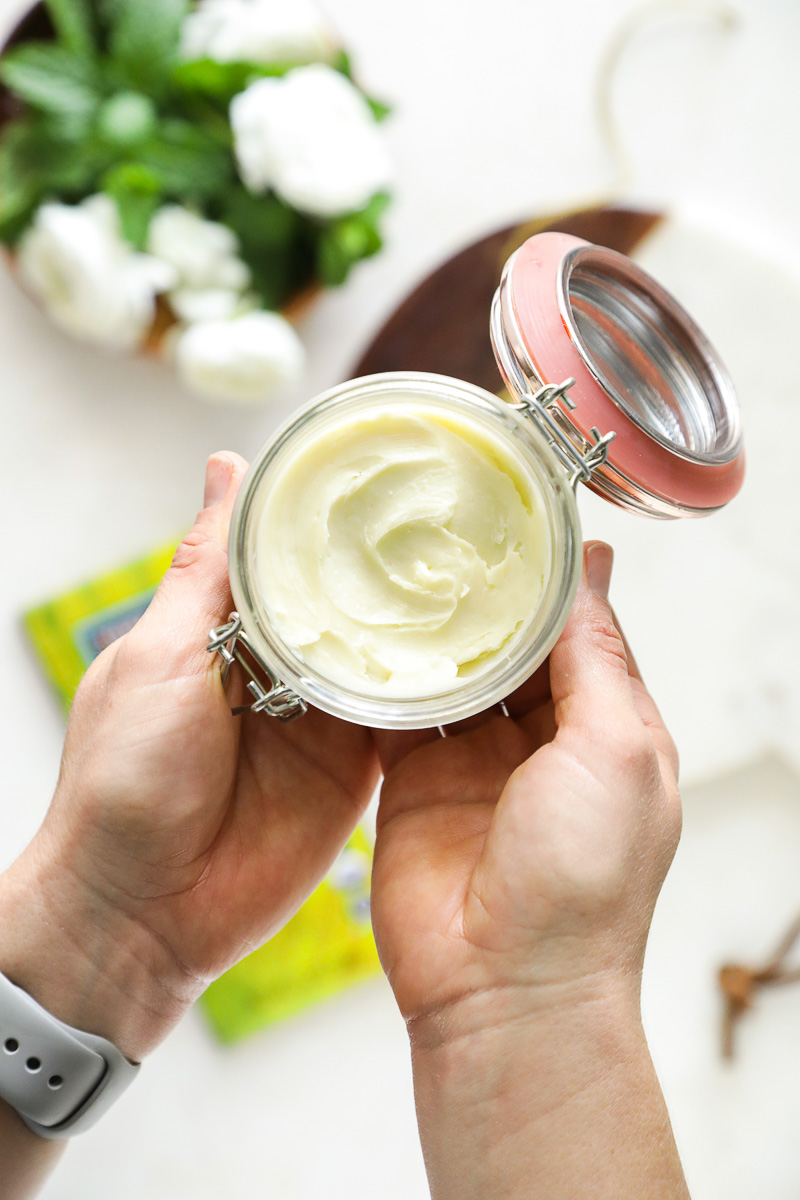
DIY body butter is easy to customize to your liking. You’ll need just 2 natural ingredients.
From there, you’re welcome to add 2 additional ingredients, if desired, to make a non-greasy product or add a custom scent.
- 1/2 cup skincare butter – provides much of the moisturizing relief. Choose one of these options for the body butter: cocoa butter (hydrating and rich in vitamin E, chocolatey scent), shea butter (rich in fatty acids, vitamin E, ultra-moisturizing), or mango butter (rich in fatty acids, ultra-moisturizing).
- 1/4 cup carrier oil – nourishes and moisturizes the skin. My favorite oil options are sweet almond, olive, sunflower, avocado, jojoba, grapeseed, and coconut oil.
- 1 1/2 teaspoons arrowroot flour starch (optional) – a natural starch that helps to reduce the oily/greasy feel by absorbing.
- 36 drops favorite essential oils (optional) – add an essential oil of choice for the amazing scent.
The ingredients may be found online, some craft stores, or health food stores.
Equipment
- small saucepan – used to create a double boiler by adding water to the saucepan and placing a heat-safe bowl on top. This method protects the fragile ingredients from burning.
- glass or metal bowl (large enough to fit on top of the saucepan) – to melt the ingredients, used with the saucepan to create a double boiler.
- fork or hand-mixer – use to whip the ingredients into a spreadable butter.
- fridge – to cool the ingredients once melted.
- glass storage jar – for storing the final product.
Learn More About Each Ingredient
1. Butter
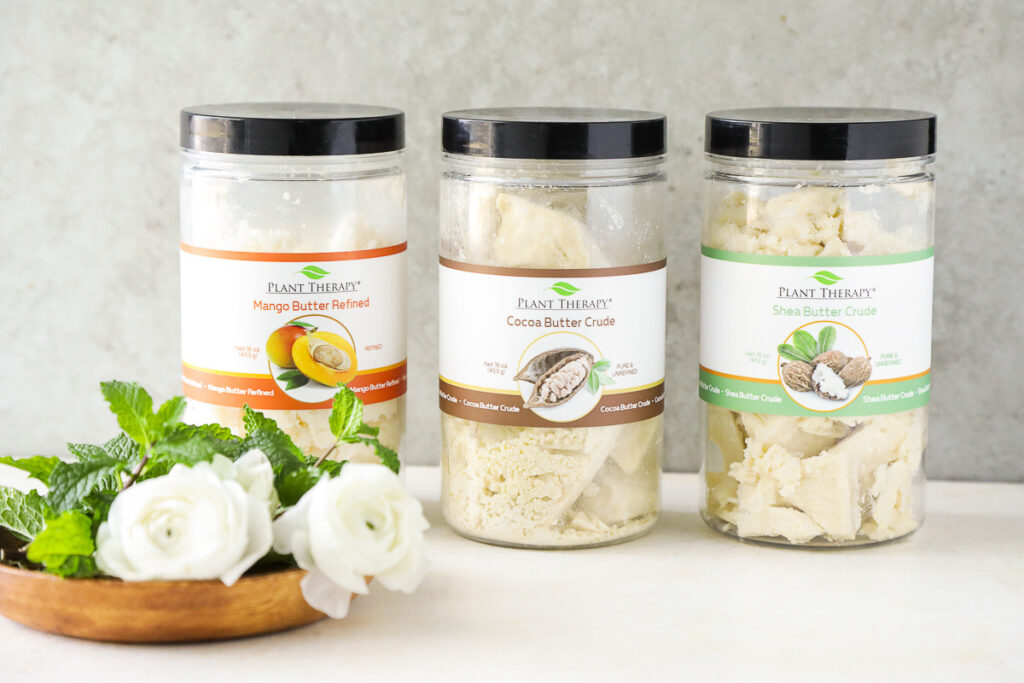
Homemade body butter starts with a moisturizing skincare butter. Shea butter is the perfect base butter since it’s soft, easy to work with, and melts into your skin. My recipe calls for at least a 1/4 cup of shea butter.
From there, it’s up to you, the maker, to customize the body butter. You’ll need a total of 1/2 cup of butter. So use all shea butter (for a total of 1/2 cup shea butter), or mix the shea with a different butter: 1/4 cup of cocoa butter or 1/4 cup of mango butter.
Best Butters
- Shea Butter: Shea butter comes from the “nut” (or pit) of the fruit found on the Karite Tree. It has a strong scent when it’s purchased in an unrefined state. I use unrefined shea butter in recipes (including body butter). If you don’t care for the strong scent, use refined shea butter instead. Since shea butter is naturally soft, it makes a wonderfully soft whipped body butter. It may be used on its own with a carrier oil, or combined with another butter like cocoa butter or mango butter. See all the ways you can use shea butter to make your own body products.
- Cocoa Butter: Cocoa butter comes from cocoa beans, so it has a strong scent and smells like chocolate. Cocoa butter is hard at room temperature, and it melts easily. Cocoa butter is naturally hard and dense, so if you use it, mix it with shea butter or mango butter to make a softer body butter. See other ways to use cocoa butter to make your own body products.
- Mango Butter: Mango butter comes from the seed of mango fruit. It’s naturally soft, similar to shea butter, and can have a gritty texture before melting. It yields a soft, airy body butter when mixed with shea butter. If you don’t want to use shea butter (due to allergies) in my recipe, then mango butter is the best replacement.
2. Carrier Oil
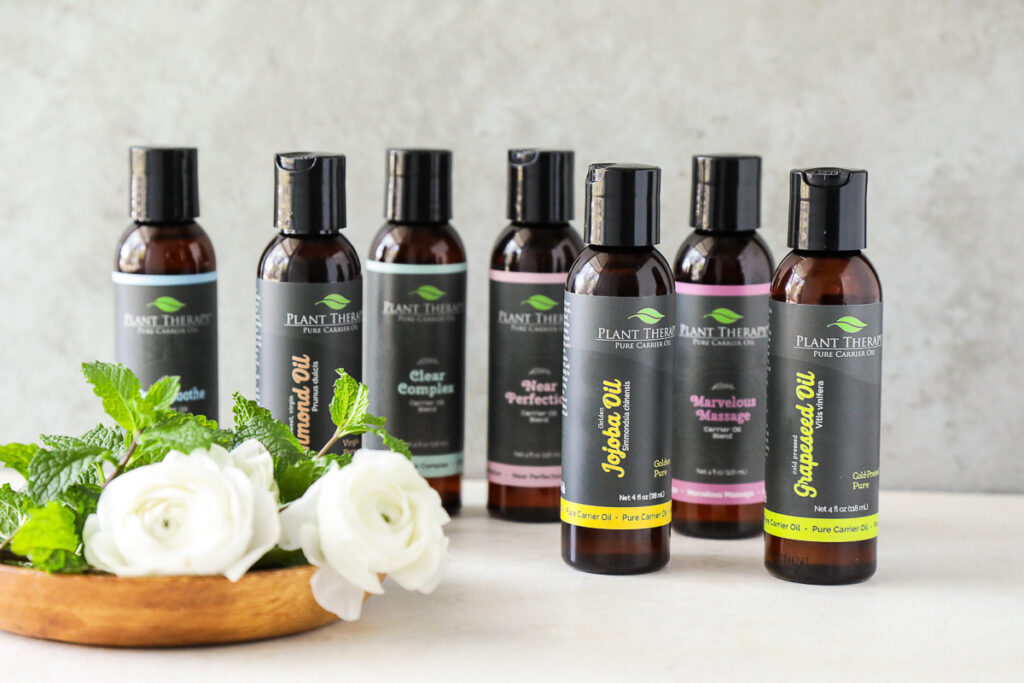
A liquid oil is the second main ingredient used to make body butter. The oils used in skincare recipes are known as carrier oils, although I usually call them nourishing oils. The oil used is entirely up to you.
See all the ways to use carrier oils to make your own body products.
Best Carrier Oils
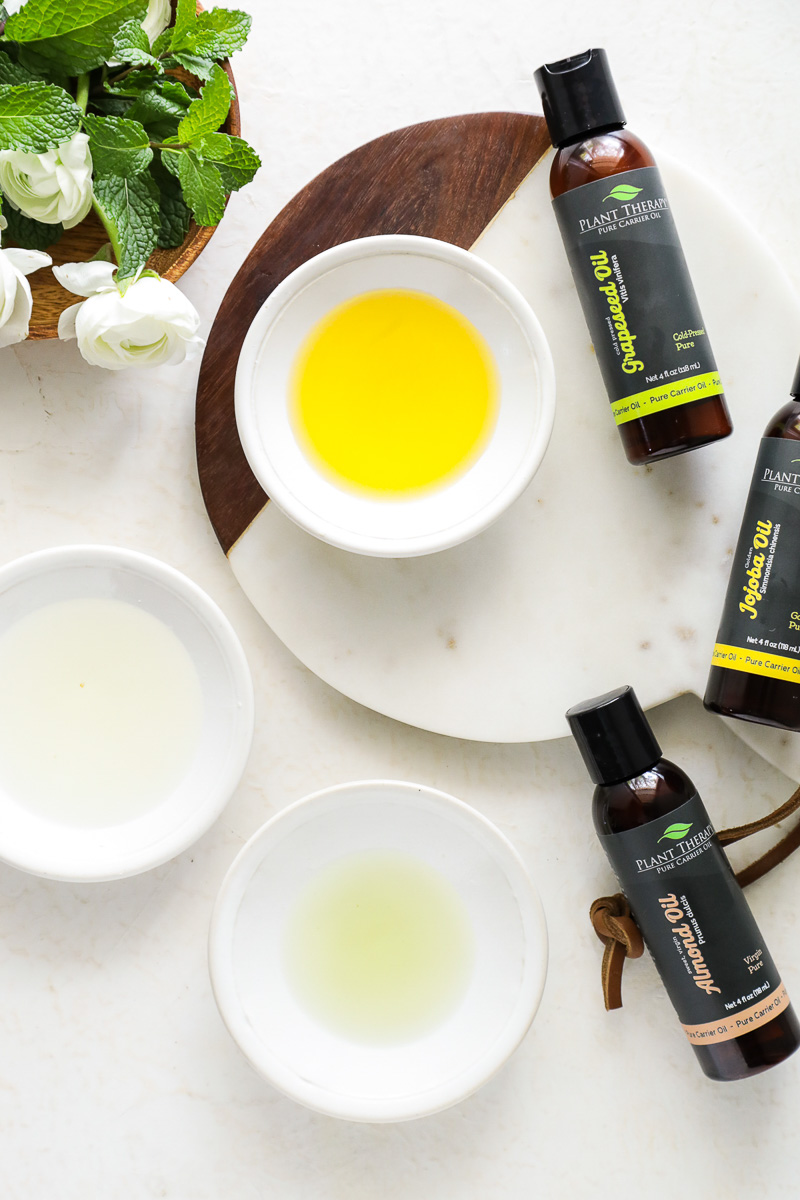
- Sweet almond oil, jojoba oil, or grapeseed oil are best for making a non-greasy body butter that is easily absorbed by the skin. Great for all skin types.
- Virgin coconut oil may be used, but it can be very greasy and clog pores. Avoid if you have body acne or sensitive skin.
- Olive oil is another option; however, olive oil can be extremely heavy and feel greasy. Just like with coconut oil, this is not an option for all skin types and you may not love the results.
3. (Optional) Arrowroot Powder
Whipped body butter recipes can be very greasy!
The good news is that there’s a simple solution for this issue: add arrowroot flour/starch. Arrowroot is a natural starch (used in cooking to thicken soups, sauces, and stir-fry) that will absorb the greasy feel of the butters and oils, without drying out your skin.
Substitution: Some folks use tapioca starch and cornstarch (which are similar to arrowroot starch); however, I haven’t used these ingredients so I can’t speak to their success.
4. (Optional) Essential Oils of Your Choice
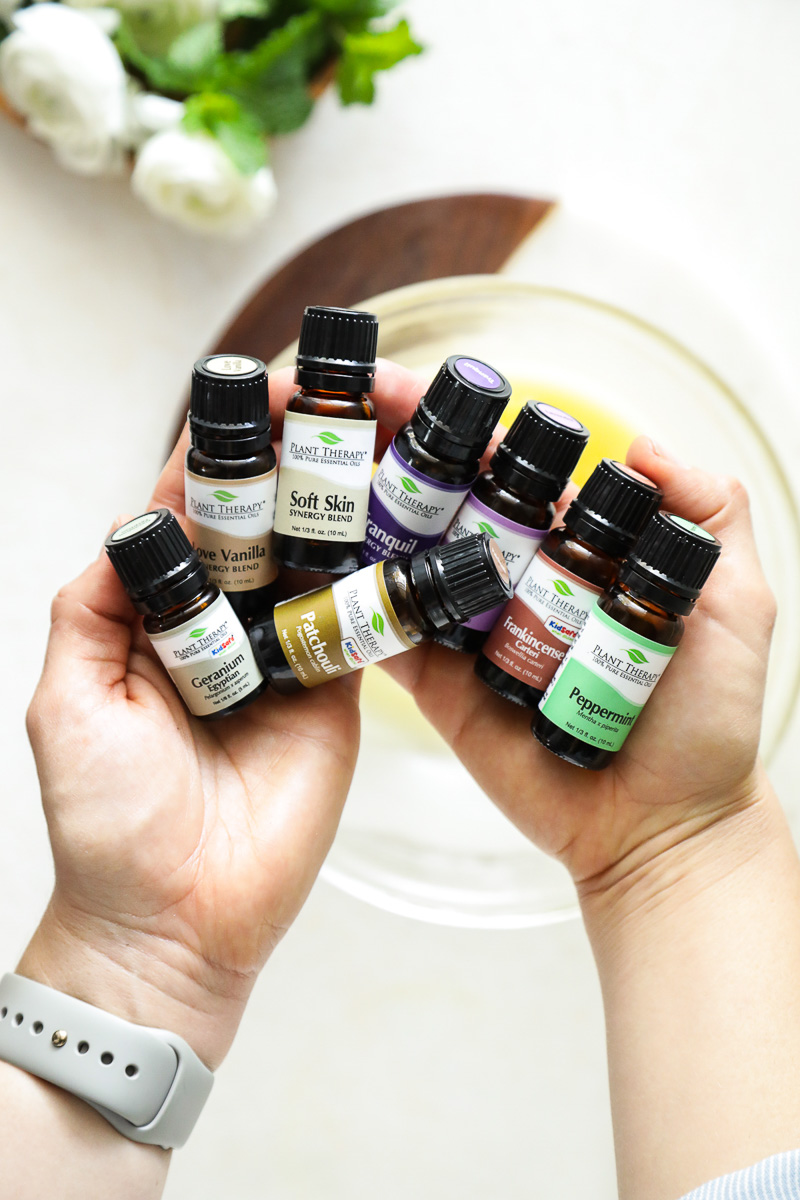
An essential oil may be added for scent and additional skincare benefits. Use just one essential oil, mix a few essential oils to create different scents, or an essential oil blend (a pre-blended bottle of essential oils). Currently, my favorite essential oils for body butter are lavender, geranium, and frankincense (carteri).
I use a 1% dilution in my body butter recipe. Before using any essential oil, read the back of the bottle for specific dilution recommendations.
Recipe Tutorial Video
How to Make Whipped Body Butter: Step By Step Guide
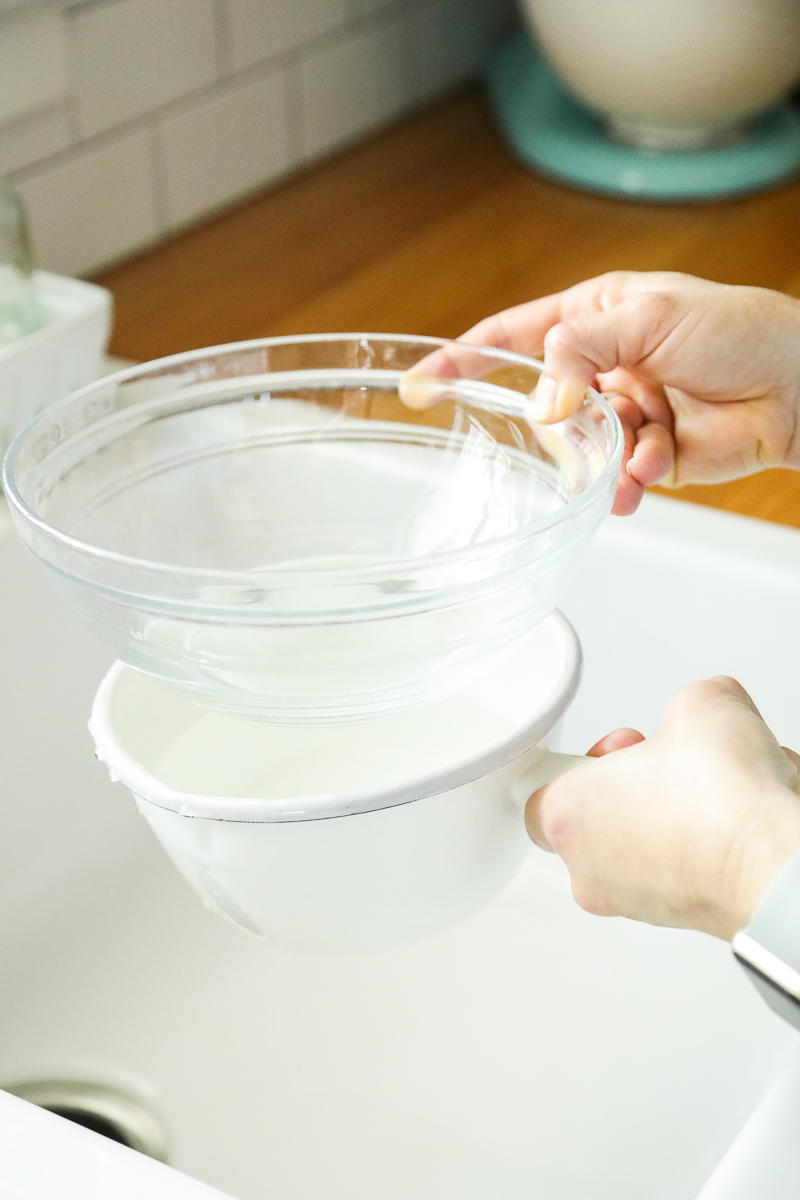
- Step 1: Melt the Butter in a Double Boiler. Partially fill a saucepan with water (about 1/4 of the way full). Then, place a glass (or metal) bowl on the saucepan. Place the butter(s) in the glass bowl. Turn the stovetop to medium heat, placing the double boiler on top of the heat. Allow the butter(s) to melt (about 3-5 minutes) fully.
- Step 2 Combine Oil & Carrier Oil – If you plan to use arrowroot flour, whisk the flour into the carrier oil in a small bowl. Set the mixture aside. If you’re not using arrowroot flour, skip this step.
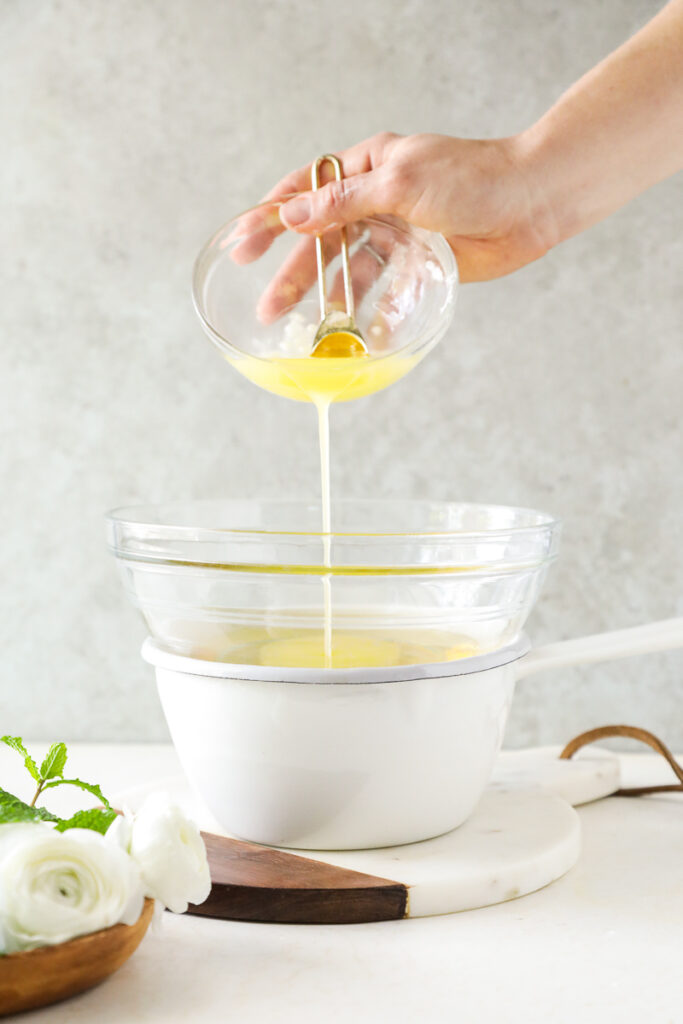
- Step 3 Combine the Melted Butter & Oil – Carefully remove the bowl (with the melted butter inside) from the double boiler setup. Add the oil (with the arrowroot flour, if using) to the melted butter, and use a spoon to stir and combine the ingredients.
- Step 4 Chill – At this point, the oil mixture should be cooler (along with the glass bowl). If not, allow it to rest for a few minutes. Then, place the mixture in the fridge and allow it to solidify (about 30 minutes to 1 hour).
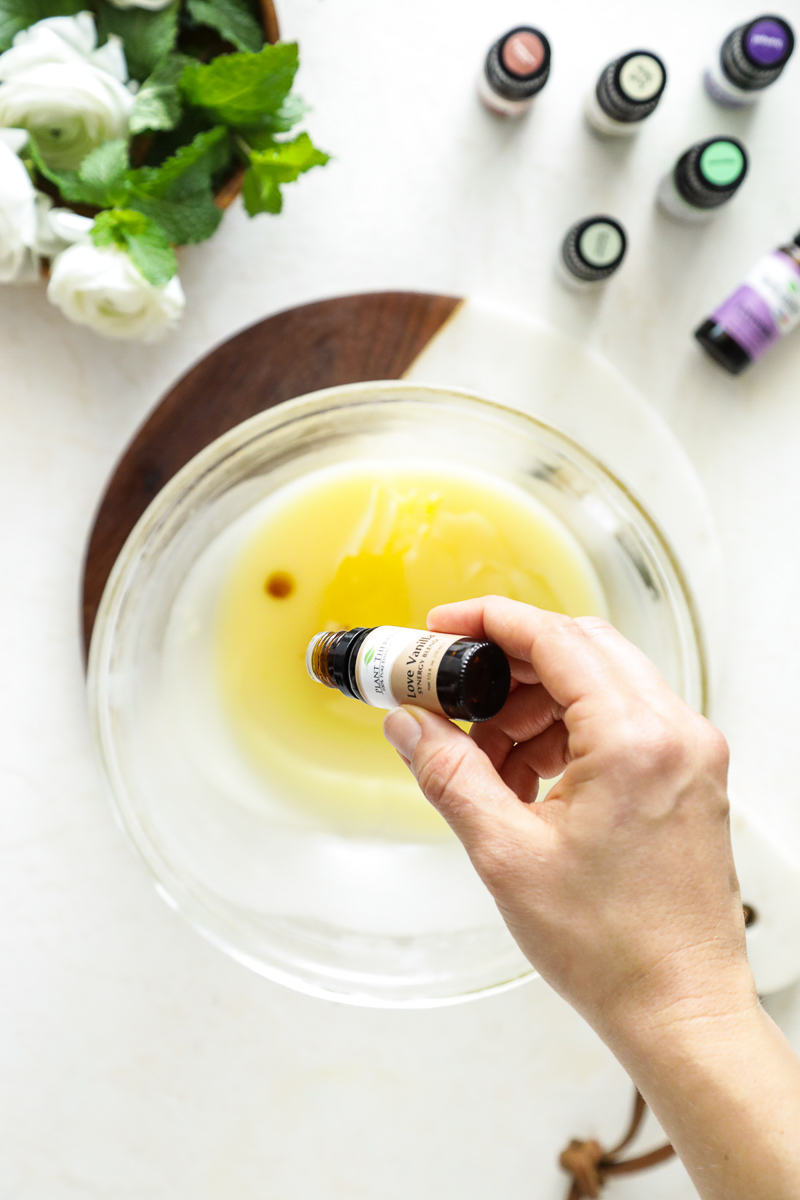
- Step 5 Add Essential Oil – Once the mixture is opaque and a bit firm (not solid as a rock), remove the bowl from the fridge. Add the essential oil of choice if desired. The essential oils must be added when the mixture is cool, as heat will cause the fragile essential oils to evaporate.
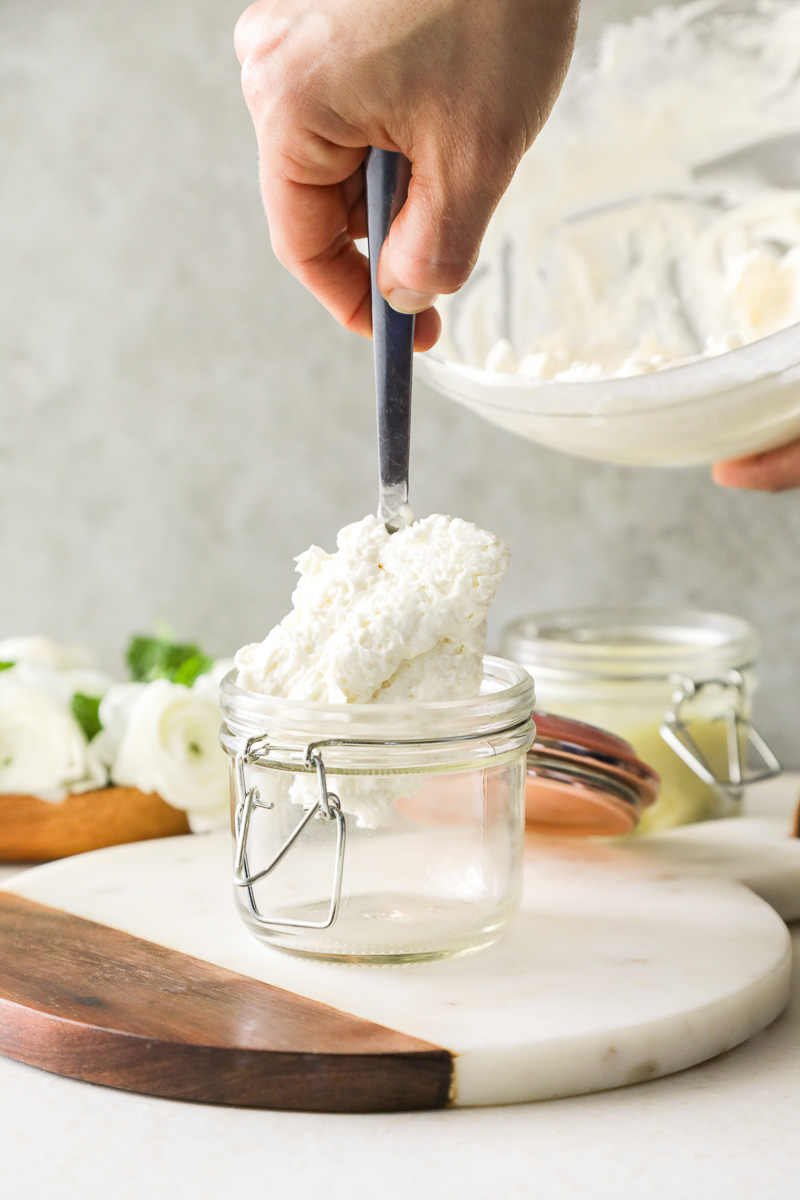
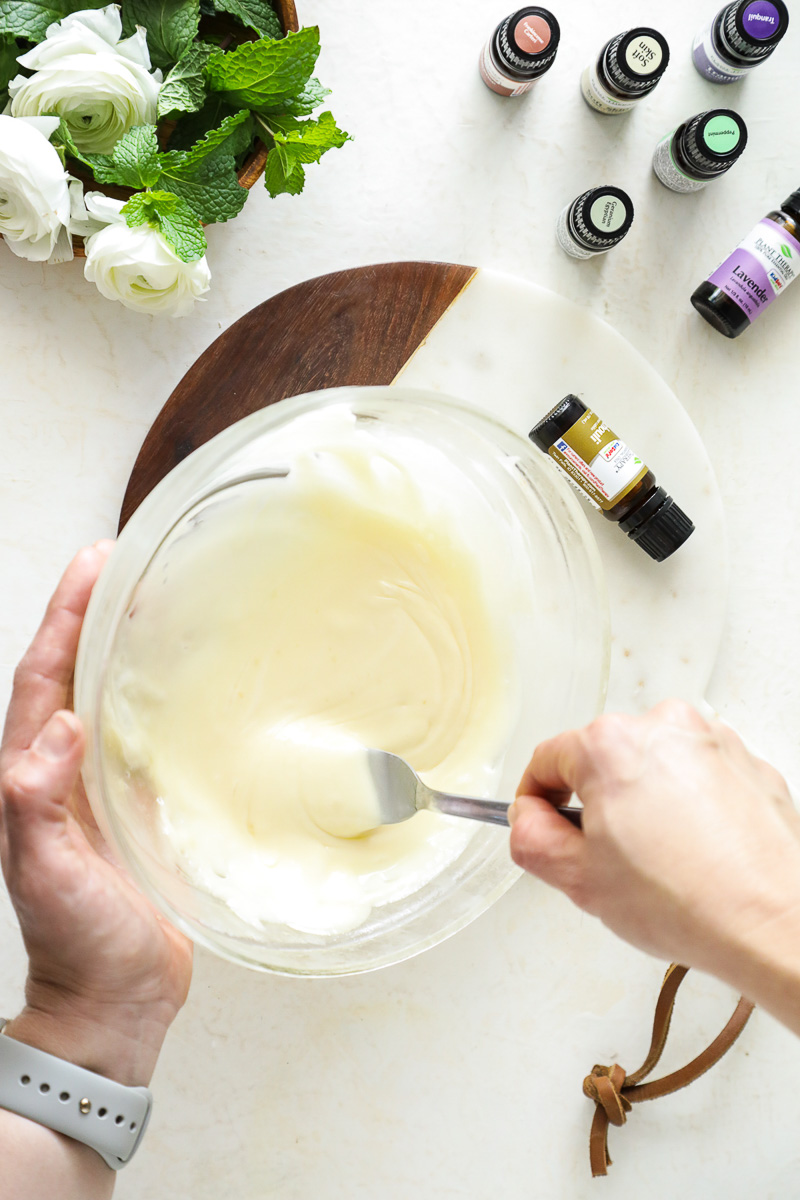
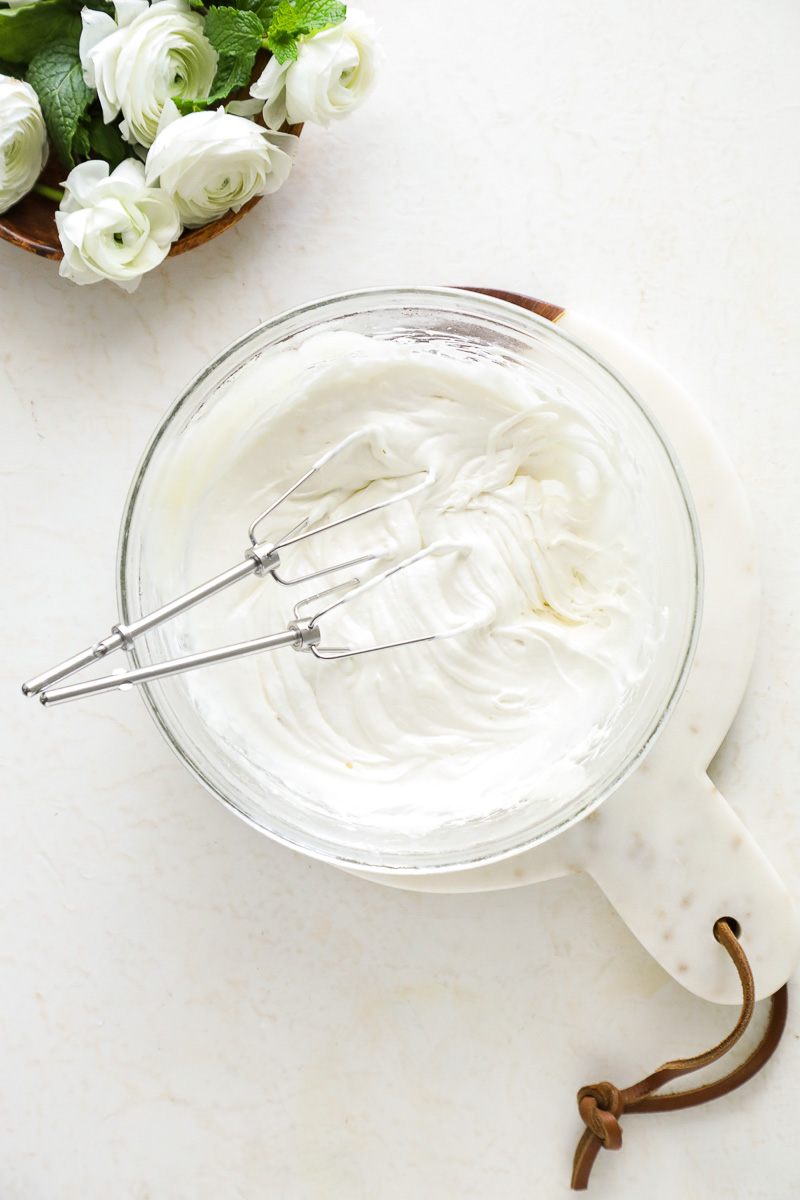
- Step 6 Whip – If you used cocoa butter, whisk the mixture with a fork until it appears “whipped.” If you used shea and/or mango butter, you can use the same technique with a fork or a hand mixer to “whip” the body butter. Just be careful not to over-whip the mixture.
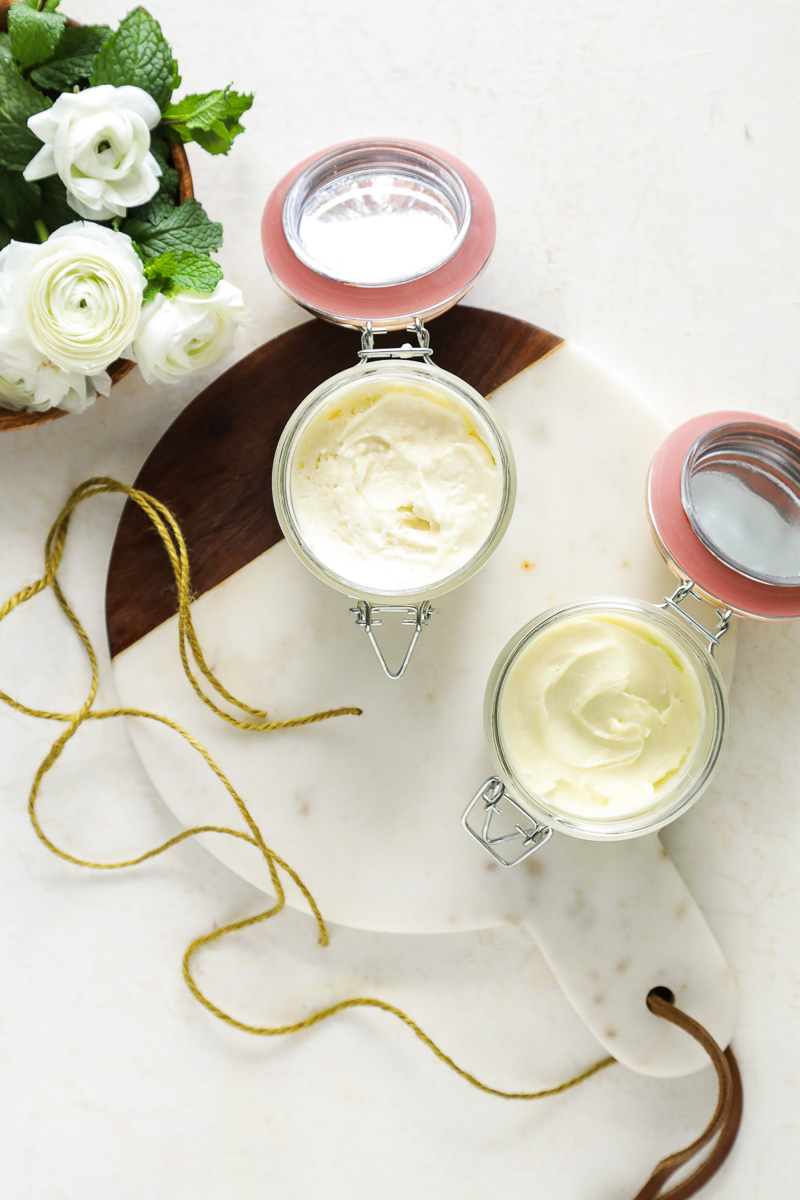
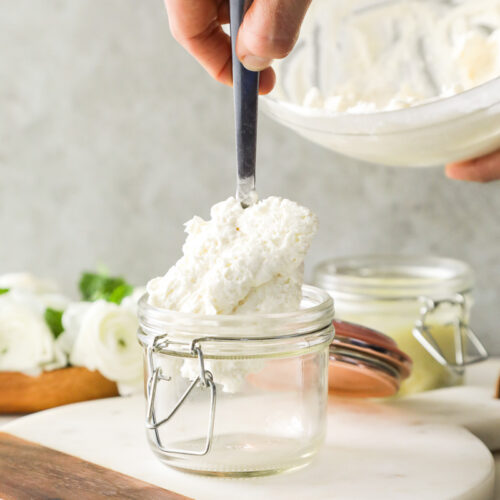
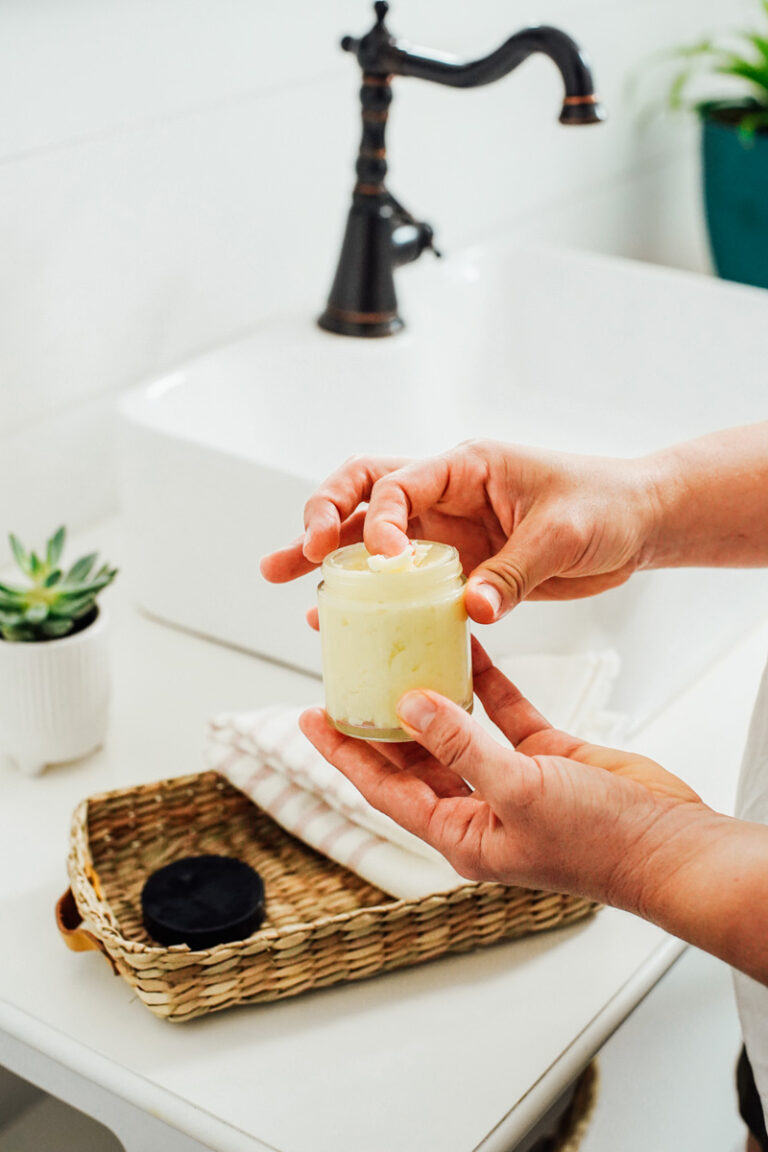
- Step 7 Spoon Into a Jar – Scoop the mixture into a jar and place the lid on the jar. Now it’s ready to use!

Storage: How Long Will It Last?
Store at room temperature (out of direct sunlight) in a sealed jar for up to 6 months.
What to Avoid Doing
- Don’t Use Hot Essential Oils – Some essential oils can irritate the skin and cause the skin to have a burning sensation. Avoid these “hot oils” such as cinnamon, clove, oregano, thyme, and lemongrass.
- Citrus Oils – Citrus oils, like sweet orange or lemon essential oil, are photosensitive and can make your skin more sensitive to the sun.
- Use Only a Little – If the body butter feels too oily, you’re most likely using too much. Body butter is much denser and richer than lotion (cut with water), so you don’t need much to moisturize the skin. Use a small amount, and it will absorb into the skin beautifully.
How to Prevent Hard Body Butter
If you want to create a soft, fluffier body butter, here are a few tips.
- Don’t Overwhip – When “whipping” the cooled ingredients, you only need a quick whip to create the body butter. Use a fork and whisk for 10-20 seconds for cocoa butter. For shea butter and mango butter, about 30 seconds with a hand mixer is plenty of time.
- Texture Depends on Ingredients & Temperatures – The outside temperature will affect the texture of the texture and softness of the final product. Cocoa butter will create a denser body butter. Shea butter and mango butter will create a softer final product.
- The Fluffiest Combo – Coconut oil and shea butter usually produce the fluffiest body butter.
How to Use This Product In Your Skincare Routine
Use this product anytime your skin needs moisturizing.
- Use a Small Amount – Scoop a small amount from the jar, then massage onto the skin. As you rub, the butter will melt into your skin. You only need a small amount at a time.
- Use When Skin is Damp – The best time to use this body butter is after showering when the skin is damp. Apply a small amount of product to your fingertips, then massage on the skin: arms, legs, feet, neck, and chest.
- Facial Moisturizer – This product may also be used as a moisturizer on your face. Avoid using coconut or olive oil in your formula if you plan to use it on your face. Or check out my homemade shea butter facial cream recipe.
How to Soften Body Butter Before Use: The body butter will soften or harden depending on the temperature in your home. To soften a hard body butter (which is normal and happens), place the butter in the bathroom while showering (not in direct contact with water). The hot steam of the shower will soften the body butter and make it easier to scoop out and spread on your skin.
FAQs
- Do I need to use a preservative? Since water is not used to make this product, you don’t need to worry about mold or bacterial growth. Do not incorporate water into the product when scooping the butter from the jar with your hands (i.e., after a shower, washing your hands, etc.)
- You say $4-6 per jar. What size jar are you referring to? This recipe makes one 6-ounce jar. The cost will depend on the ingredients purchased.
- Can I multiply the recipe without affecting the final product? Yes, you can! You can easily double, triple, or quadruple the recipe to make multiple jars.
- Would vitamin E oil work as the carrier oil? No, vitamin E isn’t a carrier oil. You’re welcome to add a small amount of vitamin E oil if desired, but you’ll still need carrier oil.
- How long do you mix the product to avoid “over-whipping”? The answer depends on the ingredients used. For cocoa powder, just a few seconds. About 30 seconds should be enough time for shea butter and mango butter.
4 More DIY Recipes With Shea Butter
- Shea Butter Lip Balm – Use shea butter, beeswax, and oil to make a nourishing balm for chapped lips.
- Custom Lip Balm – Use any body butter of choice or oil to make this natural lip balm recipe.
- Lotion Bars – Moisturizing lotion in a solid bar, made with shea butter and beeswax.
- Face Moisturizer – Combine shea butter and oil to make an all-natural face moisturizer.
How to Make Homemade Body Butter (Non-Greasy)
Equipment
- 1 small-medium saucepan to create a double boiler and melt the butter(s)
- 1 medium glass or metal bowl big enough to rest on top of the saucepan to create a double boiler and melt the butter(s)
- 1 small bowl if using arrowroot starch to mix with the carrier oil
- 1 fork or hand-mixer to whip the body butter
- 1 glass storage jar to store the final product
Ingredients
- 1/4 cup shea butter unrefined or refined (41 grams)
- 1/4 cup mango butter or cocoa butter (41 grams mango butter or 34 grams cocoa butter or use 41 grams additional shea butter if using all shea butter)
- 1/4 cup carrier oil of choice: grapeseed oil, jojoba oil, sweet almond oil, or coconut oil (42 grams)
- 1 1/2 teaspoons arrowroot flour starch optional (5 grams)
- 36 drops essential oil of choice optional
Instructions
- First, make a double boiler: Partially fill a saucepan with water (about 1/4 the way full). Then place a glass (or metal) bowl on top of the saucepan. Place the butter(s) in the glass bowl. Turn the stove-top to medium heat, placing the double boiler on top of the heat. Allow the butter(s) to fully melt (about 3-5 minutes).
- If you're planning to use arrowroot starch/flour, in a small bowl, whisk the starch into the carrier oil of choice. Set the mixture aside. If you're not using arrowroot flour, skip this step.
- Carefully remove the glass bowl (and melted butters) from the heat source. Add the oil (with the arrowroot flour mixed in, if using), and stir to combine the ingredients.
- At this point, the mixture should be cooler (along with the bowl). If not, allow it to rest for a few minutes. Then place the bowl in the fridge and allow the mixture to solidify (about 30-60 minutes, depending on location in the fridge and fridge temperature).
- Once the mixture is opaque and a bit firm (not solid as a rock), remove the bowl from the fridge. Add the essential oil of choice, if desired.
- If you used cocoa butter, whisk the mixture with a fork until it appears "whipped." If you used shea and/or mango butters, you can use the same technique with a fork, or use a hand-mixer to "whip" the mixture. Don't over-whip!
- Spoon the whipped body butter into a glass storage jar with a lid. Place the lid on the jar. It's now ready to use. Store at room temperature (out of sunlight) for up to 6 months.
How to Use:
- Use this product anytime your skin needs moisturizing. Scoop a small amount from the jar, then massage onto the skin. As you massage, the butter will melt into your skin. You only need a small amount at a time.
- I love to use this product after bathing when my skin is still moist. I apply a small amount of product to my fingertips, then massage on my skin: arms, legs, feet, neck, chest.
Video
Notes
Natural Body-Care Simplified
Learn how to make your own body and beauty products with simple ingredients.

Hi, in your video, it seems that you are adding the carrier oil and the arrowroot powder into the double boiler and in your written instructions, it says to remove the bowl with the butters from the heat and then add the carrier oil and arrowroot powder. Which method do you recommend I use?
Hey Grace, You’ll add the oil and arrowroot mixture to the bowl with the melted ingredients. You can remove the bowl from the pot (if you’re creating your own double boiler), or add the mixture while the bowl is still sitting on the pot. Either way, the mixture is being added to the bowl with the melted ingredients. Does that help clarify?
I made this as directed. Even with the addition of the almond oil I still find the butter to be too oily at first. After 10-20 minutes it absorbs. I love the way it feels after it absorbs. Any suggestions?
Hey Deborah, You could increase the arrowroot next time, or you could try adding a bit more arrowroot now if it’s not too hard. Also, with body butter a little bit goes a long way, so decreasing the amount used may also help.
Hi! Also, for the arrowroot starch, is it okay if I use the kind that they sell at the grocery store? Or does it have to be organic?
Hey Grace, Yes, any kind of arrowroot is perfect.
Hi! Love your recipe, and I’m definitely going to try it out!! As for the process of making this body butter, is it okay to simply combine the ingredients together as they are without using any heat and melting the butter first, or is the heating process necessary? *I will be using unrefined shea butter*
Thanks
Hey Grace, You could skip the heating portion if you’re using all shea butter for the butter. You may not end up with a body butter that’s as smooth, but it should still work.
what’s the shelf life on this?
Hey Ianne, The shelf life is 6-12 months, depending on the nourishing/carrier oil used.
Dear Kristin you recipes are super…. I am a beginner in the world of homemade and organic cosmetics, your blog is very inspirational. I ad been wondering what can I used in place of arrowroot flour? do you have any recommendations..
Hey Yeimi,
Thank you, you could use cornstarch instead.
Hello! How much vegetable glycerin would you suggest I add to this recipe? Thank you!
Hey Lindsay, I wouldn’t add any to a body butter.
Hi Lindsay, I know your post is old but I thought that maybe it would be nice to know that I put cannabis-infused vegetable glycerin in my body butter. I make a bigger batch but if making this recipe I would add 1 tablespoon of vegetable glycerin in when adding in the essential oils.
I used Shea and Kokum butter and grape seed oil as a carrier oil. I did omit the essential oils.
Hey Jennifer, Hmmm, I’ve never used kokum butter, so I’m not sure how it cools and sets (cocoa butter will produce a harder body butter, shea butter and mango butter will produce a softer butter). It could just be the butter results in a slightly harder body butter. Body butter is hard versus a fluffy, soft product, but it should go on effortlessly when it comes in contact with the skin (and it should easily scoop from the jar with your fingers).
I have used Kokum butter with no ill effects
Hi there! I made your recipe but used tapioca starch as that was all I had and it was so soft yesterday. I didn’t add oils as I didn’t have them. But this morning it was solid as a rock and I don’t know why. Any advice?
Hey Jennifer, Body butter is a harder moisturizing product than a water-based lotion, but it shouldn’t be so hard that you can’t get it out of the jar. Here’s my initial thought… Did you skip the carrier/nourishing oil or essential oil? If butter alone was used, that would be the cause for the hard product. The body butter needs the carrier/nourishing oil to create a softer product. The essential oil can be skipped. If a carrier oil was used, what butter was used, or combo of butters?
I’m wanting to buy unrefined cocoa butter is PURE cocoa butter the same???
Hey Robin, I want to say yes, because usually cocoa butter is unrefined cocoa butter, from my buying experience. I would search around on Amazon, too, and see what you can find and compare product descriptions. You could also reach out to Plant Therapy via their site.
Hi Kristin, great recipe! I was wondering why you didn’t use Beeswax in your recipes? I see it in other recipes. Thank you so much!
Hey Liz, I’ve found that beeswax creates a very stiff/hard body butter. I personally don’t care for the texture when beeswax is added. Thank you :).
Thank you so much for replying! I will be trying this recipe along with the facial moisturizer!
Where did you find that jar with the pink gasket?
Hey Denise, I found this jar at Target!
Hi Kristin! I’m allergic to shea and mango, but was wondering if this would work with Cocoa Butter + Avocado Butter? I just discovered your blog the other day during a desperate search for hypoallergenic skin products after another allergic reaction to a facial cleanser and I am so excited about making my own products. I have such sensitive skin and I’m allergic to so many nuts and even some preservatives which makes it extremely difficult to buy organic AND synthetic skin care products! It’s such a relief to have guidance on how to make moisturizers, cleansers, and toners that I KNOW all the ingredients in.
Thanks!
Hey Megan, I’ve never tried avocado butter before. As long as it’s a softer butter, I think it should work. Cocoa butter alone (well, along with the oil) results in a very hard body butter. Let me know if you try it! And now I need to find myself some avocado butter so I can play around with using it!
Mine is cooling. I’ll be adding ginger essential oil hoping to duplicate Origins Ginger body butter, which I can’t afford, but love! Funny story, I was visiting a friend in Texas who had a bag of arrowroot and wanted me to take some home in a zip bag. I could just see TSA officials at the airport as I tried to explain what it was and wasn’t!! My local health food store had it in bulk and I bought a small container full. Thanks for all the fun recipes. I’ll be making some of the other personal care products.
Lol, Phyllis, I’ve thought the same thing about a few natural ingredients and going through TSA ;). I love that you’re using ginger essential oil–sounds amazing! Let me know how it turns out with the ginger.
Dear Kristin,i love your website and all of your recipes . I’ve tried dozens of them and i stopped buying beauty products 🙂
However, i have one problem and i ask your advice, you prepared hundreds of recipes and you have a lot of experience.
My question is why some of the creams or body butters start to crystallize? Even this one, It has a texture like a crystallized honey ( grainy, sandy type). Actually,it turns into very small sugar granules. Why this is happening? What i have done wrong?
I would appreciate so much your answer. Thank you very much.
Hey Avram, That can happen with shea butter when it cools slowly. If the issue continues, I recommend rapidly cooling the final product, once everything is mixed together. This should prevent the shea butter from turning into a grainy final product. Here’s an example of the method: https://livesimply.me/2016/11/04/cooling-honey-lip-balm/.
This can happen if you heat your Shea butter to much. Shea can be sensitive to heat. When I make my butters I melt the other butters first, turn off the heat then add your Shea and let melt that way ,stirring occasionally. This will help.
Thank you for sharing, Kathy. Very helpful.
I’m looking to try this but do not have arrow root powder, could something else be used?
Hey Christy, I wonder if cornstarch would work the same way? I’m not sure, but it’s the closet substitution I can think of.
arrowroot, cream of tartar and tapioca flour can all be used in other recipes as substitutes for each other so i would guess it should work.
Awesome, thanks!
I’d like to make this as a gift for
18 people so what would the amounts be for this.
Thankyou
Hey Sue, I would multiply the ingredient amounts by 18.
PS!!! Thanks so much for the arrowroot tip! I didn’t know that and am constantly dealing with oil all over EVERYTHING because of the dry skin problems I’ve been dealing with the past year that nothing but oils will relieve….
Excellent recipe, Kristin, and great explanation of the hows and whys and reasons for different types of moisturizers! It’s always nice to have “recipes” for things that we can customize for particular needs and likes! There are so many good companies out there selling the different ingredients for home made goodies and EVERYONE publishing has their own favs (!!!) that it would be nice, after you’ve let us know what is your fav company, that the ingredient list just had the products listed, not the brand of choice for every ingredient. I notice this on all the wonderful sites I watch and read and subscribe to. And it is just my personal opinion! Thanks so much. God Bless Your Day, juli
Thank you, Juli! I’m so glad the post was helpful. The arrowroot definitely makes a huge difference.
This particular post was sponsored by Plant Therapy, so I collaborated with them on the post–and since they provided the products, I’ve linked to the products used. It’s very rare for me to partner with a specific company, but I love PT and use their products and so it’s a very natural fit here.
For other posts, many folks ask for the specific products I use (the brands), so that’s why I link to them, but don’t usually mention specific brands–unless necessary. Usually I’ll list, “shea butter” and also provide a link to the brand used. I don’t have to link to the brands I’m using, but many times people ask for them. I’ve found this helps people who don’t know what to look for have a good reference. For some links (Amazon), we earn a commission (at no extra cost to a reader), although that’s just a small by-product and not the main reason for using those links. Since we provide free recipes on the site, but the cost to maintain a website our size is very very expensive (buying supplies for making and testing recipes, paying for website hosting and email service, etc.) this is a great way to support the expenses on the blog while also providing helpful information for readers.
Thanks so much for the reply and that is good to know! I like that the companies that sponsor you will give you a commission if we go to their site from yours. I will try to remember to link straight there from the recipe if I need something. And I do, also, like knowing what you’ve tried and which companies work for you. Thanks so much.
I’m so glad the explanation was helpful, Juli! Thank you :).
Hello,
Thank you for this wonderful comprehensive explanation of body butter making. It’s been so helpful. a few questions, what size glass jar should I buy for the recipe? How many oz? And I was considering adding vitamin e to the recipe, if I did would I need to adjust the carrier oil measurement? Not sure how much I would even add. Was planning on doing Shea, mango butter, arrowroot, sweet almond, and some vitamin e if allowed. I was also curious of you can use two different oils, just half each type like the butters. Is that something that would work? Or would it throw the recipe off. I was thinking of doing half sweet almond and half argan. And one last thing. Can you ever use squalane in body butter? How much if so? Your blogs the best thanks so much!
I love the idea of making my own body butter (and all other body products as well) but I hate the greasiness of most DIY body butter/lotions. I ha e never heard about adding arrowroot to the mixture to cut the greasiness. I’m so excited to try this recipe out!
Ion of the best step by step instructions I’ve seen. Love your recommendation of the company as well. Thanks for this…
Thank you, Laura. Glad it was helpful!
Finally a body butter that actually FEELS like butter! After months of trying many many recipes, this one has they key! It’s so important (if you want soft yet thick consistency) to let the mixture cool completely before using a hand or stand mixer. Step #5 is absolutely not to be skipped. Mine had to stay in back of fridge for 35 min to get completely opaque with no more liquid center. It was not hard as a rock but it’s definitely solid. Then it whips perfectly into a butter like consistency. Adding arrowroot is essential as well for silky feel. But adding it exactly as described in step #2 makes a HUGE difference as compared to adding it into the solid mixture during the whipping phase. For some reason whisking into carrier oil first allows it to absorb perfectly. Thank you so much for this gorgeous body butter!
Yay, Moe! I’m so glad you found success with this recipe. Thank you for sharing what worked so well for you. 🙂
Getting ready to make this now. I need to make something for the women that are making masks, they live in extreme high heat in the desert. Most have no electricity or running water. Severely dry hands. Will this turn into oil in these conditions as their room temp is over 30 degrees more then mine. Can you think of anything that could stand up to that kind of heat i could send for their hands…also face without it clogging their pores?
You are saying to whip for few seconds and if so then you still have liquid form and not whipped for of a lotion. Took me 30 min to get the sickening of this lotion.
Hey Irina, That’s a lot of time for it to turn into a lotion. Which butters did you use?