
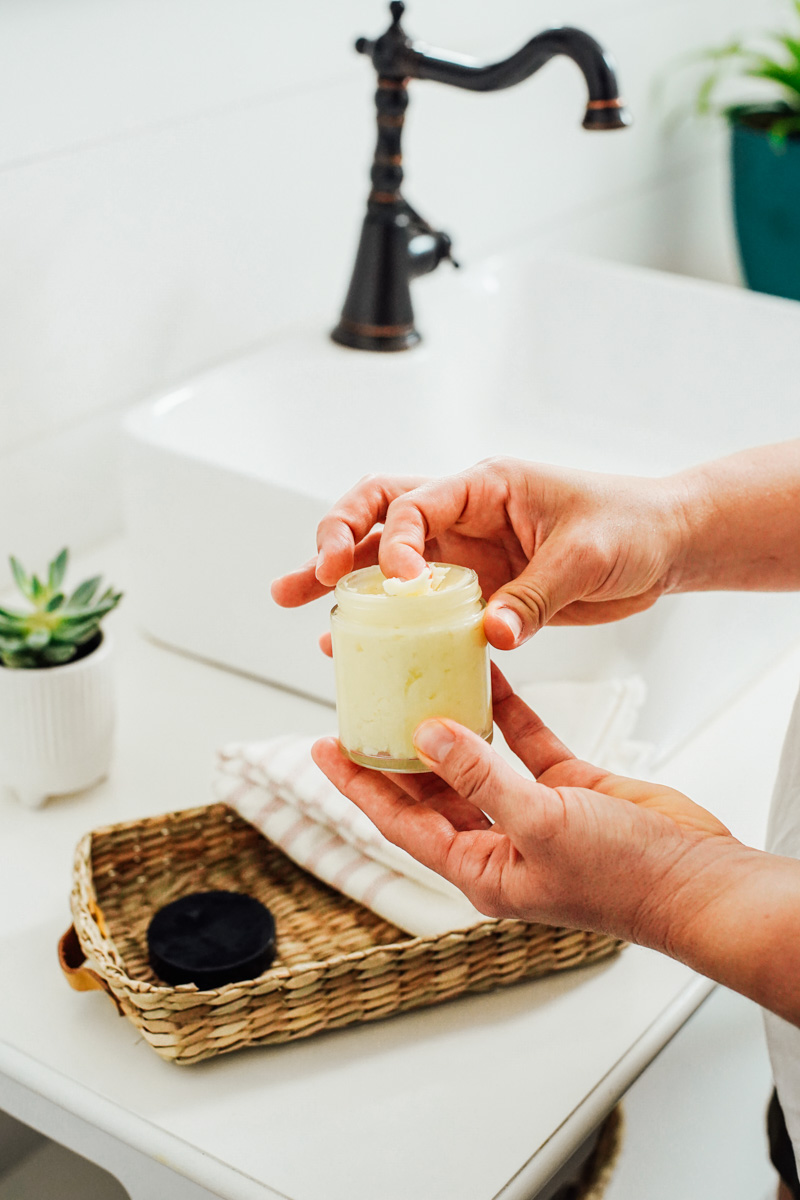
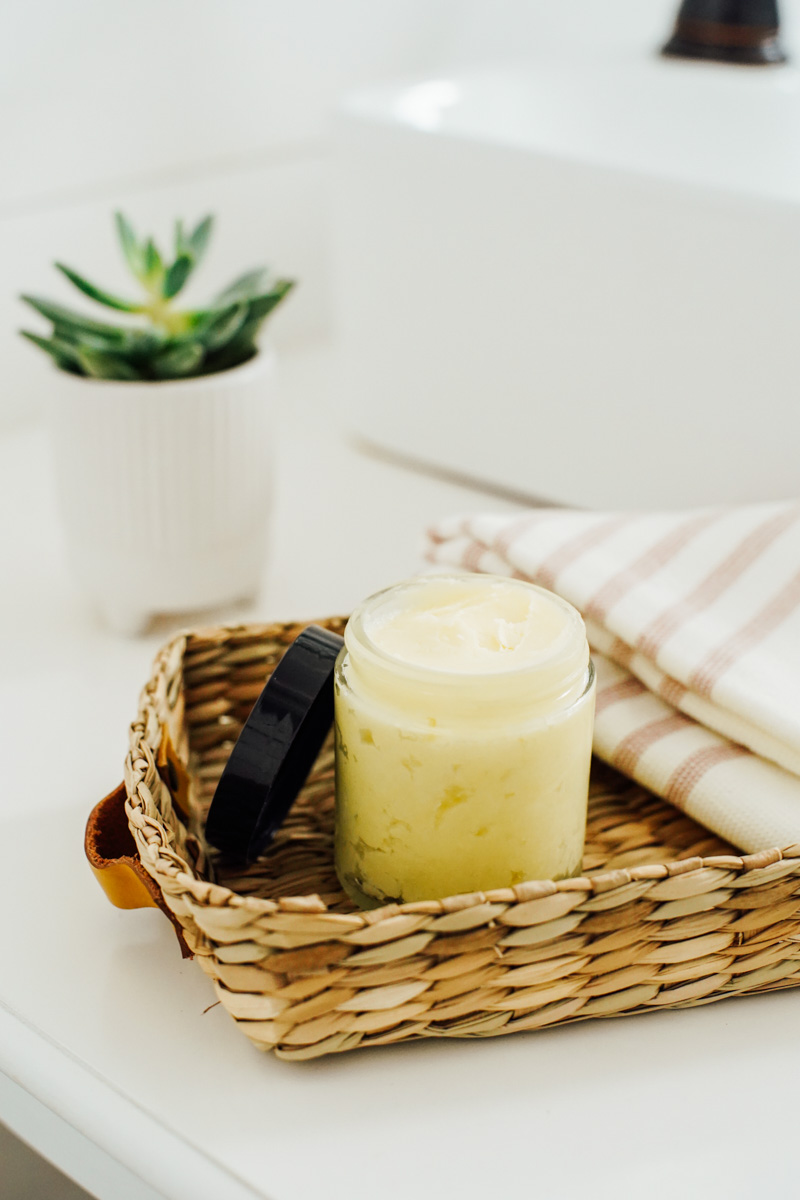
This simple DIY shea butter lotion recipe (made with just 3 ingredients) is the perfect moisturizer for the whole body, face included, and may be used for acne-prone and aging skin.
Want to Save This Article?
Enter your email & I’ll send it straight to your inbox. And you’ll get new recipes & tips each week.
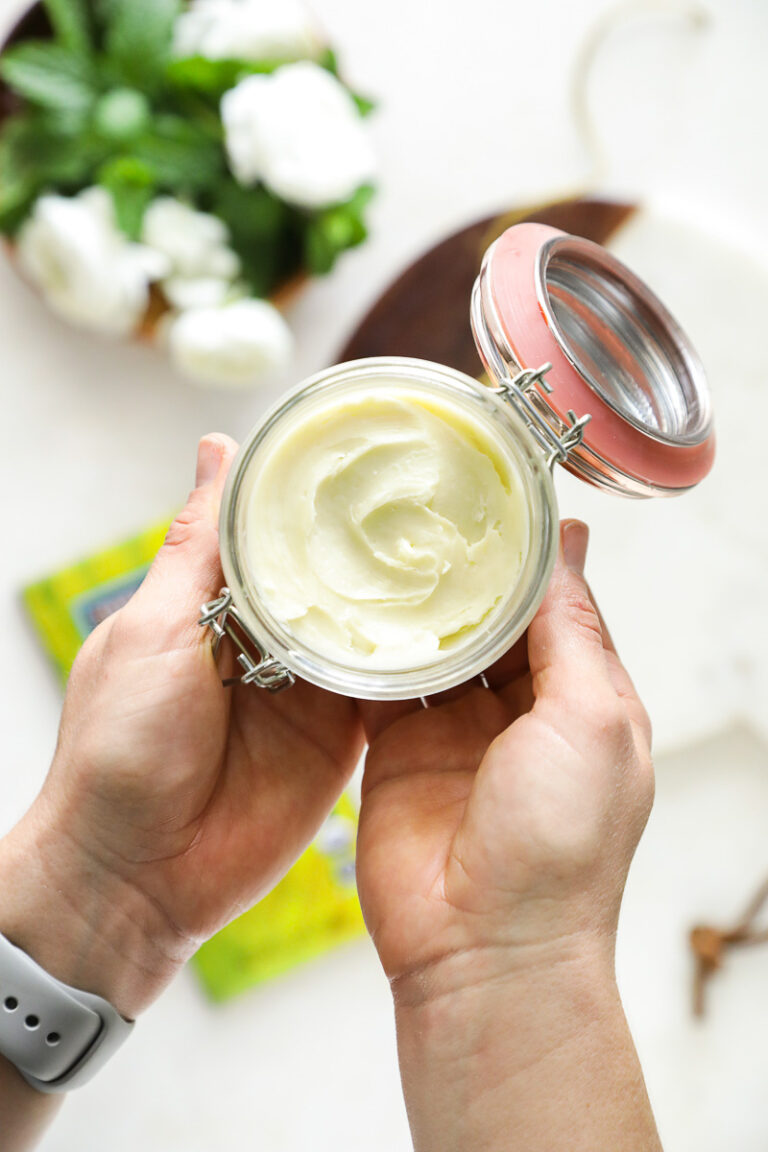
I’ll guide you, step-by-step, through how to make shea butter lotion, using shea butter and no coconut oil (because coconut oil can and will clog pores). The final product is a non-greasy, 100% natural moisturizer, with a creamy consistency and skin-soothing properties.
This recipe is used just like store-bought body lotions: to moisturize the face, hands, feet, legs, arms. Technically, this is more of a homemade body butter recipe: a thick moisturizing cream versus a pumpable lotion. (Make pumpable lotion recipe here.)
But whatever you call it, it’s one thing: AMAZING!
What is Shea Butter?
Shea butter comes from the “nut” (or pit) of the fruit found on the Karite Tree. It is soft, compared to cocoa butter, and has a strong scent when it’s purchased in an unrefined state.
I use unrefined shea butter in body-care recipes, but if you don’t care for the (natural) fragrance, I recommend using refined shea butter. Shea butter softens and moisturizes the skin, making it perfect for homemade lotion, shaving cream, and lip balm.
Benefits of Shea Butter
Shea butter is the main ingredient used to make homemade body lotion and many other skin care products.
- It’s naturally rich in vitamins and fatty acids, like vitamin A and vitamin E.
- It contains anti-inflammatory, antibacterial, and antioxidant properties. It’s ideal for sensitive skin and as an anti-aging product. There’s even evidence that shea butter could help with wrinkles.
- Shea butter helps to combat dry skin. It’s an emollient: traps moisture on the skin without clogging pores. There’s also some evidence to suggest that it may help to alleviate eczema symptoms and soften scar tissue. Source: Medical News Today
- Shea butter contains stearic acid, a naturally occurring fatty acid, that allows the butter to spread smoothly on skin without tension. This makes it ideal for a body and face moisturizer since it will melt right into the skin!
I personally use shea butter moisturizer every night before bed. And I’ve seen the texture and softness of my skin improve.
Before You Get Started: Ingredients & Tools
The natural ingredients can be found at most health food stores or online via Amazon. Each ingredient is carefully chosen for its natural moisturizing properties.
Video Recipe Tutorial
How to Make Shea Butter Lotion: Step-By-Step Instructions
Here’s the best way to make shea butter lotion, step by step.
Step 1: Melt Shea Butter
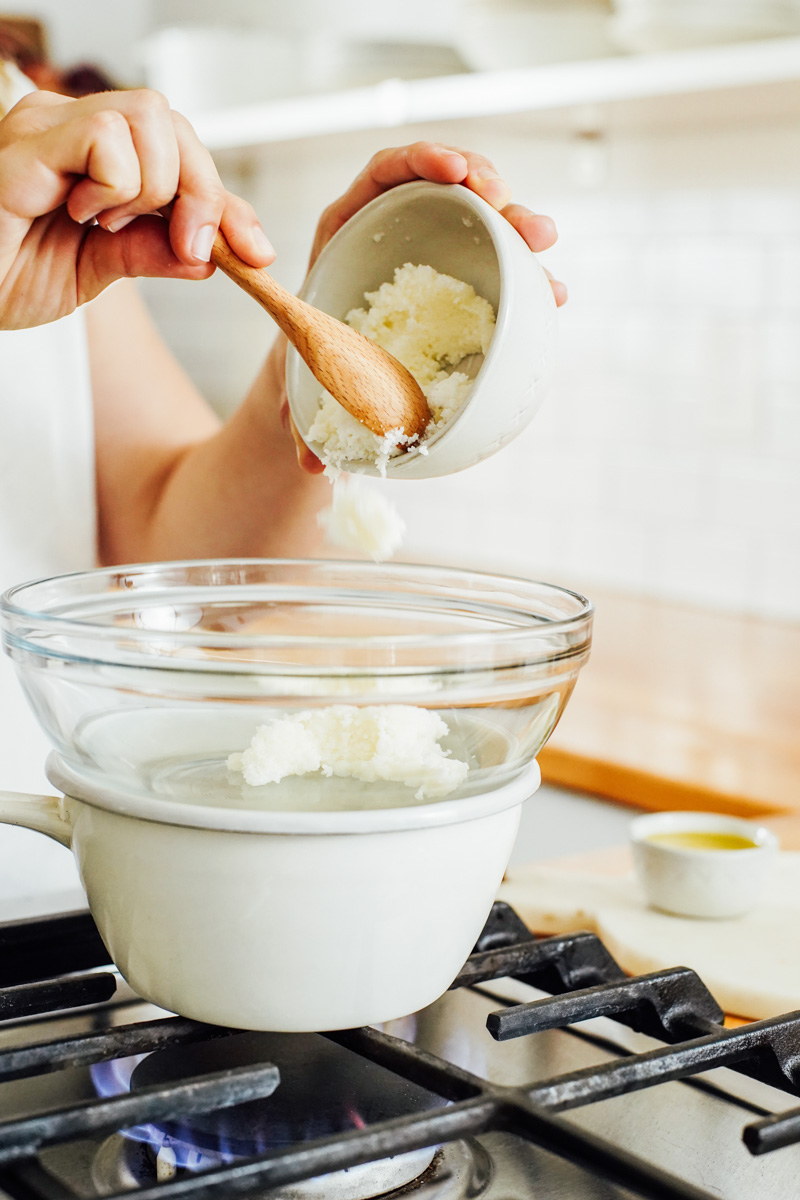
Heat the shea butter to melt it, don’t burn it. To avoid burning the shea butter, create a DIY double boiler. This will allow you to melt the shea butter without it directly touching the heat.
Place a medium-size glass bowl over a sauce pan filled 1/4 the way full with water. The glass bowl should sit just on top of the saucepan, without touching the water in the pan.
Over medium heat, allow the water in the saucepan to simmer. Then add the shea butter and melt.
Once the shea butter has fully melted (about 2-3 minutes), turn off the heat and remove the bowl from the heat.
Step 2: Add Nourishing Carrier Oil
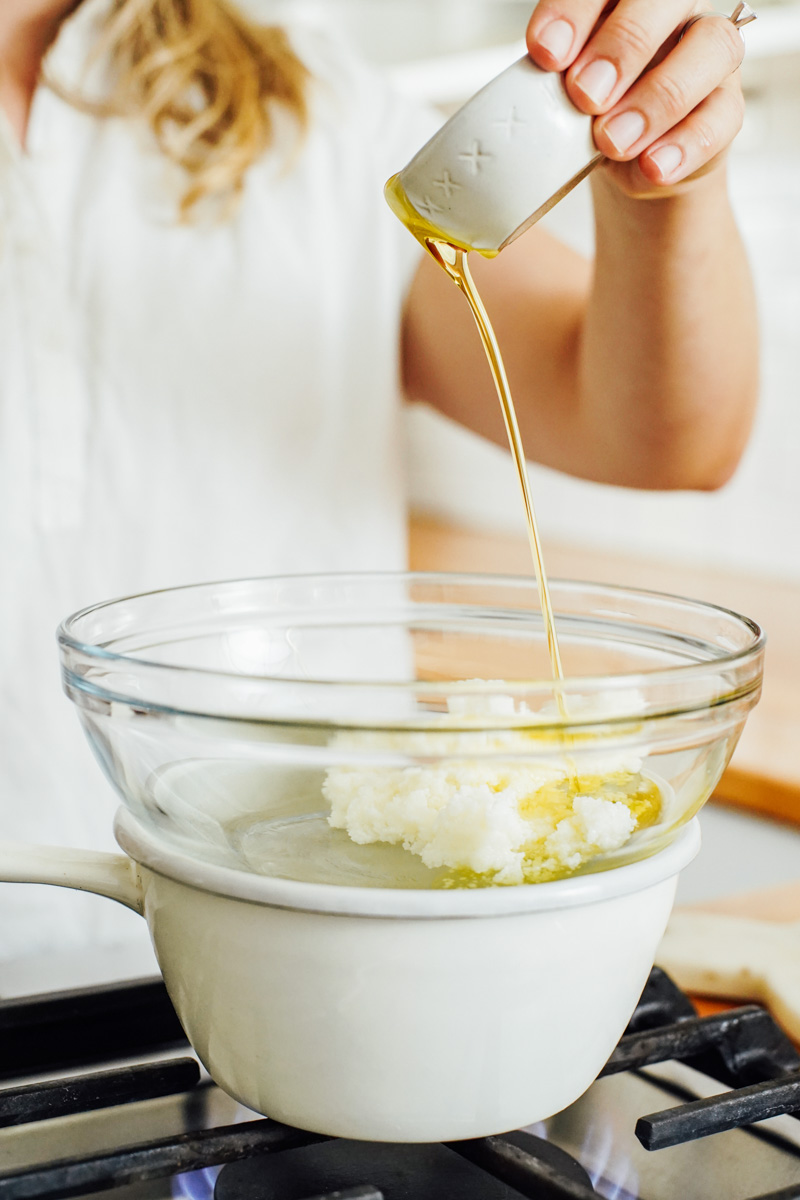
Stir 1 teaspoon of arrowroot starch into the liquid oil of choice (grapeseed oil, sweet almond oil, OR jojoba oil) and whisk to combine. Pour the oil (and arrowroot starch whisked in, if using) into the shea butter.
You can skip the arrowroot starch and add the oil directly to the shea butter at this step. The arrowroot creates a non-greasy lotion.
How do you make non-greasy shea butter lotion? Adding arrowroot starch, which is similar to cornstarch, is the best option. You’ll find this ingredient in the baking section at most grocery stores or online. This ingredient may also be used in cooking: make almond flour cookies and waffles or thicken stir-fry sauce.
Step 3: Cool in the Fridge
At this point, the shea butter and oil mixture should be cooler (along with the bowl).
If not, allow it to rest for a few minutes. Then place the mixture in the fridge and allow it to solidify (about 30 minutes to 1 hour, depending on location in the fridge and temperature).
Alternatively, speed up the process by placing the bowl in the freezer.
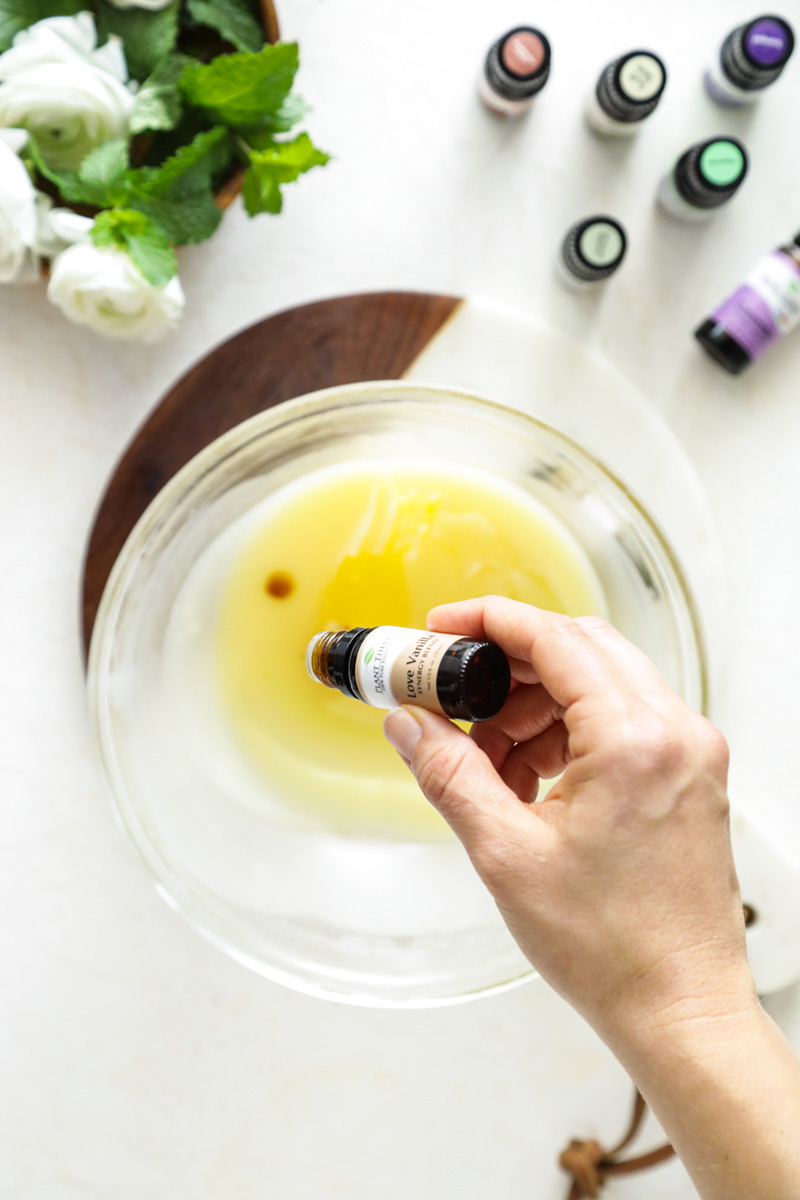
Step 4: Add Essential Oils
Once the mixture is opaque and firm (not solid as a rock), remove the bowl from the fridge.
Add the essential oil (or a combination of essential oils) of choice, if desired. Add up to 15 drops of skin-safe essential oils to this mixture. A few of my favorite essential oils to add are listed in the recipe below.
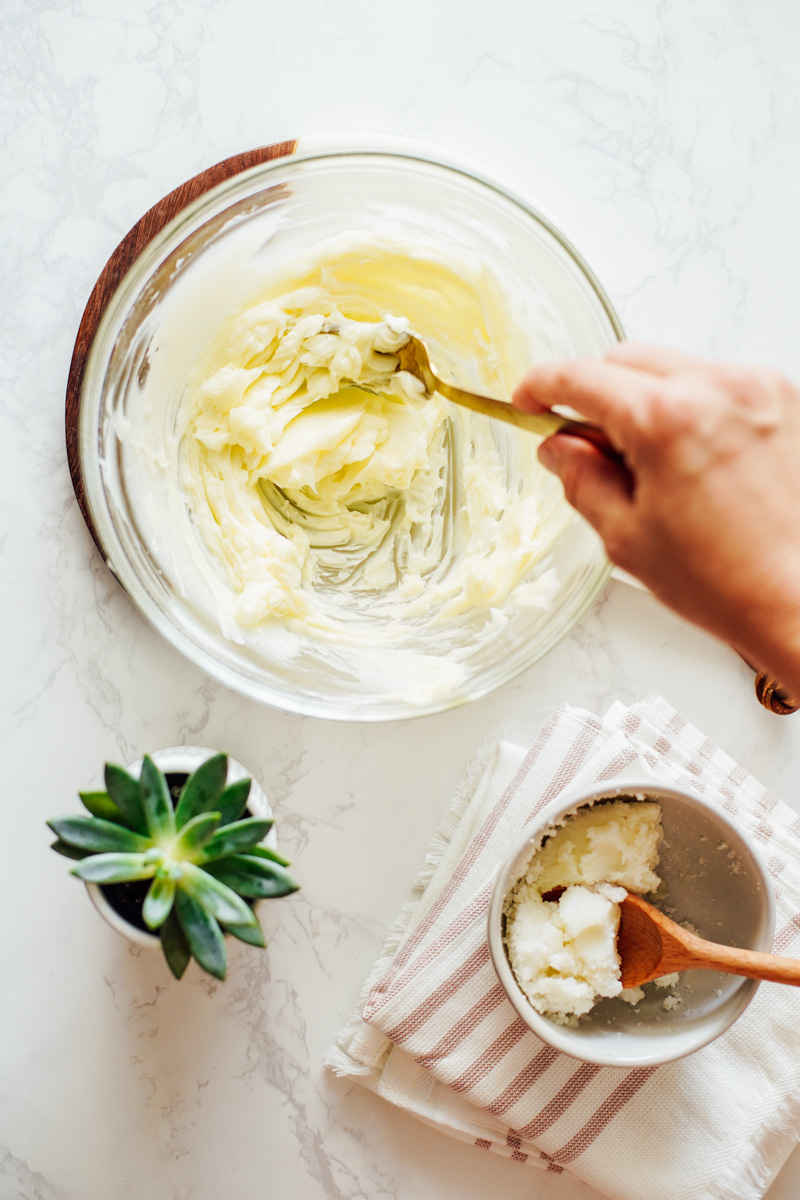
Step 5: Whip the Shea Butter
Use the whisk attachment and an electric mixer, hand mixer, or a fork to whisk the mixture until it appears “whipped.” This doesn’t take very long, just a few seconds using a mixer and a bit longer with a fork.
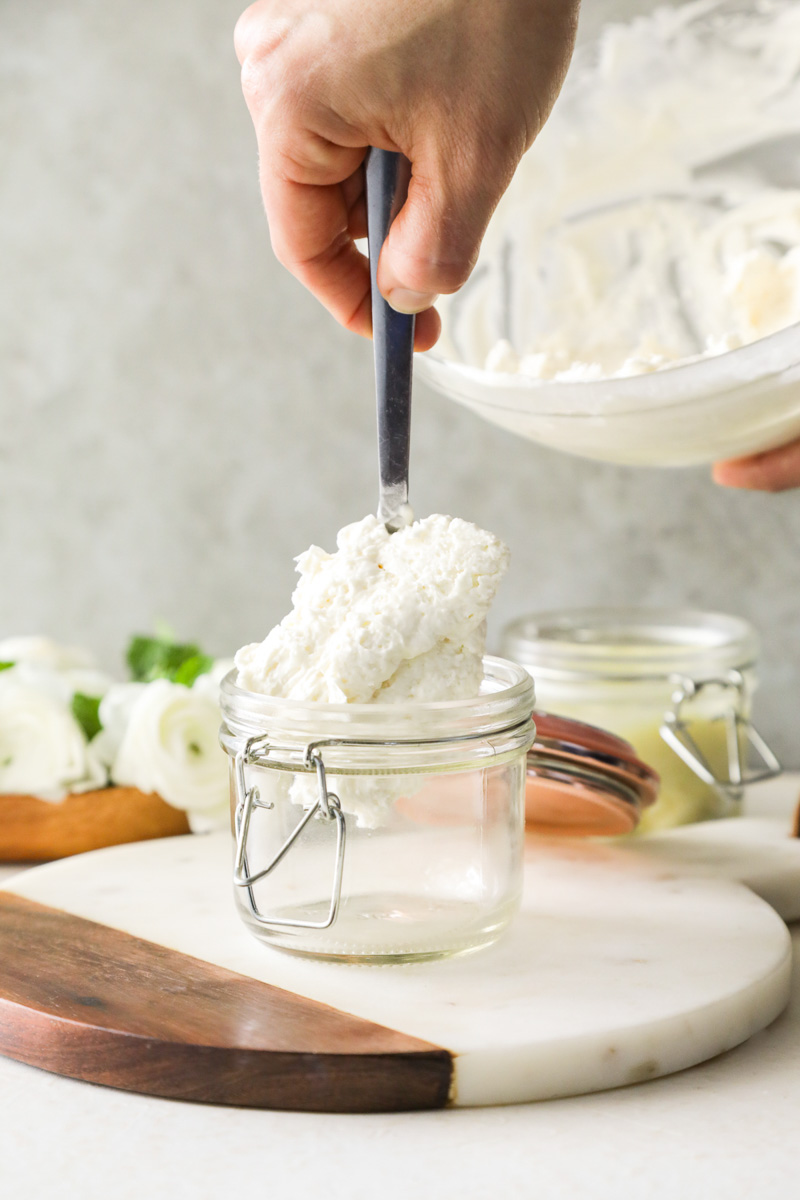
Step 6: Spoon Lotion into a Jar
Now you get to enjoy this amazing homemade lotion recipe and all its benefits (we’ll talk about the awesome benefits in a minute). Or, share the lotion as a gift.
Choose a beautiful glass jar and spoon your creation into the jar. Add a label, if desired. And store the lotion at room temperature in a cool place (like a bathroom cabinet) for up to 6 months.
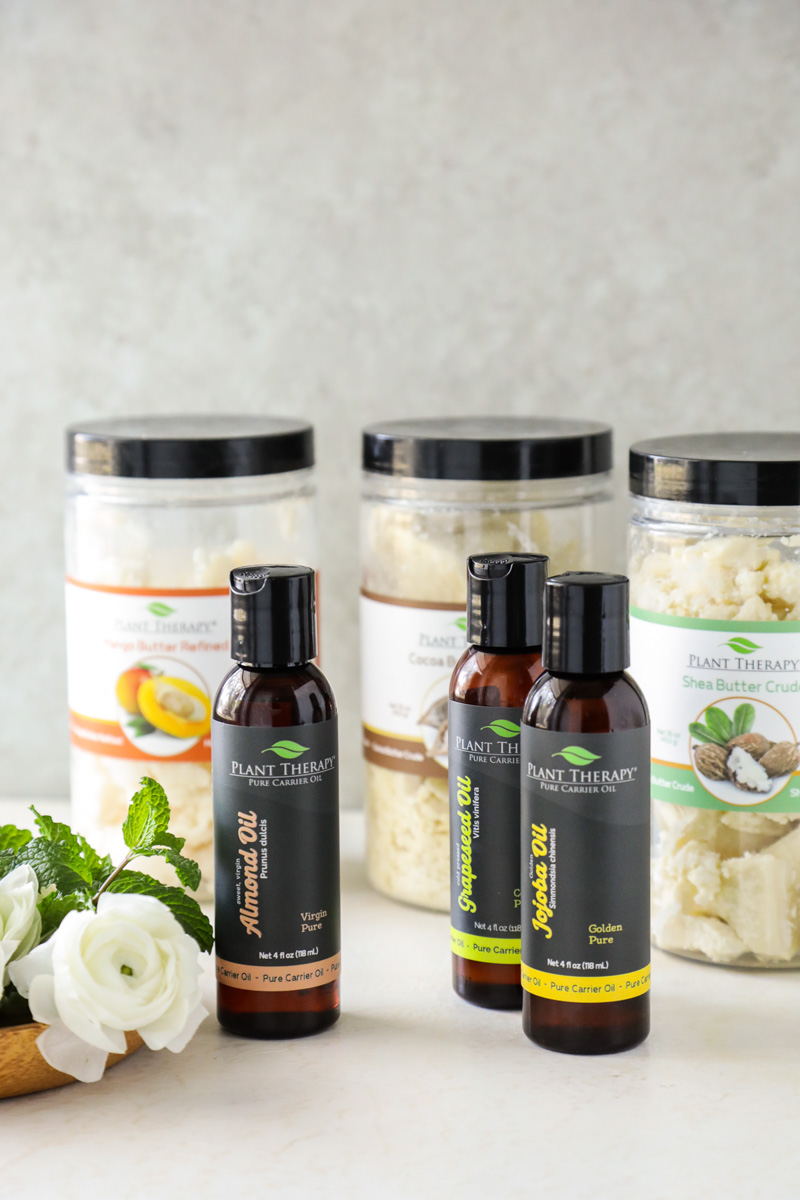
How to Choose a Carrier Oil
You can use shea butter alone as a body and face moisturizer, or you can mix it with a carrier oil to make a whipped body butter recipe or lotion (like this recipe).
Here’s what I recommend for a nourishing carrier oil to mix with the shea butter. The options absorb easily in the skin, making them the best options for a non-greasy lotion.
Jojoba Oil: Jojoba oil is made from a shrub that grows in Northern Mexico and the Southeast US. Jojoba is an emollient: a natural moisturizer that softens and moisturizes skin. Jojoba is the closest to our skin’s natural oil, making it ideal for all skin types.
Grapeseed Oil: This oil comes from pressed grape seeds. It has high amounts of fatty acids, vitamin E, and antibacterial properties. Grapeseed oil may be a great option for aging skin and for those with acne-prone skin.
Sweet Almond Oil: Made from sweet almonds and rich in vitamin A & E, fatty acids, and proteins.
Virgin Coconut oil is also an option, but as I’ll share in a minute, I don’t care for using coconut oil on my face. If you’re just using this lotion on your body, coconut oil may be a good option.
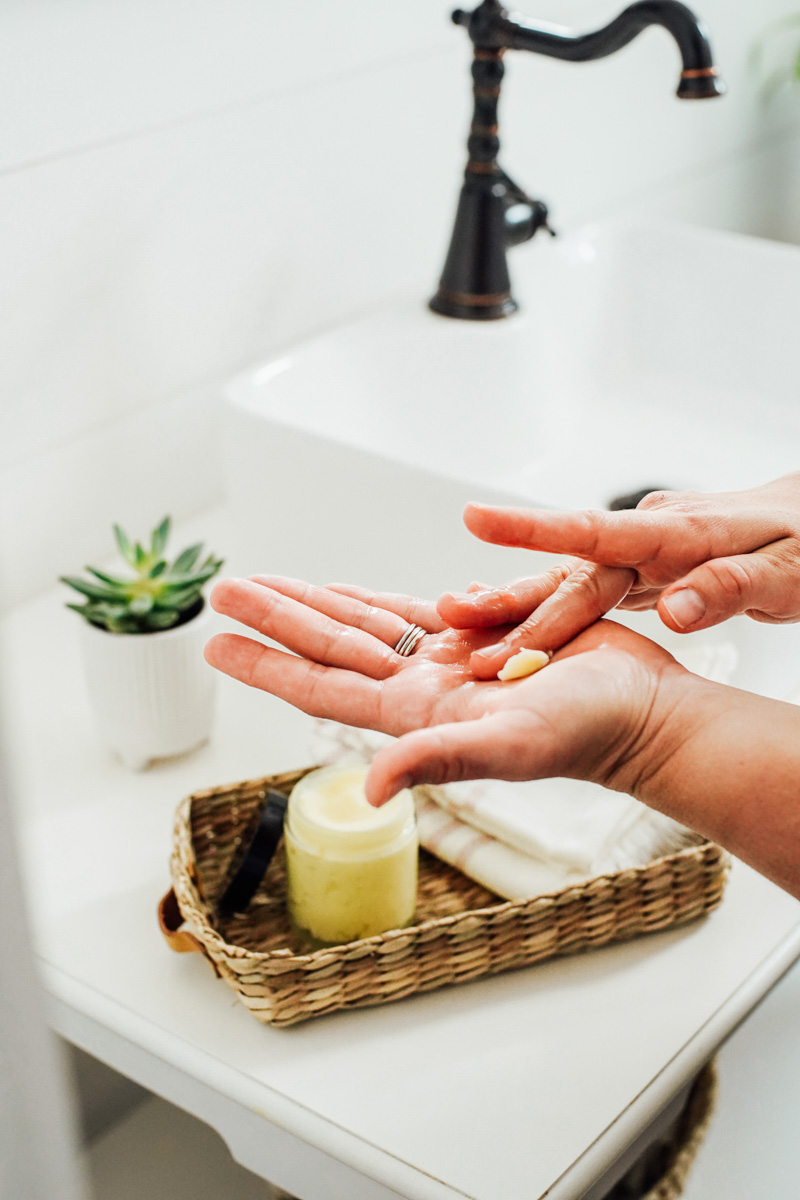
How to Use
Scoop a small amount of shea butter lotion out of the jar using your finger, then rub between your hands. The heat from your hands will soften the shea butter. Massage into your skin: face, arms, legs, feet, dry patches, etc.
A little goes a long way.
For the face, apply this moisturizer after cleansing (my favorite natural face cleansers) and toning (a spritz of rose water is my favorite). If you use any serums, apply a facial serum before applying the lotion.
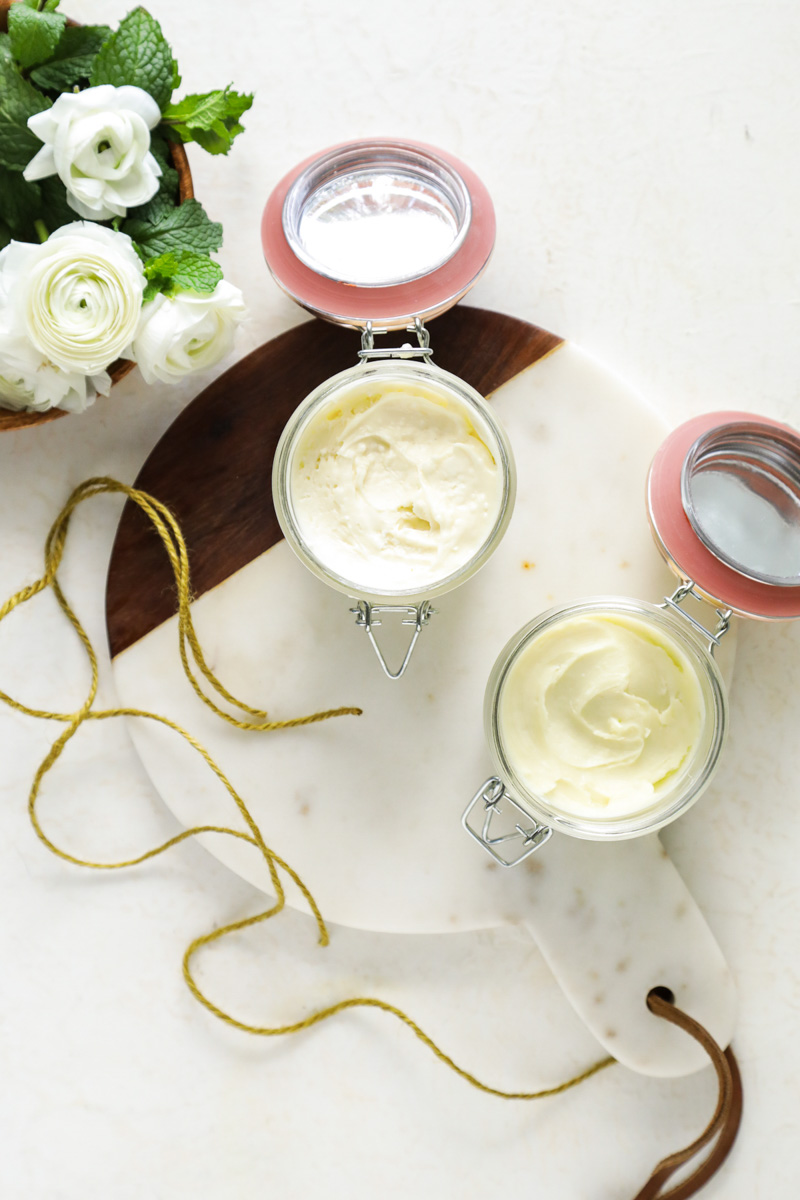
What’s the Shelf Life?
This natural lotion recipe doesn’t use any preservatives. Store-bought lotions add preservatives to formulas out of necessity. Without a preservative, mold and other bacteria will grow in a water-based lotion.
This recipe doesn’t need a preservative because it doesn’t use water in the formula. This means you can make a long lasting moisturizing lotion, without using any preservatives and don’t need to worry about mold growth. Woohoo!
Store the final product at room temperature, in a cool dry place, for up to 6 months. I recommend keeping homemade shea butter lotion away from heat, like a hot steamy shower, since it will melt slightly. This recipe is intended for home use; not to be sold commercially.
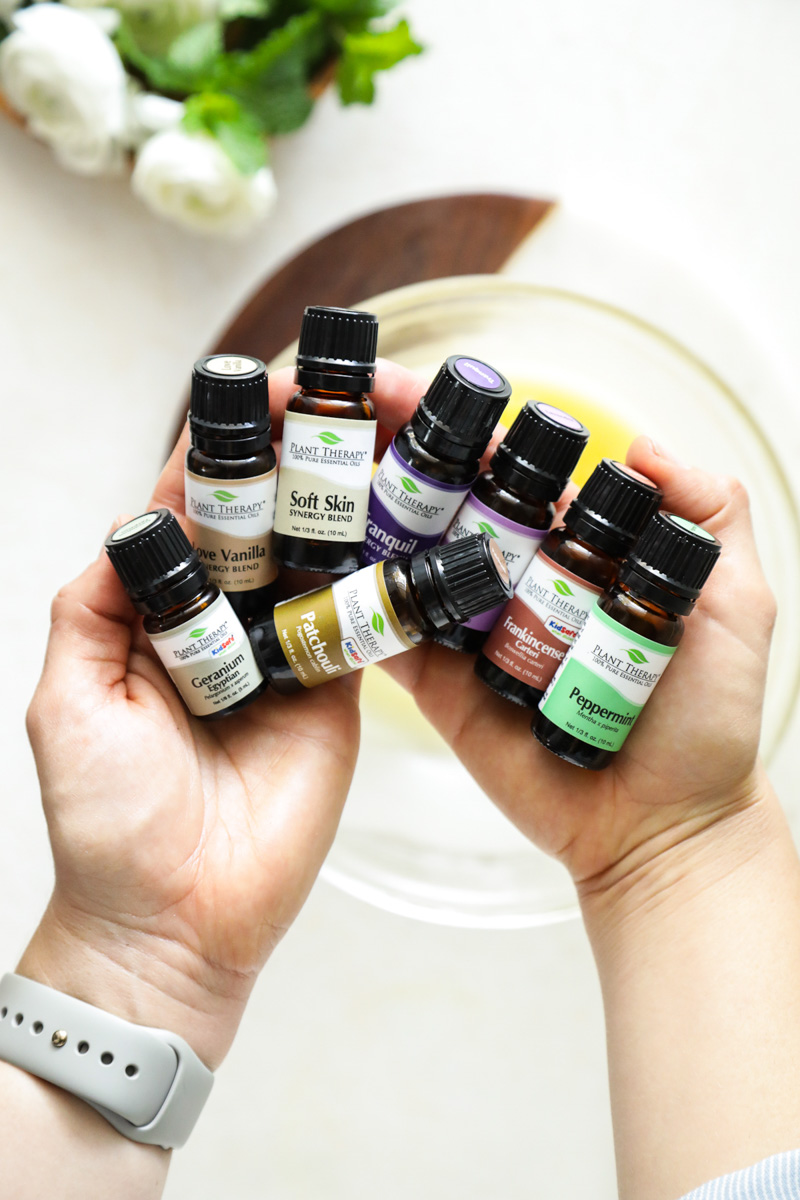
How to Add Essential Oils
If you want to scent your own lotion, essential oils are the best way to do this! Along with their scent, essential oils are easily absorbed by the skin for nourishment, and provide antibacterial and soothing properties.
Add one essential oil or a combination of essential oils, totally 15 drops, to this lotion recipe. The best essential oils for homemade lotion are…
- Roman Chamomile
- Frankincense
- Lavender
- Rosemary
- Jasmine
- Carrot Seed
- Rose
- Lavender
- Tea tree
- Sandalwood
- Geranium
Essential Oils to Avoid: Avoid citrus essential oils (like lemon or orange essential oil) if you plan to wear this lotion during the day when exposed to the sun. Citrus essential oils are photosensitive and can cause your skin to develop a rash or sunburn.
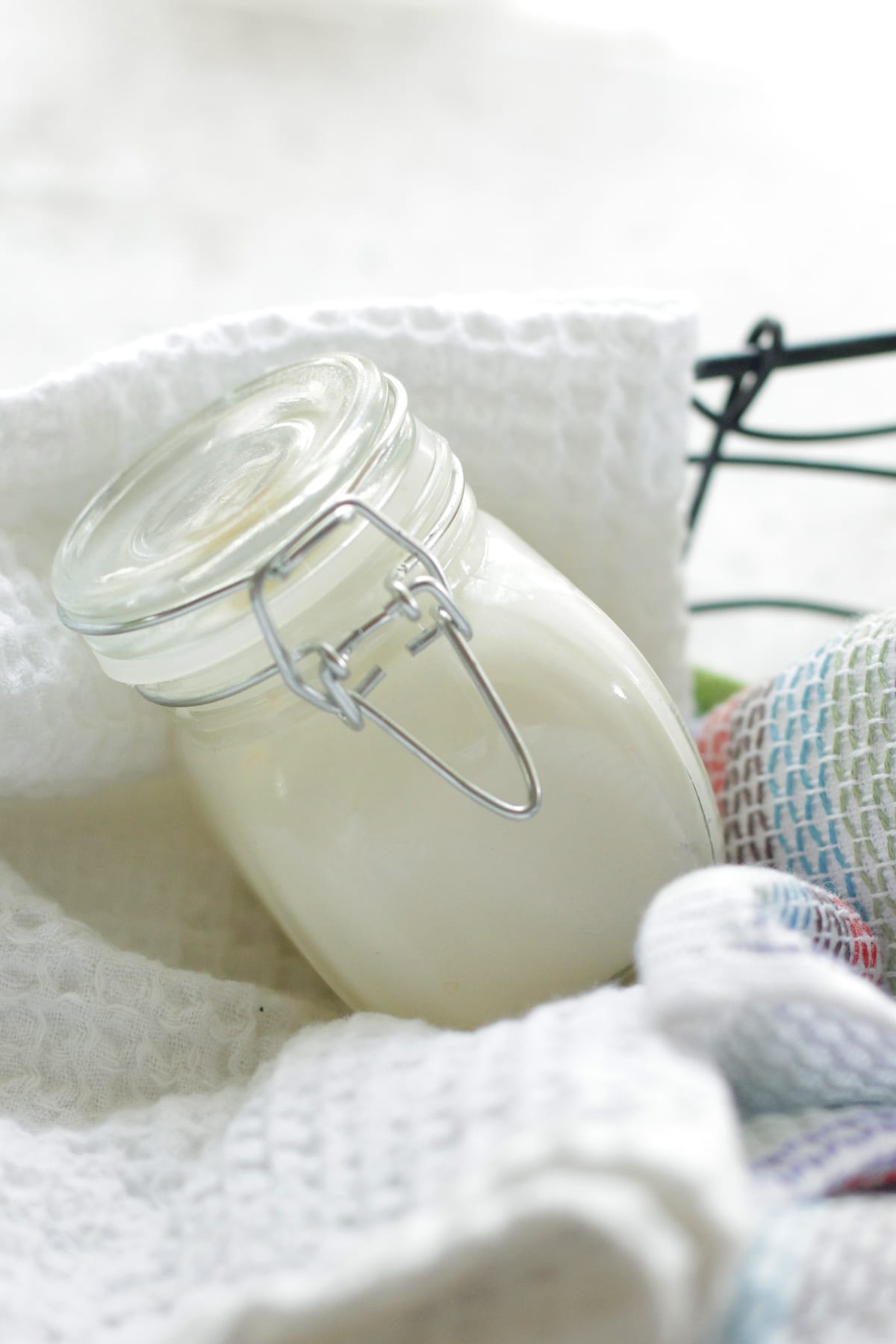
Lotion Without Coconut Oil, Here’s Why
You’ll notice that this recipe doesn’t use any coconut oil. A lot of lotion and homemade whipped body butter recipes rely heavily on coconut oil.
Coconut oil is not the cure-all. Gasp, I know. That statement is practically heresy in the natural living community. Toothpaste? Coconut oil. Smoothies? Yep, coconut oil. A boo-boo? More coconut oil. We use it for everything! I’ve learned the magical oil isn’t always suitable for every need.
Many years ago, I decided it was time to ditch the toxins found in our bathroom. From lotions to body wash to makeup, the amounts of toxins I put on my body was astounding. With the urge for simplicity and natural living, I started developing my own replacements for things like foundation powder and lotion.
One of my very first DIYs was a simple homemade moisturizer using coconut oil. After a few weeks of using this moisturizer on my face, I experienced multiple break outs, daily peeling, and dry skin patches. Here’s why…
There’s nothing wrong with coconut oil, but from a skin care perspective, it’s not the best moisturizer option for the face. If you use it on your face, it’s likely to clog pores and cause breakouts due to its chemical composition.
Shea butter does not clog pores and is the best moisturizer option. So skip the coconut oil on your face and instead turn to shea butter and a non-clogging carrier oil!

FAQs
6 More Ways to Use Shea Butter
- Use shea butter to make homemade deodorant. You’ll also need arrowroot starch for homemade deodorant.
- Combine shea butter, coconut oil, and castile soap to make homemade moisturizing shaving cream.
- Combine butter, carrier oil, and beeswax to make Shea Butter Lip Balm or a custom DIY Lip Balm.
- Jojoba oil, coconut oil, shea butter, and soothing herbs come together to create DIY lotion bars.
- Shea butter, aloe vera, chamomile, and coconut oil make a fantastic homemade diaper rash cream.
- Use shea butter combined with mango butter and cocoa butter to make a customized body butter.
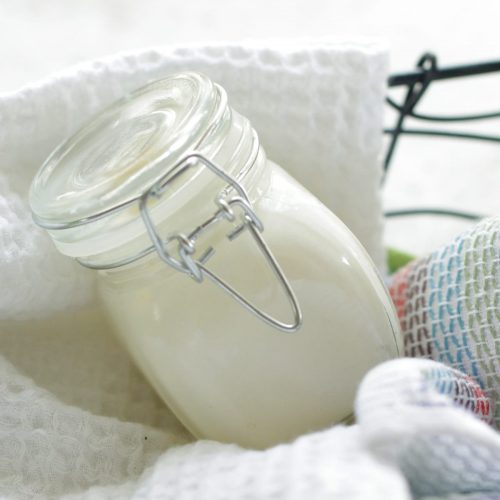
Homemade Moisturizing Shea Butter Lotion Recipe (Without Coconut Oil)
Equipment
- 1 electric mixer or fork
- 1 medium-size heat safe bowl
- 1 medium-size sauce pan
- 1 4-ounce glass storage jar (or larger)
Ingredients
- 1/2 cup shea butter (4 ounces)
- 1 teaspoon arrowroot flour starch (optional, to make a non-greasy lotion)
- 2 tablespoons nourishing carrier oil such as: jojoba, sweet almond oil, or grapeseed oil. This can even be coconut oil or olive oil (if not using on the face).
- 5 drops lavender essential oil optional*
- 5 drops rosemary essential oil optional*
- 3 drops carrot seed essential oil optional*
- 2 drops tea tree essential oil optional*
Instructions
Step 1: Melt Shea Butter
- To melt the shea butter, make a DIY double boiler. This will allow you to melt the shea butter without it directly touching the heat.
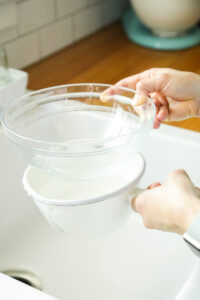
- Place a medium-size glass bowl over a sauce pan filled 1/4 the way full with water. The glass bowl should sit just on top of the saucepan, without touching the water in the pan.

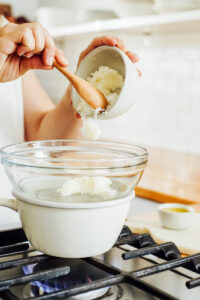
- Over medium heat, allow the water in the saucepan to simmer. Then add the shea butter and melt.
- Once the shea butter has fully melted (about 2-3 minutes), turn off the heat and remove the bowl from the heat.
Step 2: Add Nourishing Carrier Oil
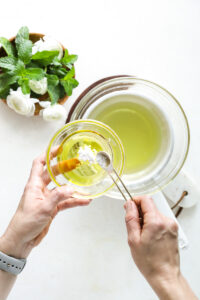
- Stir 1 teaspoon of arrowroot starch into the liquid oil of choice (grapeseed oil, sweet almond oil, OR jojoba oil) and whisk to combine. Pour the oil (and arrowroot starch whisked in, if using) into the shea butter.
- NOTE: You can skip the arrowroot starch and add the oil directly to the shea butter at this step. The arrowroot creates a non-greasy lotion.
Step 3: Cool
- At this point, the shea butter and oil mixture should be cooler (along with the bowl). If not, allow it to rest for a few minutes.
- Place the mixture in the fridge and allow it to solidify (about 30 minutes to 1 hour, depending on location in the fridge and temperature). Alternatively, speed up the process by placing the bowl in the freezer.
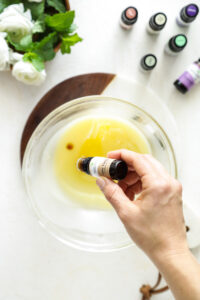
Step 4: Add Essential Oils
- Once the mixture is opaque and firm (not solid as a rock), remove the bowl from the fridge.
- Add the essential oil (or a combination of essential oils) of choice, if desired. Add up to 15 drops of skin-safe essential oils to this mixture. A few of my favorite essential oils to add are listed in the recipe above. You can add your favorite essential oil or oils, not the ones listed above (if desired).
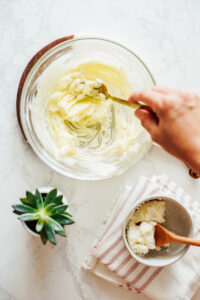
Step 5: Whip
- Use the whisk attachment and an electric mixer, hand mixer, or a fork to whisk the mixture until it appears "whipped." This doesn't take very long, just a few seconds using a mixer and a bit longer with a fork.
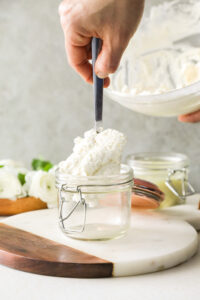
Step 6: Store
- Choose a beautiful glass jar (4 ounces or larger) and spoon your creation into the jar. Add a label, if desired. And store the lotion at room temperature in a cool place (like a bathroom cabinet) for up to 6 months.
Video
Notes
- Roman Chamomile
- Frankincense
- Lavender
- Rosemary
- Jasmine
- Carrot Seed
- Rose
- Lavender
- Tea tree
- Sandalwood
- Geranium
Natural Body-Care Simplified
Learn how to make your own body and beauty products with simple ingredients.

Hi,
I am new to DIY skin care product. And I have some questions. I don’t know if the question as already been asked, but do you know how long the lotion is good? Do I have to throw it away if I don’t use all of it in a period of time?
Thanks alot.
Mary
Hey Mary, The lotion will keep for about a year in a glass jar (due to the essential oils). Enjoy!! 🙂
THANK YOU SO MUCH!! I am back on the site to get the recipe again! This will be my second batch and I LOVE this body lotion. Then one day I was out of face serum and started using this and guess what? My face has finally cleared up from all the meds I’m on. THEN I ran out of this all-together and grabbed some coconut oil and used it. AGH!!! Now my knit capris are nasty as they have oil marks all over them and I didn’t even put them on until 1/2 hour after the oil. That had happened to so many of my yoga pants this winter that I said forget it—no more coconut oil.And now I have a lotion I love 100 x’s more! Thanks again!
Hey Patty, Yay!! I’m so happy you’re able to get back on. We’ve been trying to find the problem since you wrote. I’m so happy you love the lotion. I need to make another batch today. Blessings, Kristin
Oh, I had to laugh when I read this post this morning. I just ruined my kombucha scoby – and yes, mourning is in order.
I make my own shea butter cream too – but I’ve never added carrot oil – so I’ll have to try that in my next batch.
Enjoying your blog! Micaela @MindfulMomma
Thank you so much, Micaela. I’m so sorry about your SCOBY- totally ground for mourning!
I tried it and really like this recipe. It’s my first recipe attempt, but I honestly don’t feel the need to hunt around and try other recipes :).
It was late and I misread the recipe for the first batch so I put in 1/4 C shea. I thought, that’s not gonna work and added 2 more TBL of shea, which ended up being basically equivalent to your original recipe!
I’m letting go of trying to make it squeezable from a bottle and am just putting it in jars. If anyone has tried this with a pump I’d like to know if it worked.
Thanks for sharing this.
Hey Beth, Thanks for sharing! I’m so glad you like it. Sounds like the lotion came out perfectly even with the misreading which turned to be correct lol :). Enjoy!!
Looks like a great recipe! I need a lotion that can be used from a squeeze bottle or a pump. I’m thinking of trying this recipe, but doubling the oil to 4 TBSP. Have you tried this recipe with that ratio? Do you think it would work for a pump?
Thanks!
Hey Beth, I tried adding 2 more TB of oil while developing the recipe and found the recipe too oily for my liking. Let me know how it works for you!
I made a batch of this with just the shea butter, sweet almond oil, and lavender as that’s all I had on hand at the time. I would really like to add the carrot seed oil…would I be hurting anything to melt what I have down (like if I just set the jar in a pan of water and heated it until it got soft) and add the carrot seed oil? I made the batch just a few days ago, so very little of it is gone! I do love it, though, and am so appreciative you shared your recipe. Coconut oil, while I love taking it internally, has never brought about any miracles topically; I have actually found it to be drying to my skin. Yay for shea! 🙂
Hey Maria, I agree about coconut oil… it’s great, but not for everyone. So glad you like the shea butter alternative. I would simply add the carrot seed oil to the lotion and mix. I’ve done that many times without any issues.
Would cocoa butter work for this recipe?
Hi Sloane, I think cocoa butter would work in this recipe. It may be a bit thicker than the shea butter lotion, but it will get the same job done.
I have been reading through your lotion & cream recipes, and they sound wonderful. I do have a question about the essential oils. Are they somewhat ‘perfume-y’ or can I just add some real vanilla for fragrance or make them unscented somehow? I tend to not like something very strong smelling. I realize that the essential oils may have some beneficial reason for being in the lotion but just wondered if you could help me with this aspect. Thanks for all the natural recipes!
Hey Erin, The EOs have a fragrant smell (except the carrot oil). You can leave them out of any recipe and still make a fantastic lotion. 🙂
Looking forward to making this recipe. I’m not a fan of oily moisturizer and so far I have only made a recipe that called for coconut oil (which I love for all other applications). As a newbie I’m not sure how to clean the utensils / jars. Appreciate any advice. Thank you 🙂
Hi Dee, I use glass jars to store this (pint-size mason jars)and then clean the jars with lots of soapy water. Enjoy the moisturizer. Let me know how it works for you.
I just made my first batch. I didn’t want to use coconut oil because it doesn’t seem to help with my dry skin. I used the sweet almond oil, lavender essential oil, vitamin E oil and the tea tree oil. The lotion is more oily than what I was expecting but I am waiting to see if it will help with the dry skin. The consistency of the lotion in the glass jar is harder than I also expected after whipping the oils together. I am liking the fragrance so far.
Hi Kimberly, Sounds great. The lotion should be hard (not like store-bought lotion), but spreadable. It will be a bit greasy when it first goes on, but within minutes should be absorbed by the skin. Enjoy :).
Is there a substitute for shea butter? My daughter is allergic, darn it, and we are trying to move away from chemicals as well. Thanks!
Hi Airmid, I’m not sure there’s a great substitute for the shea butter, but the coconut oil moisturizer mentioned in the post above may work well for her.
I would suggest mango butter as a substitute. Has a very similar consistency to shea!
Thanks for sharing, AnneB. That’s great to know!
I would suggest cocoa butter.
Do you need to use a preservativ in this receipe?
Hi Debbie, All the ingredients are shelf-stable, so a preservative isn’t needed. I’d recommend storing this lotion in a glass jar if you choose to use essential oils.
does it matter if you use refined vs. unrefined shea butter? I want to make a large batch to give away as presents so I’m trying to buy the shea butter in bulk but the suggested brand only sells small jars.
I’ve used both refined and unrefined shea butter for this recipe, both have worked well.
If you want to buy oils or butters in bulk try http://www.soaperschoice.com/
I make soap so I often find that even with the high price for shipping it’s cheaper to buy this way but only if you plan to do large quantities.
I’ve made two batches of homemade lotion and both have come out too greasy for my husband’s tastes. I’m using them on my currently sunburned arms, lol, but I’m still looking for that elusive “perfect” lotion for him. Yours is next up on my list – thank you for creating one without coconut oil (which seems to be the main greasy issue)!
Do you know approx cost to buy all the ingredients, how much it makes, and how long it lasts? Also, shelf-life recommendations, etc.? Thanks! 🙂
Hey Stephanie, the price will depend on what you have on hand. If buying everything for the first time you could spend anywhere from $20-30. The oil and essential oils can be used lots of times (there will be LOTS leftover from the recipe). The shea butter, if purchasing one like the size above will last two times ($9). I also have a local shop that sells their own packaged shea butter for $2/2oz. (this recipe calls for 4 oz.). This recipes makes about a 1/2 cup. Hope that helps :).
Thank you for being honest about the essential oils. It is really nice to see that some bloggers aren’t out there solely for money. 🙂
Thank you, Loriel 🙂
Love this! Carrot seed oil is superb. And I adore lavender! I am definitely going to make this!! xo
Hey Kelly, I agree, I recently learned about carrot seed oil and I’m so glad I did! It really is an awesome ingredient. Enjoy the lotion :).
Hi! Found your site through Pinterest and I’m so glad I did! I love this recipe and can’t wait to try it out. I also loved your comment about the intense ‘selling’ of essential oils! I am just getting in to it, but it seems like if you’re not using the one or two popular brands then you’re not using the right thing! I’ve found a brand that I really like, at a much more reasonable price..and they are no less effective 🙂 Thank you for being a voice of reason!
I can’t wait to try this lotion recipe! My skin definitely needs a coconut break. One question: what is the lotion consistency at room temperature? Is it hard like coconut oil (I live in the Pacific Northwest so my coconut oil is pretty hard except during a couple months in the summer) or an actual lotion consistency?
Thanks! I really enjoy your blog.
Hey JennB, The consistency is a harder “butter” consistency vs. a liquid lotion, like we are used to in the store. I scoop it out of the jar with my finger and a little bit goes a long way (I use it for both face and body). The melting of the shea butter and then “whipping” helps it maintain a bit softer consistency.
Awesome, thank you. I’ve been having similar issues with coconut oil. Time to change it up. Can’t wait to try this.
Dear Kristin,
It was a relief to find something minus the coconut oil. I’ve been a looking for one without it, and thanks for posting this wonderful recipe. I am going to make this soon and would let you know about the results.
Love your blog… and would try others, too.
I just had one small question: here in India, we get essential oils that are water and oil based. which ones are we supposed to use in these handmade creams and lotions? It would be a great help if you could clear this for me.
Also, please suggest some alternative for rosemary essential oil, carrot seed oil and tea tree essential oil. As I haven’t been able to buy these here in India.
Thanks..
Shreya.
Hi Shreya, So glad to help with the sans coconut oil recipe.
There really aren’t any replacements for the oils mentioned, but you can leave them out and still create a good lotion recipe. You can also refer to the link in the post for more essential oils recommended for the skin.
You want to use the essential oils vs the hydrosols (water based) in this recipe.
This sounds wonderful, Kristin! I’d love to make it this week but I have a question. Do you think I could use only one essential oil instead of 4 (I love Lavander)?
Hey Ella, Thank you. One essential oil will be great in this recipe :). The base of the recipe is very customizable for any oils you’d like to use.
I looked through many of the questions but would like to know one more thing about this lotion. Does it stay fairly solid above 76 degrees? I’m having a lot of trouble with the body butters melting and becoming useless. Thanks!
Hey Melissa, I live in Florida and so far my lotion remains solid even in our hot temperatures.
Reading your recipe for homemade body lotion..you had me at “Even though essential oils are wonderful additions to homemade products (when used safely), I’ve noticed a trend in the blogging community, one I find a bit concerning: The intense selling of particular brands of essential oils and the development of recipes and usage “tips” just to sell oils”
I get so tired of people pushing THEIR brand or their brands combination of oils that don’t say what is actually in them. I know enough about them to mix them myself and what I don’t know, I have a computer and Google, I think I can find my way.
Your blog is great and I look forward to catching up with your ideas especially the ‘Simplify’ and Homemade’ sections.
Thanks for being a blogger with integrity.
Jody
Hey Jody, Thank you so much for your sweet and encouraging words. I 100% agree!
Hi Kristin,
I made it and it feels really good for the hands but I find it too greasy for my face and body. Do you have a suggestion on how to make it less greasy?
Thanks.
Hey Kathleen, I know a few people added arrowroot flour/powder (a cornstarch alternative) to the lotion. Probably a tablespoon or two would help.
Can you use tapioca starch instead of arrowroot?
I’m not sure. You could try. I’m not sure how much you’ll need.
Tapioca starch and arrowroot flour/starch are generally interchangeable ?
Hi Shreya,
So glad to help with the sans coconut oil recipe.
There really aren’t any replacements for the oils mentioned. You can leave them out and still create a good lotion recipe. I would also suggest reading more from the link above, describing various oils for the skin.
I would recommend using the essential oils for this recipe vs the hydrosols (water-based).
They are generally interchangeable 🙂
Thanks, Shauna. I’ve never tried using tapioca in a body recipe so didn’t want to suggest something I can speak confidently about. Glad you were able to help. I appreciate it!
Hi Kristen
Thank you for this
I have a couple of questions
Can I add aloe vera gel to this mix?
I have alot of oils collections and I wanna make use of them, can I make a mix of many oils with this?
Hey Hana, I don’t recommend adding aloe. If you do, you’ll need an emulsifier. I think that will depend on the oil. Most skincare/body oils will work.
there are no essential oils that are water based. You may find it easier to get essential oils over the internet (the blog lady mentions Amazon.com) to start with until you get used to what they are and can then look for them locally. A small 25 or 50ml bottle of them would last you for quite a few batches of this lotion/body butter so you don’t need to buy bigger bottles to try them.
Thanks for sharing, Amanda. You’re correct, essential oils are not water-based. There are hydrosols that are water-based, but they are not called for in this recipe. Enjoy the lotion!
I know this was posted years ago, but I feel it’s still worth responding to for anyone who ends up reading through all of these postings…you need to be careful with which essential oils you are getting however, because they can claim to be 100% pure when the oil they are calling it is pure, but in reality it has only a small percentage of the bottle as that oil and the rest is filled with other chemicals. I want to warn this, because I don’t know of any 100% pure essential oils that can be bought as 25 or 50ml bottles, they are typically 5 or 15ml bottles when they are pure and I have never found them locally (at stores). The ones that are typically sold in local stores are the ones that claim they are pure but have other chemicals in them. As an animal person, I also feel it’s important for you to know this, because I have known people who have had their birds die because they have used the essential oils from local stores that claimed to be pure but actually had other chemicals (because the other chemicals can kill the birds), when using true 100% pure oils there are still certain ones you need to be careful with around birds (since they are more sensitive than other animals), but others you can actually use with them safely to help benefit them as well. On that note, since it’s used in this recipe: tea tree (melaleuca) oil is actually dangerous to use around birds as well as cats. So, if you have either of those, I would recommend trading that oil out at least.
Hey Stephanie, Thank you for sharing. There’s a great book about essential oils called Just The Essentials that I think you might love.
Hi Stephanie, I just wanted to let you know as a soap and bodycare business I regularly purchase 500ml to 1L bottles of 100% pure essential oils from whole sale companies. I simply could not afford to make my products in bulk, if I bought 15ml bottles at retail cost!
I would never use essential oils on any pets even 100% pure, without consulting with an aromatherapist. Essential oils are naturally made up of hundreds of chemicals in their structure.
Here in Australia I see native birds hanging around the Tea Trees all the time. The aroma bothers my sinuses more than it does the birds..
Shreya,
Kristin used oil based oils in her recipe. Here in the US the water based are called hydroxide and I believe are used more in perfumes or for use with babies from everything I’ve been learning.
I did something wrong or bought the wrong Shea butter this didnt work at all
Hey Candace, What didn’t work? I’d love to help you troubleshoot and will need specific details to do that.
Hi there, if I used hemp oil with the shea butter, would I need to keep the moisturiser in the fridge?
Hey Sue, If the hemp is unrefined it will need to be stored in a cool, dry place (such as the fridge). If the oil is refined it’s shelf-stable and the lotion can be left on the counter.
This is a great recipe. Thank you for sharing. Why do you add the following?
15 drops drops lavender essential oil
10 drops rosemary essential oil
5-7 drops carrot seed oil
3-5 drops tea tree essential oil
Thanks
Thank you, Natasha. This recipe can be customized according to each person’s skincare needs. For me, I’m looking for a lotion with both healing and rejuvenating properties, so I choose oils and amounts that reflect that need. 🙂
does anyone have a recipe for a homemade lotion that isn’t more like an ointment… i want to be able to squeeze it out of a container or a pump bottle… i’ve tried several different recipes and although i like the results on my skin the process of making sure its all rubbed in is driving me crazy… help
Kathryn, I’ve been working on a lotion recipe similar to what you describe, but have not found the perfect formula just yet. I’ll keep you posted and continue to look online.
Thing is with a lotion it must be used right away or kept in the fridge unless a preservative is used. I make my own so I don’t have to use store bought with synthetic chemicals. I really like the idea of this creme. It doesn’t seem to turn to oil immediately on the skin. It almost looks like a lotion in the picture. How is the texture onceit is made.
Hey Veronica, The texture is a very thick lotion with a spreadable consistency. The final product should easily absorb into the skin.
I know that this comment is coming late, however Grapefruit Seed Extract can be used to extend shelf life. And Cosmetic Grade Stearic Acid is a great (vegan: as it comes from Palm) emulsifier, I use it at roughly 1/3 the amount of beeswax in my lotions. A great combination is sweet almond oil, vegetable glycerine, rose water, distilled water, beeswax, and stearic acid, it comes out gentle and creamy. I avoid scenting lotions and creams as you can never tell who’s allergies you will be wreaking havoc with and my Dad was always very sensitive to scents.
I have been reading your comments and enjoying the fact that you are not trying to sell something. On that note I am going to share with you and your readers a recipe that I have used many times for homemade lotion. This recipe is very easy and so versatile in that you can use any kind of oil you choose as long as they total 3 oz.
This basic recipe makes approximately 20 ounces of Lotion.
(I do use a digital scale to make this.)
You can either use a stainless steel pan on the stove using low-medium heat or I use a large glass bowl and use the microwave in short 30 second bursts.
Start by melting 1.2 oz. Emulsifying Wax until just liquid then add oils.
1.5 oz. Sweet Almond Oil or Safflower Oil
1 oz. Avocado Oil or Hempseed or Apricot
.5 oz. Jojoba Oil
*(Neem oil is good for eczema but it has a rather harsh odor that is difficult to hide.)
.2 oz. Glycerin
warm to approximately 120° – 140° F.
Separately heat 15.2 oz. Distilled Water to approximately 140° F. Do not boil.
add water to oil and using a stick blender for about 2 – 3 minutes. Don’t worry about it being watery, it will thicken as it cools.
Add after above mixture cools a bit
.5 ml (1.5 ml) Liquid Germall Plus (Do not attempt to weigh this ingredient. Use a pipette and fill to the first mark. (An excellent broad spectrum antimicrobial preservative, intended to prevent bacteria, mold and fungal growth in products.)
16 – 20 drops of essential oil per 20 oz. mix. (This is of your choosing, mix as desired. Lavender is very popular but I love Frankincense. The smell is amazing. Tea Tree and peppermint make a very nice foot lotion.)
You may also add:
1 teas. Vitamin E *optional
1Tbls Arrowroot *optional
1 teas. Aloe Vera Gel *optional
I am adding these optional ingredients to show how versatile this recipe really is.
Once your lotion is well blended you can pour it into a container that has a pump or just use a mason jar.
*Note: You can find everything mentioned in this recipe on ebay and you won’t have to buy large quantities.
Hope you have fun experimenting with this.
Thank you so much for sharing, Joanne!
This sounds like a lotion to try. However, I’m allergic to glycerin (and mineral oil). This is one reason I’m making my own lotions. Do you have an alternative to glycerin for this recipe? Thanks!
Hey Marietta, This lotion doesn’t contain glycerin.
Hello, Joanne Stevens!
Greetings from Bulgaria! Thank you for sharing your recipe, I am going to try it for sure. But I don’t want to use anything synthetic, so I am going to skip the synthetic preservative. I am just going to use EM-1 (Effective Microorganisms) instead of water. Read about EM here -> https://emrojapan.com/case/detail/91
Be healthy!
Yes, this! I was expecting something more like lotion than body butter.
Hey Reese, Awesome, glad the recipe is helpful. Yes, it’s more of a thick body butter, and a little bit goes a long way.
Adding coconut oil adds a really nice whipped (and soft texture) to lotion, which is why so many lotion recipes call for this ingredient. Another option is adding water, but that gets tricky due to bacteria growth and emulsion issues.
Hi Kristen,, how much water do you recommend to add to this formula? I do find this body butter rather thick so not easy to spread, esp one who has very sensitive skin. Thank you.
Hey Jesse, This recipe is meant to be on the thicker side. I wouldn’t add any water to this formula. You could make an actual lotion: https://livesimply.me/2016/08/12/smooth-homemade-lotion/
Just my 2cents: It’s not AS “clean/natural”, but you can “enhance” many plain basic/hypoallergenic lotions with essential oils. For example, my face cream is a plain Vitamin E Sorbolene Cream (again, this is not in keeping with the ideal clean/natural, but it is closer than most products) with essential oils mixed throughout it in a little old travel-Nivea dish 😛 (reduce-reuse-recycle!)
Until you find something more Clean, you may find that an acceptable alternative 🙂
How does this end up smelling, more lavender, more tea tree or more like rosemary?
Thank you so much for sharing. I have been reaping the benefits of virgin coconut oil but it made my face feel scaly when I put it on directly. Not wanting to overlook its benefits, I reckoned your recipe would help and used the oil as you describe. I followed your instructions to a T and was delighted that the concoction came out soft and easy to smear. Next day it was hard and it too, makes my face feel scaly. Any suggestions or advice?
Thank you
Hey Martha, You’re welcome :)! It sounds like you made the recipe perfectly. The lotion will be much softer and have a greasy feel the first day, but by the second day the lotion will feel more like butter–hard, but “scoopable.” The only way to really get around this consistency is to add something to thin out the lotion like a liquid–a tiny amount hydrosol, aloe gel, or even coconut oil–and whip it again.
Hi Kirsten,
Thanks for sharing this wondering recipe. I’ve tried it a couple of times and decided it’s a little too thick. I wonder if I can whip it again by adding in a small amount of vitamin E serum to get a more spreadable consistency. Thanks !
Hey Jesse, This should be thick like a body butter. To make a truly soft lotion you will need to tweak the ingredients–using water or a hydrosol. Here’s a recipe that may be more of the consistency desired: https://livesimply.me/2016/08/12/smooth-homemade-lotion/ I’m not sure if the vitamin E will produce a softer consistency.
This seems like a lovely tutorial. Do you think it would be good for acne-prone skin? I use little amounts of Neutrogena facial moisturizer that is supposed to be working against acne, but it leaves my skin feeling rather oily by the end of the day (that’s embarrassing for school!). I’ve been searching forever for a facial moisturizer for acne WITHOUT coconut oil (it was great the first week, then I broke out like never before!) and I’m having so much trouble.
Do you think you could make a recipe for acne-prone skin? Thanks!
Hey Lex, This may help the acne. Another option is a gentle moisturizing serum: https://livesimply.me/2015/01/18/diy-homemade-facial-serum/. I also have a super creamy shea and aloe lotion recipe that will be coming in February, which is very cooling and gentle.
Kristen,
I’ve been wanting to make a daily face moisturizer with spf. Carrot seed oil has a high software so I’m definitely making this recipe. I also have some non-nano zinc oxide powder and was wondering if it could be added to this recipe? It would boost the spf but I don’t know if it would alter the feel of it.
Michelle, I just wanted to let you know that I’ll make sure Kristin sees your comment when she returns from traveling to give you an answer to your question. ~Rachel, commenting on behalf of Kristin while she’s traveling
Hey Michelle, I definitely think you could add the zinc to create a lotion. You could use a similar method to this recipe: https://livesimply.me/2014/06/05/homemade-sunscreen-recipe/. Let me know how it goes!
Love love love that I found this recipe. I am extremely allergic to coconut and it seems that it is in everything. I too was wondering about adding zinc to this recipe so I could use it as a sunscreen. I checked out your sunscreen recipe, but you u coconut oil. Any suggestions as to how much zinc I would add to this recipe? Have yet to make this as I just gathered all my ingredients.
Hey Anita, I think you could try adding zinc to this recipe. I would use a similar amount and method as this recipe: https://livesimply.me/2014/06/05/homemade-sunscreen-recipe/.